USER INTERVIEWS
To identify key challenges and better understand real user needs, I conducted online research and in-depth interviews. The goal was to capture moments of information overload, decision-making barriers, and difficulties in maintaining consistent care routines. The interviews helped contextualise the problem within users’ everyday lives and revealed that the difficulty stems not from a lack of motivation, but from excessive information and the absence of a structured support system.
“I’d like to start a conscious skincare routine, but I feel discouraged by the amount of information I have to absorb at once. Something that guides beginners step by step would be really helpful.”
“Do you know an app that analyses cosmetic ingredients? Ideally, I could take a photo of a product and get a simple explanation. That would be much easier than looking up each ingredient individually.”
“My friend is pregnant and is struggling because she doesn’t know whether she should avoid certain ingredients in cosmetics. She wonders if they could negatively affect the baby.”
“Is there an app that helps with haircare? It would be great to add my products along with expiration dates and photos of results to track progress.”
“I want to start taking care of my skin, but I don’t know where to begin. I don’t have major skin issues, but choosing the right creams and building a routine feels overwhelming.”
“Choosing cosmetics is very time-consuming. An app that analyses ingredients based on a product name or barcode and flags potentially harmful substances would be extremely useful.”
— Key insights:
• Users experience information overload and struggle to identify trustworthy sources.
• Overly complex onboarding reduces motivation to start using a tool.
• The lack of a centralised system for managing products and routines leads to chaos and inconsistency.
While there are apps on the market that support single habits, such as tracking supplements or water intake, there is no integrated solution that combines ingredient analysis, product management, education, and decision support within one cohesive system. This gap highlights the need for a tool that not only tracks actions but actively helps users understand why a particular routine is appropriate.
— Problem areas:
• cosmetic ingredient analysis,
• product search, selection, and alternatives,
• compatibility of products within a single routine,
• usage instructions and proper application,
• routine consistency,
• skin and hair type assessment.
Competitive Analysis
The analysis of competing applications helped identify functional gaps and recurring issues reported by users. I focused on app store reviews and available features to understand which needs remain unmet. The insights gathered formed the foundation for defining Revival’s functional scope and establishing key design priorities.
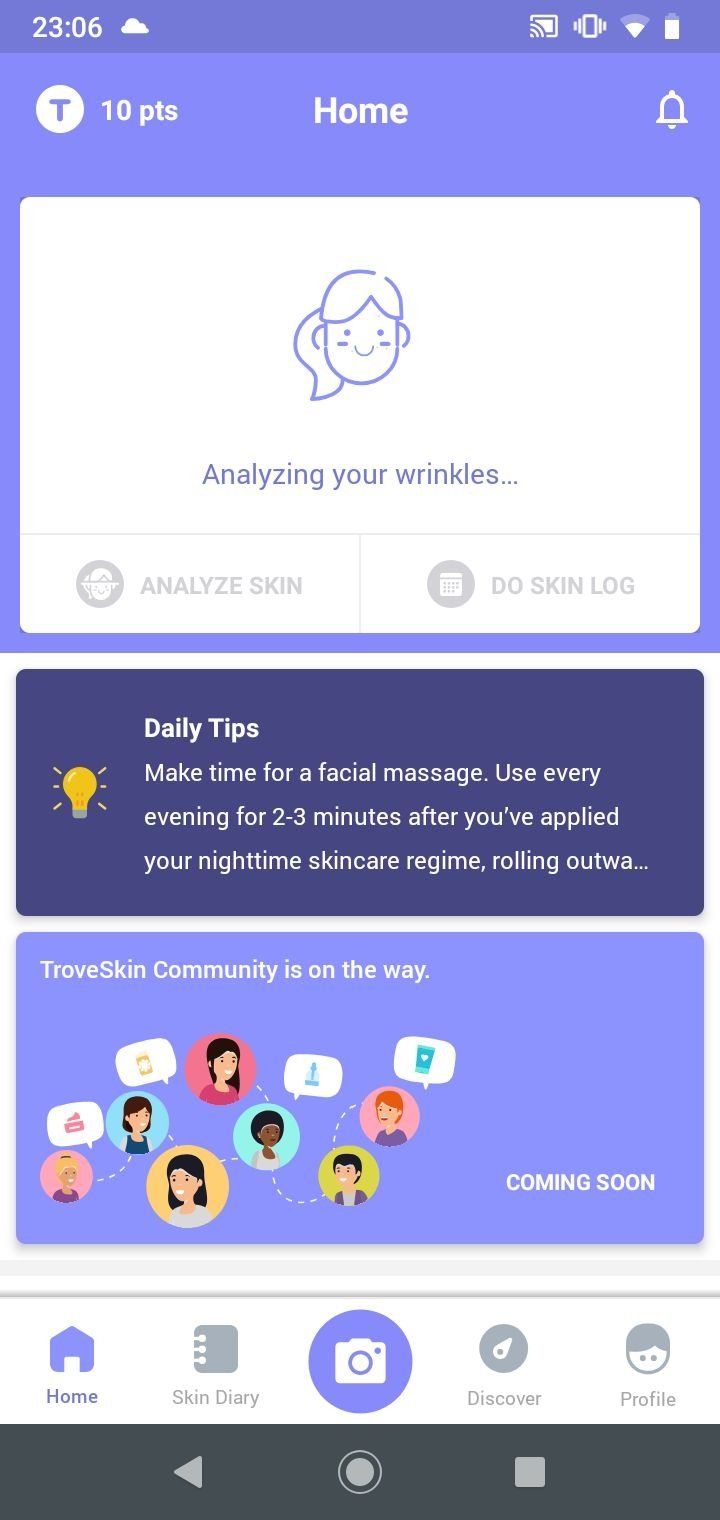
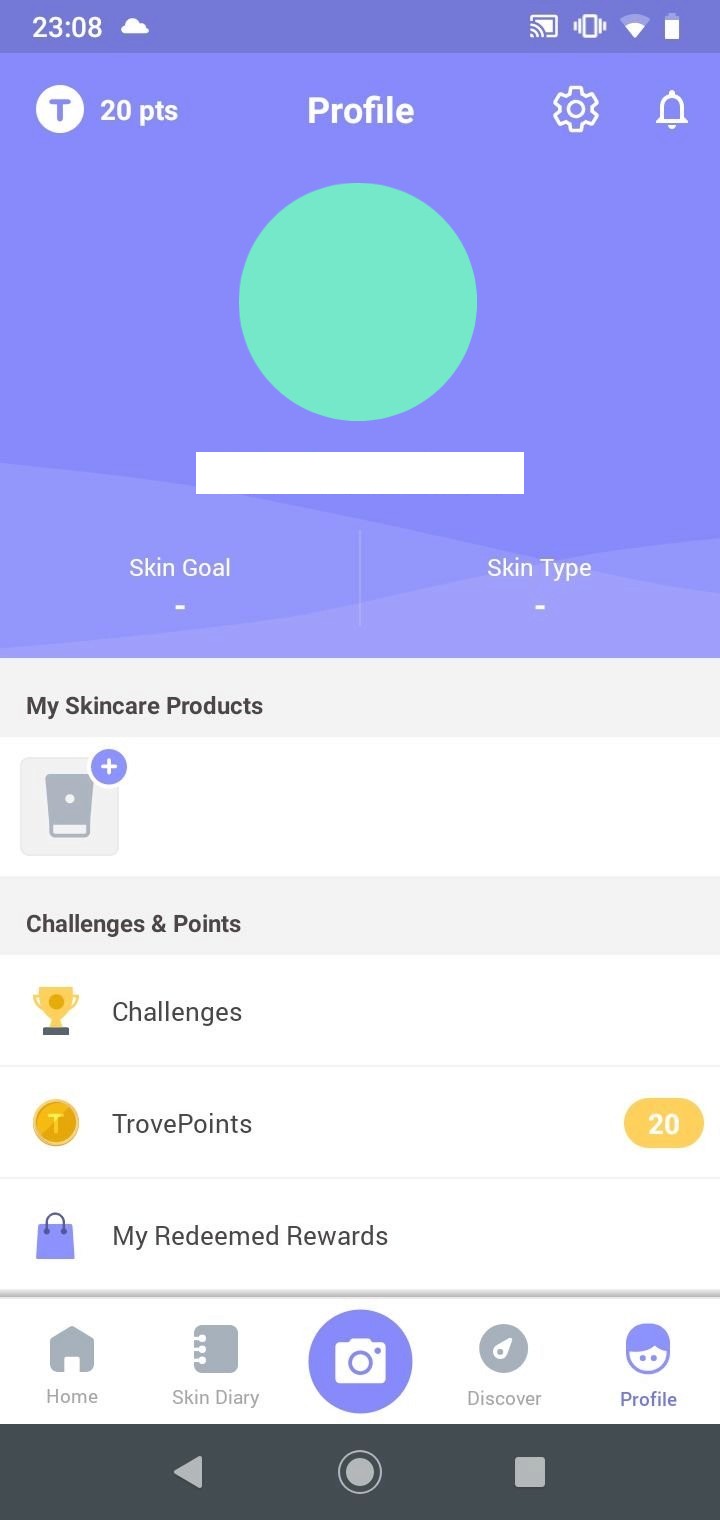
“The scanner just guesses. I didn’t expect much from it, but it doesn’t detect red spots as blemishes and even identifies eyebrows as wrinkles. It’s a decent app for manual tracking, but that’s about it. I’ve tried the scanner at least 15 times…”
“It doesn’t work. No matter what I do, it won’t upload any photos – neither my face nor products. I tried creating a new account and reinstalling the app. Nothing makes it work. It’s a shame, because it seemed like exactly what I needed.”
“I think this app is really amazing. It helps me understand my skin type and much more. It also doesn’t contain tons of ads.”
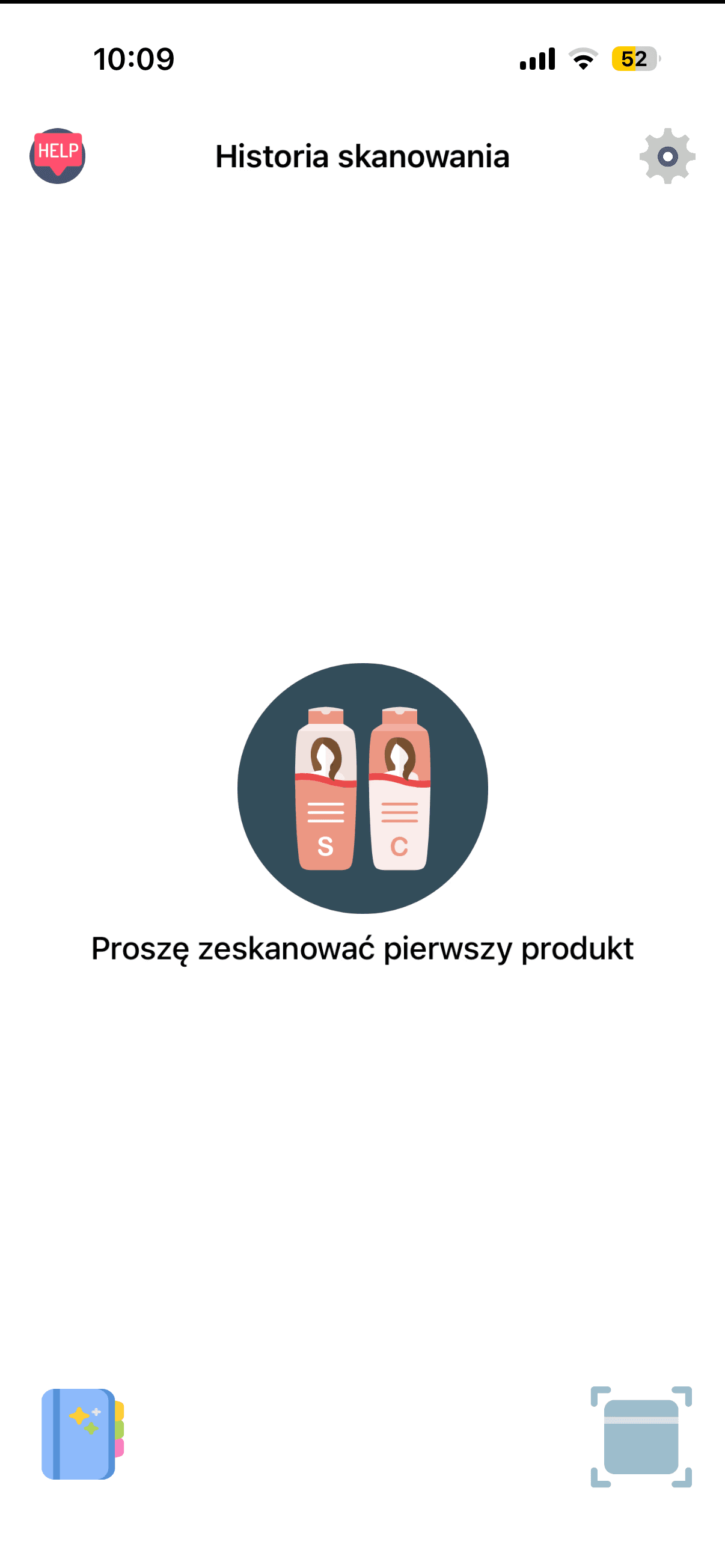
“I only had 7 free scans, and then it asked me to pay. It seems like it’s still under development. For example, the only available categories were ‘shampoo’ and ‘mask.’ I expected more variety so I could categorise my products by type.”
“What a great app! Worth every penny. It’s just a shame I can’t manually add certain ingredients if the camera can’t read them.”
“I love this app. I can quickly scan a label and it analyzes the ingredients. The only thing I don’t like is that when it says there are controversial ingredients, I’m not sure if those are the ones highlighted in red?”
— Key observations:
• Limited accuracy and reliability of scanners reduce trust in the application.
• Technical issues and unstable performance lead to frustration and user drop-off.
• Payment models based on heavily restricted free features create a sense of dissatisfaction.
• There is a lack of clear interpretation of ingredient analysis results and educational context.
• Existing solutions often function primarily as trackers, without actively supporting decision-making.
The competitive analysis confirmed that while the market offers partial tools, it lacks a solution that integrates ingredient analysis, education, product management, and guided user support within one cohesive system. This gap became the foundation for defining Revival’s unique value proposition.
The 4Ws and 5 Whys analysis confirmed that the core issue does not stem from a lack of motivation for self-care, but from the absence of a clear, structured system that supports everyday skincare decisions.
4 WS
Who is affected by the problem?
The problem affects individuals for whom skincare and haircare are an important part of daily life – both women and men. It is particularly relevant to those dealing with skin concerns or hair loss, who fear recurring issues and want to make informed, well-reasoned care decisions.
What is the problem?
Users struggle to choose the right products and maintain consistency in their routines. Analysing ingredients, comparing cosmetics, tracking expiration dates, and applying products correctly require time and knowledge. The abundance of information and available options leads to confusion, frustration, and abandonment of consistent care.
Where and when does the problem occur?
The problem arises daily – both when planning and performing care routines and when purchasing new products. Users often lack certainty about whether a product is suitable, safe, and compatible with the rest of their routine.
Why does it matter?
Skin and hair concerns affect not only physical condition but also well-being and self-confidence. The absence of structured decision support increases stress and feelings of helplessness. Addressing this issue directly improves everyday comfort and supports the development of consistent habits.
5 WHYS
Problem: Difficulty in choosing the right skincare routine, selecting suitable products, and systematically monitoring their use.
Why?
Users are overwhelmed by excessive information they are unable to independently analyse.
Why?
The market offers an ever-growing number of cosmetics and methods, often accompanied by conflicting messages.
Why?
Brands respond intensively to shifting consumer trends, including rising health and sustainability awareness.
Why?
Consumers seek solutions aligned with their lifestyle, values, and aspirations.
Why?
Media and online environments promote specific skincare standards that users attempt to follow without sufficient context and knowledge.
PERSONA DEFINITION
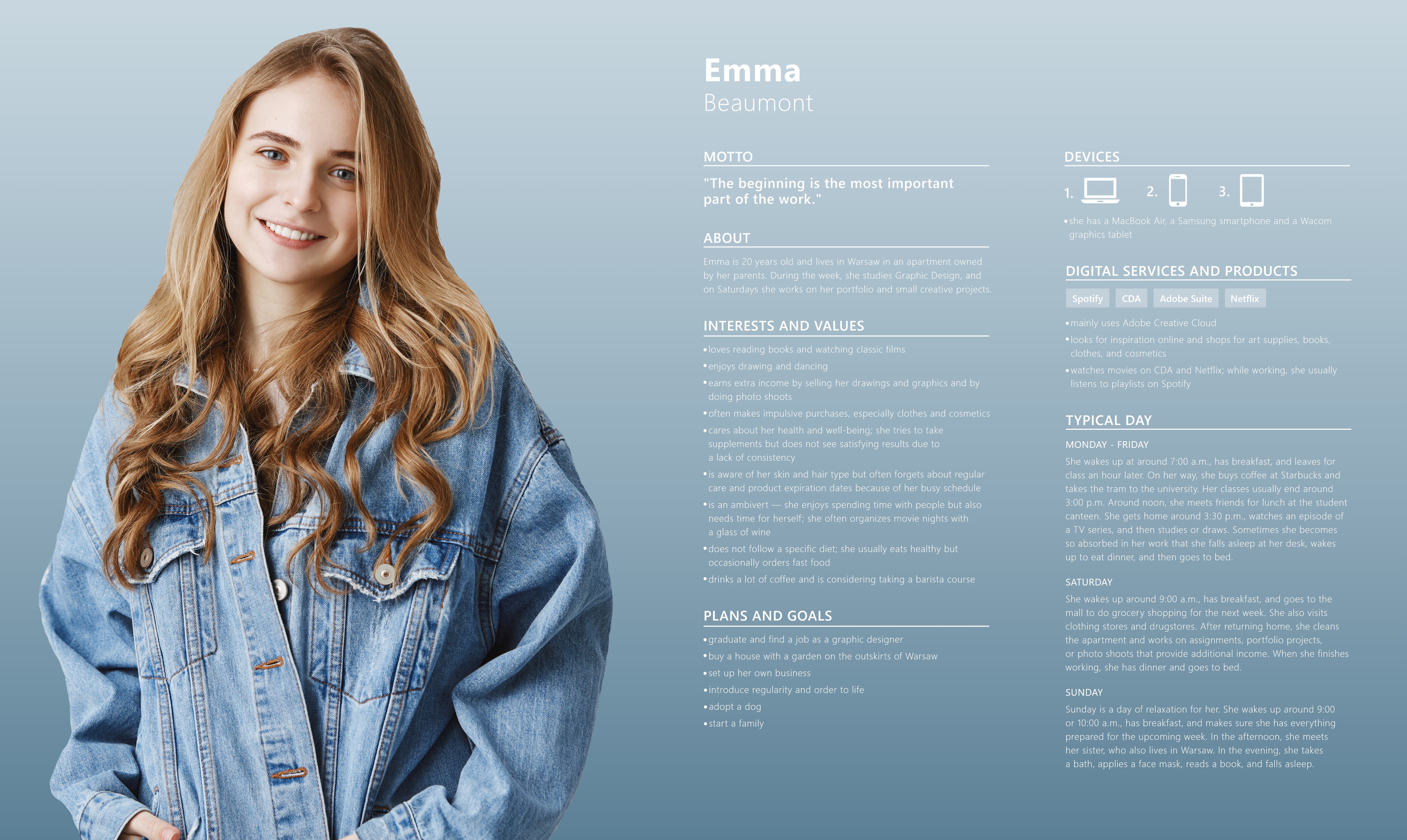
Personas were developed at an early stage of the design process, prior to creating the Revival app concept. Their purpose was to understand users’ lifestyles, motivations, barriers, and decision-making contexts. Based on the collected insights, I identified key problems to address and defined functional priorities, information architecture assumptions, and the direction for onboarding design.
PROBLEM STATEMENT
I am a busy student trying to bring more consistency into my life. Due to the number of responsibilities I juggle daily, I often postpone self-care. I want to grow my career and achieve success, but the lack of structured support in managing my skincare leaves me feeling stressed, frustrated, and disappointed.
I am a busy corporate professional. I want to look good and feel well-groomed, but I don’t know where to start. The overwhelming number of available products and treatments creates information overload, leading me to delay decisions and abandon consistent care altogether.
BRAND GUIDELINES
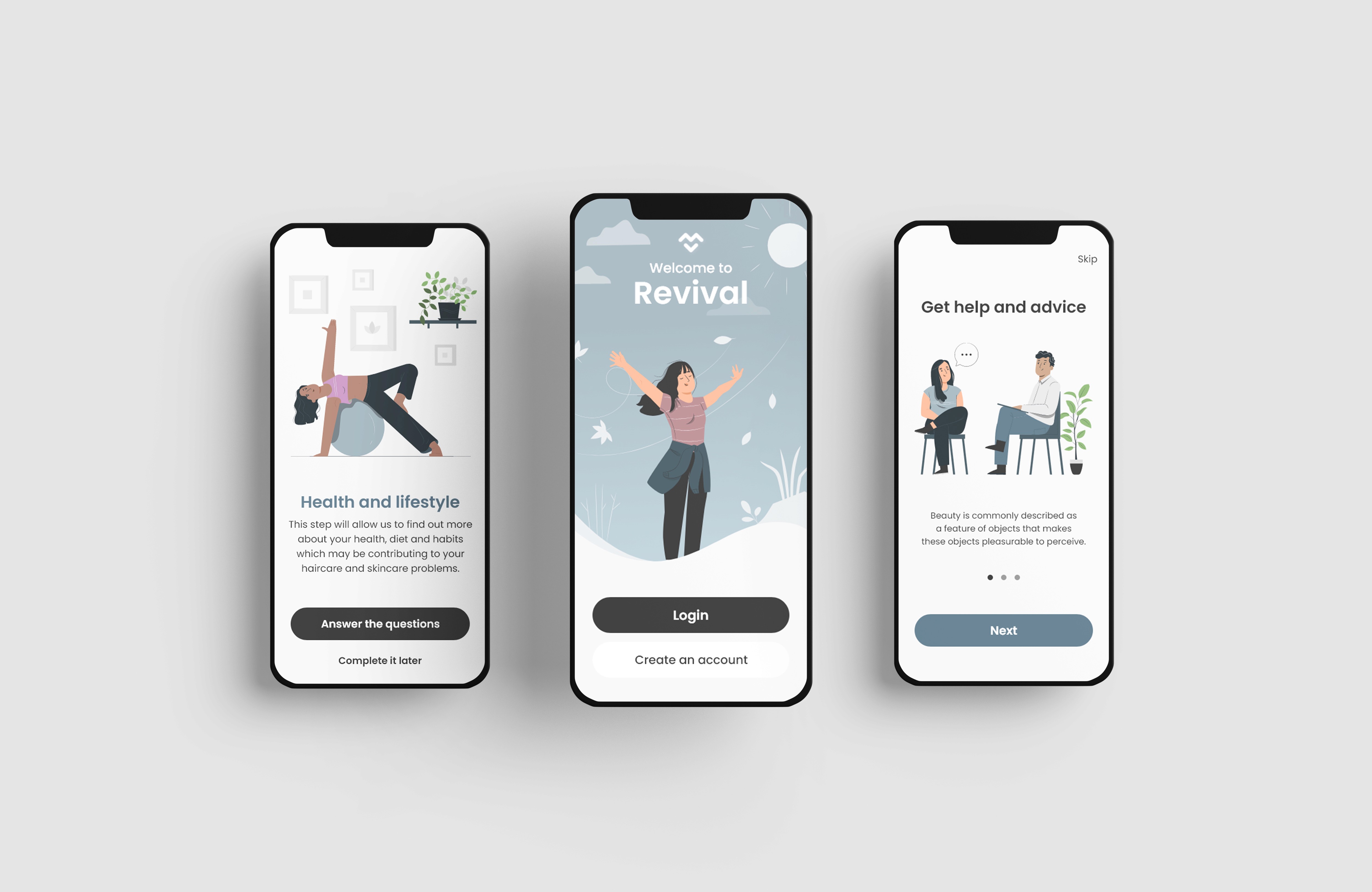
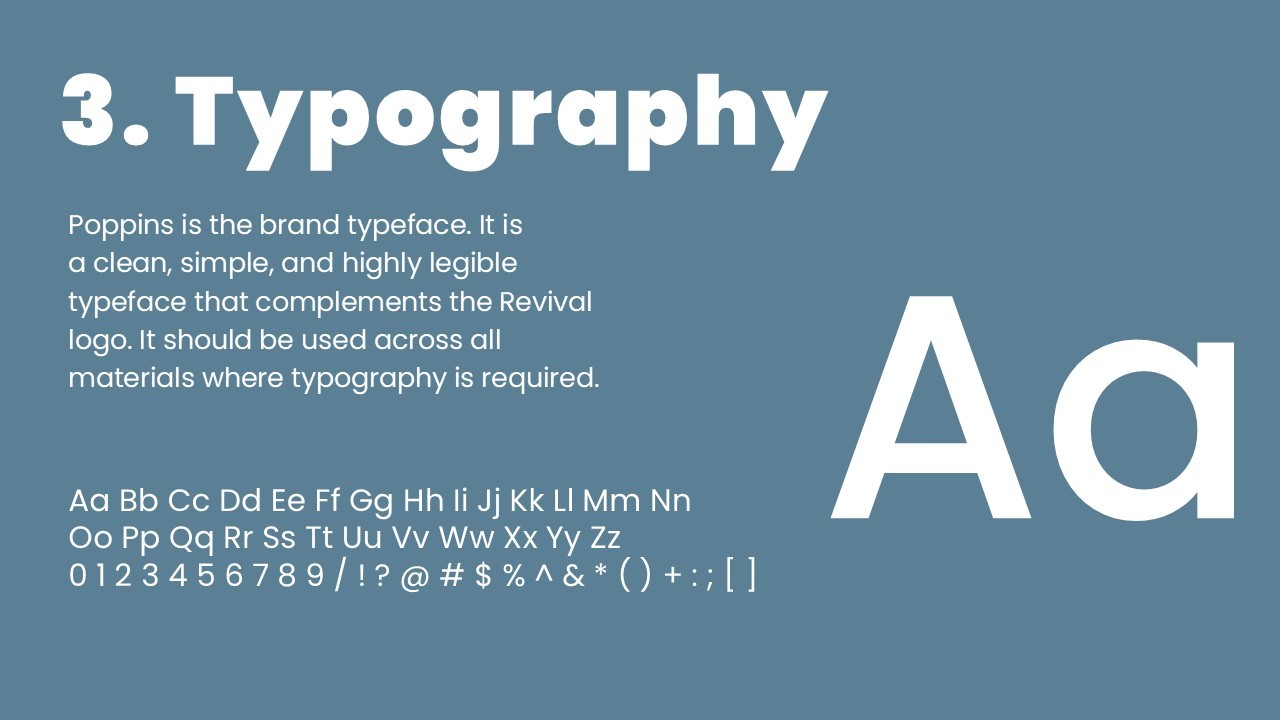
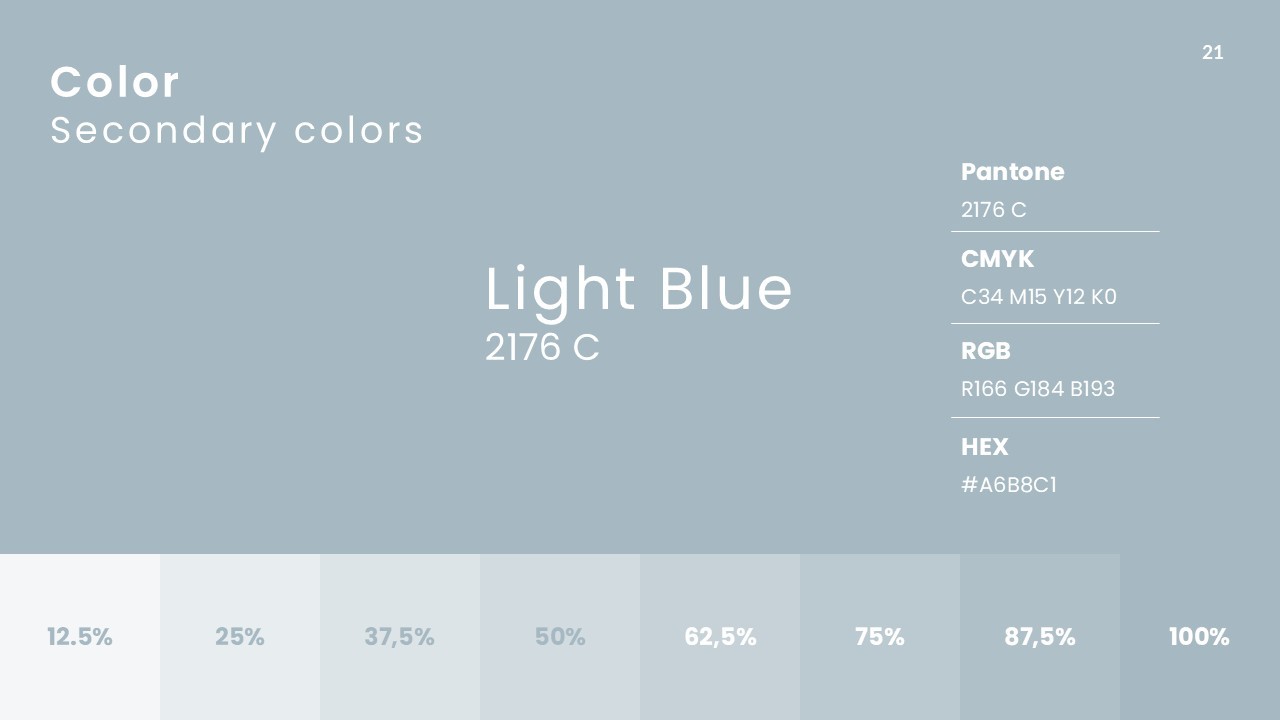
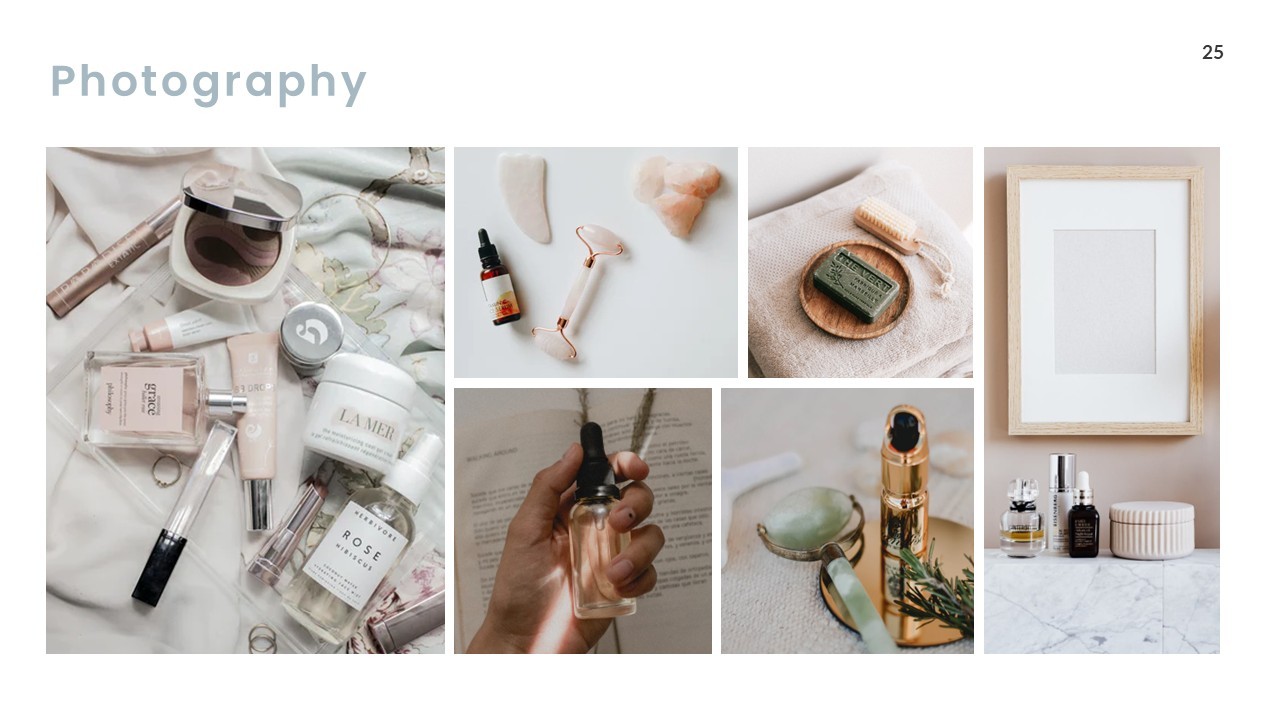
After defining the problem, the concept of the Revival mobile application was developed along with a complete visual identity system. I created the name, logo, and brand guidelines, which became the foundation for interface design and product communication.
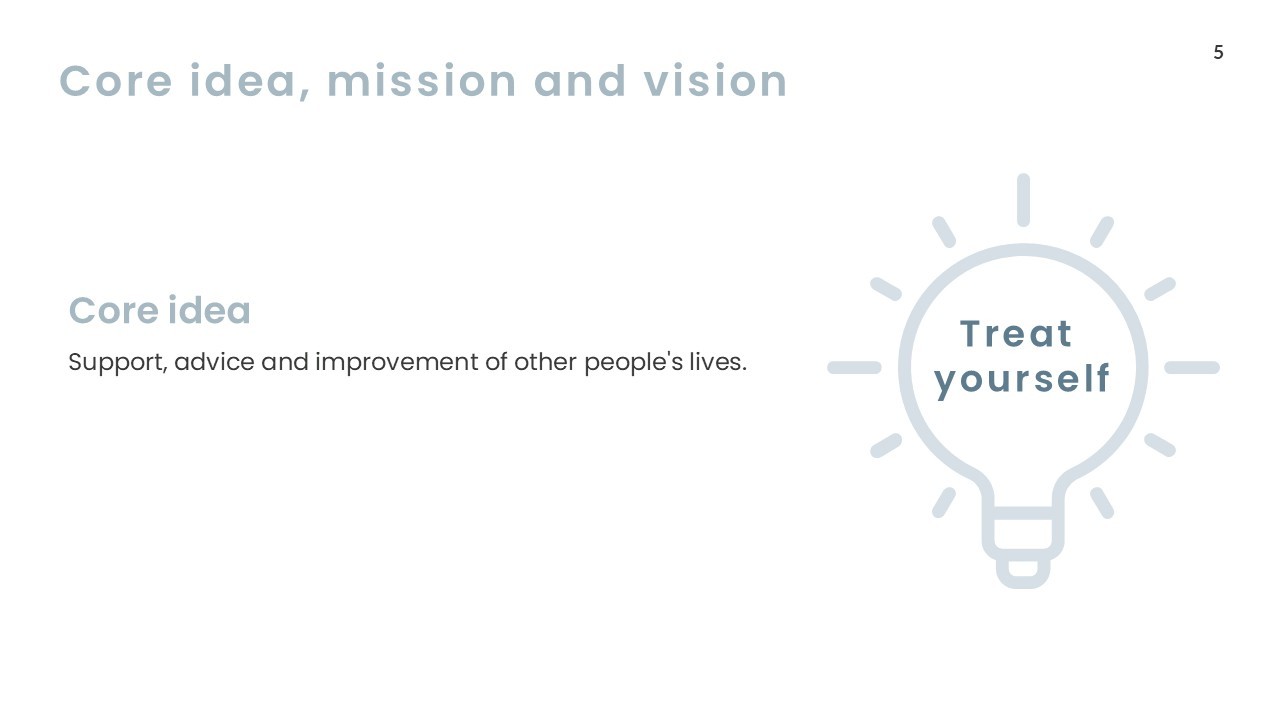
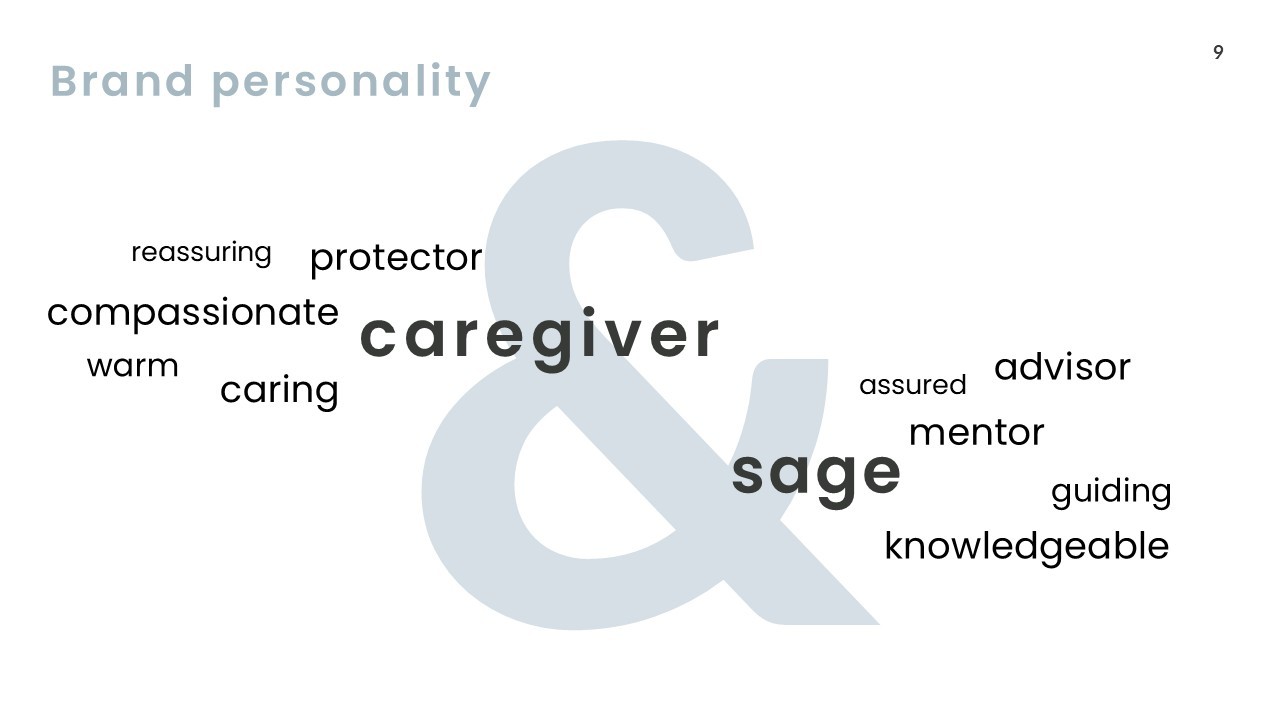
Revival’s branding was designed as an integral part of the user experience. The empathetic brand personality, calm colour palette, and supportive tone of voice were intended to reduce anxiety around “making mistakes” in skincare and to build a sense of safety and agency. The visual system serves not only an aesthetic function but also strengthens trust and facilitates confident decision-making.

User Journey Map
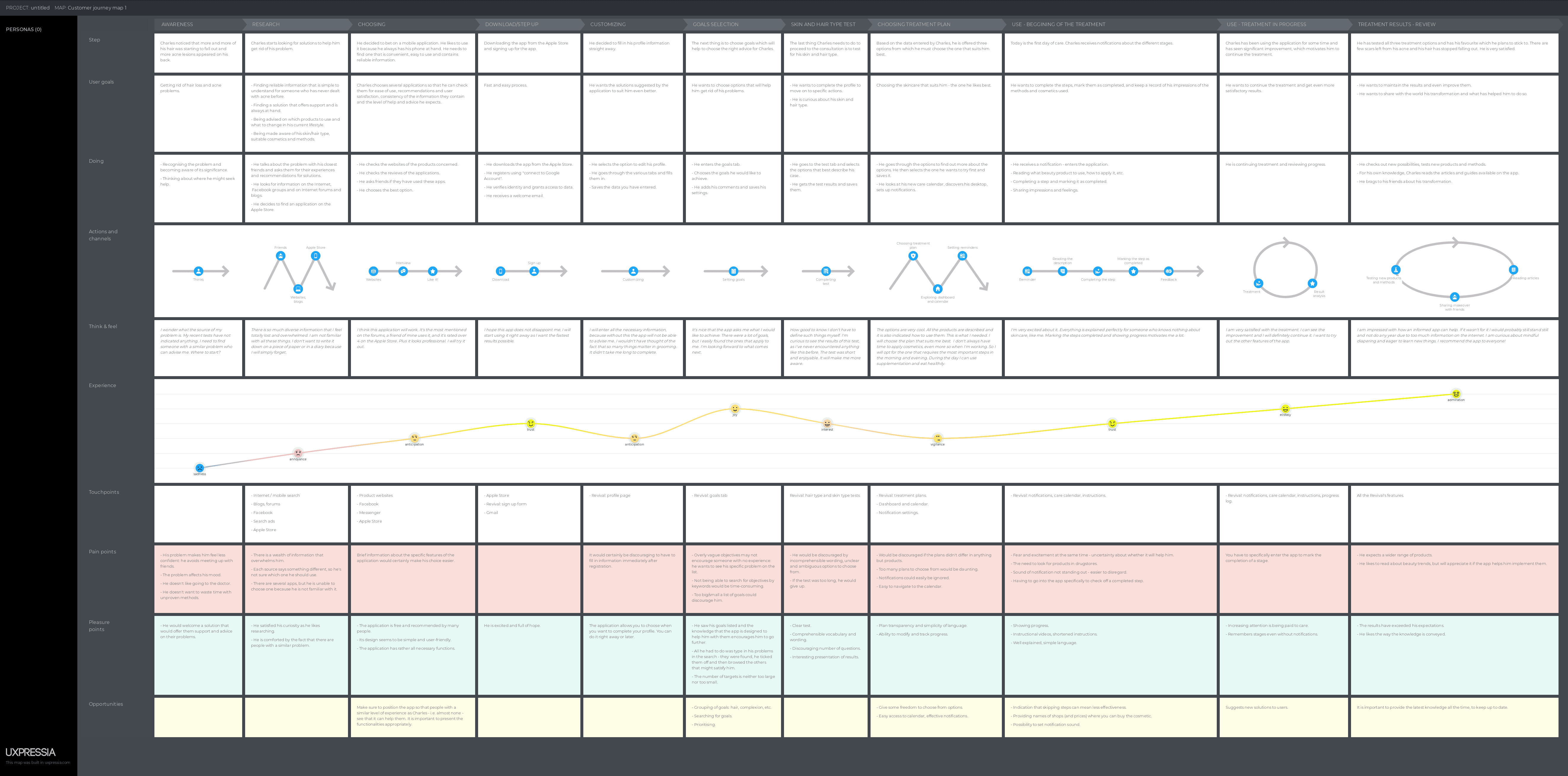
The user journey map helped identify moments of highest cognitive overload and points at which users lost motivation to continue the process. Analysing emotions, barriers, and expectations at each stage of the experience provided the foundation for simplifying onboarding, phasing questions, and redesigning the information architecture. The journey map enabled a shift from a broad problem statement to clearly defined, measurable areas requiring targeted design intervention.
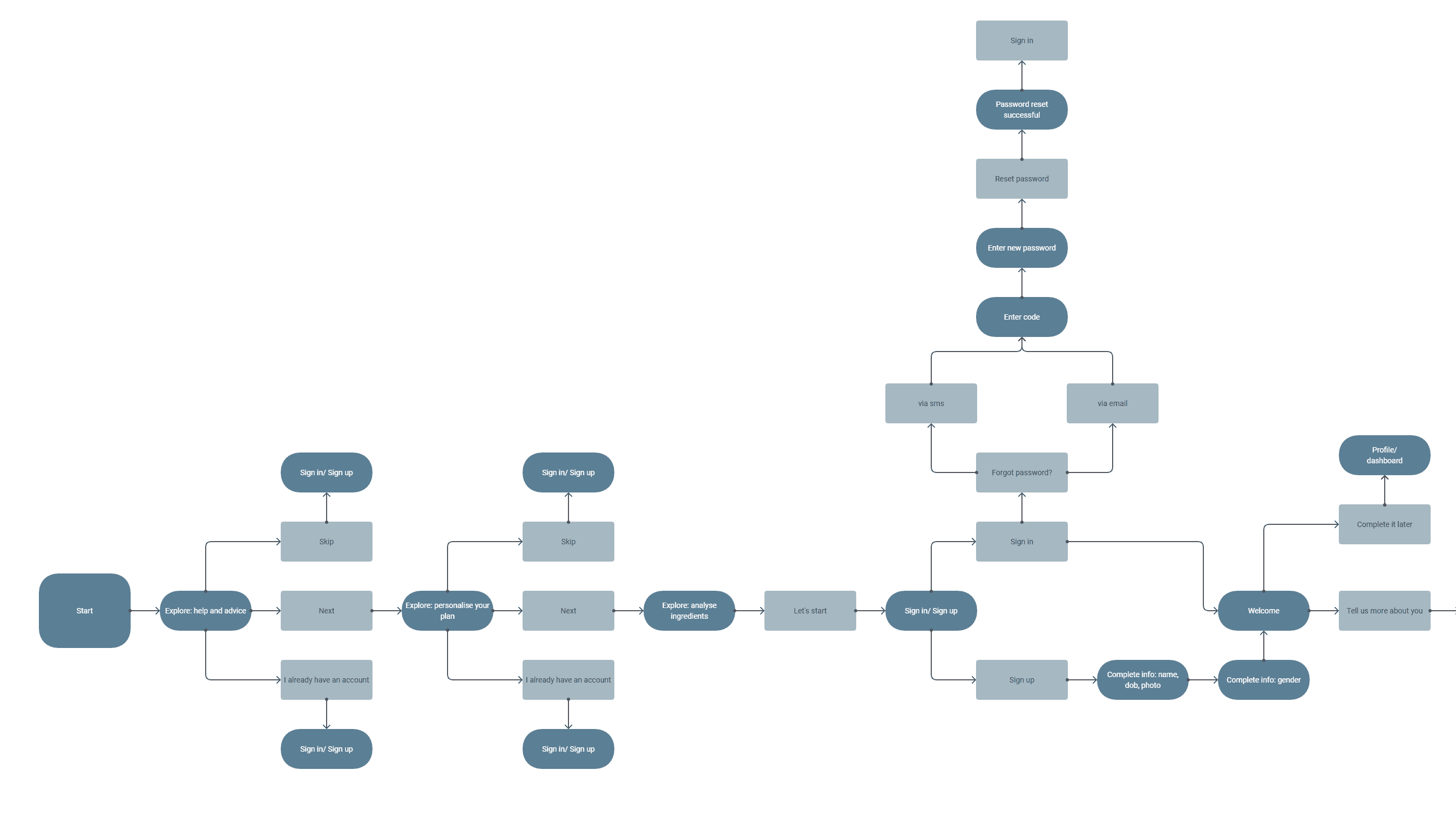
USER FLOW
The user flow helped structure the application’s logic and verify whether key user tasks could be completed intuitively and without unnecessary steps. The flow diagram made it possible to identify potential friction points, redundant paths, and areas requiring simplification. Based on this analysis, I refined the screen structure, sequence of actions, and relationships between functionalities.
Key Design Decisions
1. Simplifying entry instead of starting with a full diagnosis:
I deliberately moved away from a comprehensive skin and hair diagnosis at the beginning of the process. Testing showed that too many initial questions reduced motivation and increased the risk of onboarding drop-off. In response, I designed a shorter, phased flow that enables gradual personalisation without overwhelming the user.
2. Focusing on education and decision support, not just tracking:
The app was not designed as a simple tracker. Its role is to actively support users in making informed care decisions. A key element was introducing educational content and contextual explanations that clarify why a particular ingredient or routine is recommended or requires caution.
3. Centralising product information instead of scattered notes:
I designed one structured space for managing cosmetics, their ingredients, and expiration dates. Users identified informational chaos as a major barrier to consistent care. Centralizing data reduces cognitive load and enables faster, more confident decisions.
— Impact of design decisions:
• reduced onboarding fatigue,
• increased willingness to personalise,
• faster activation and app adoption,
• strengthened sense of control and user agency.
These decisions resulted in a solution that genuinely supports users in everyday choices rather than adding another layer of obligation.
Wireframing
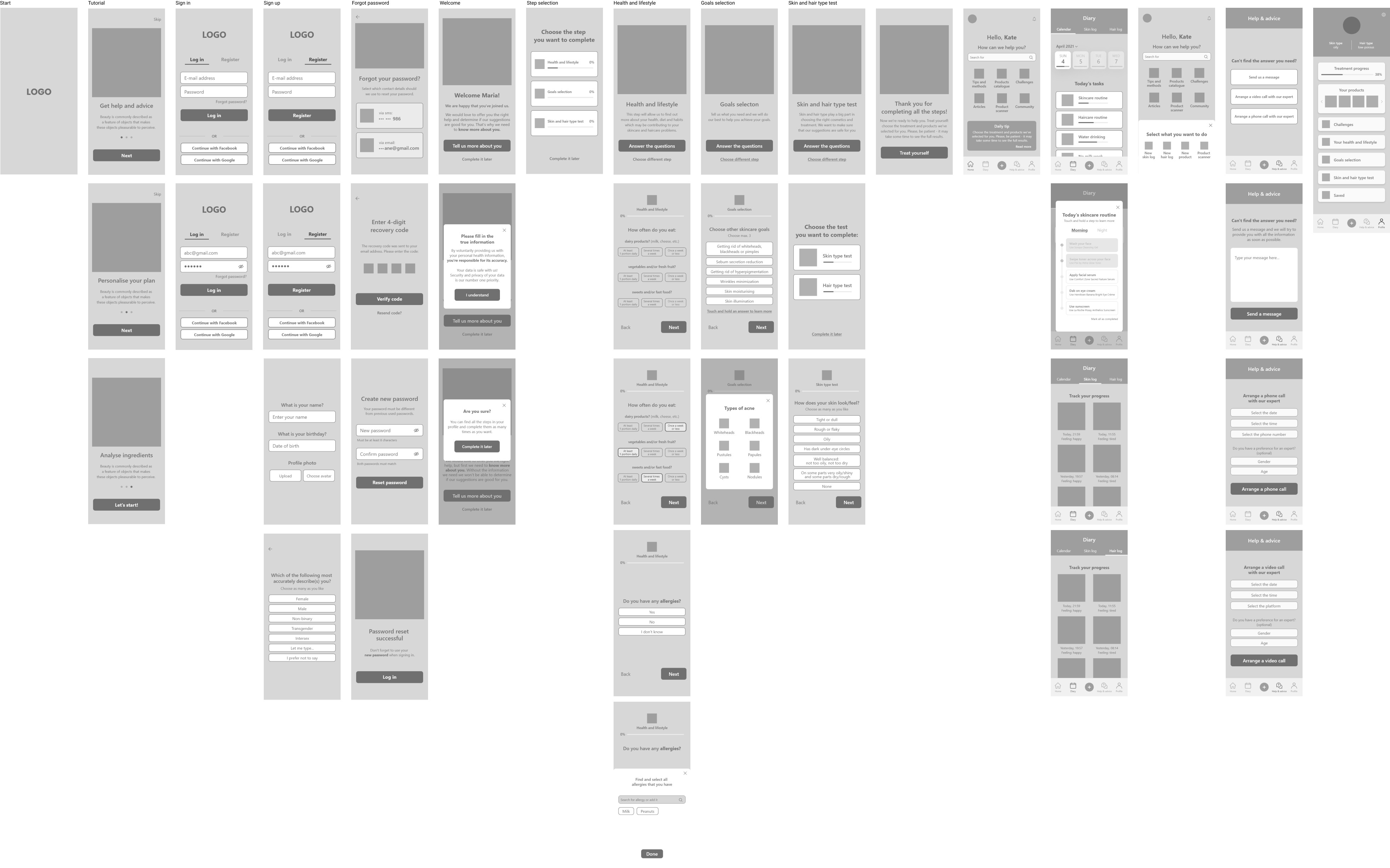
After defining the user flows, I developed a set of low-fidelity wireframes to structure the screen layout and validate navigation logic. The wireframes translated the information architecture into concrete screen solutions and allowed me to verify whether key user tasks could be completed in a simple, sequential manner.
PROTOTYPING
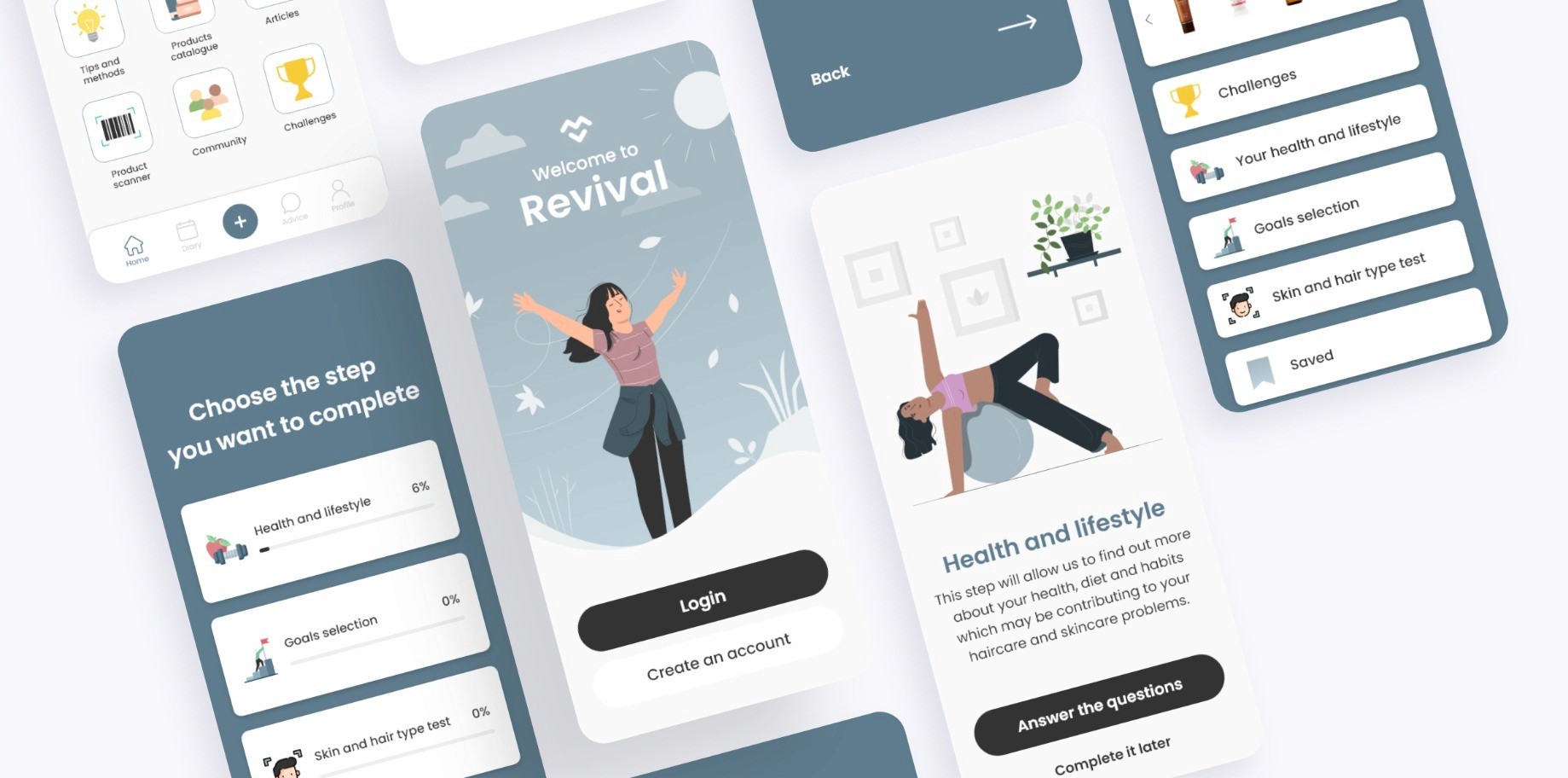
Based on the approved structure, I designed high-fidelity screens in both Polish and English, and then developed an interactive prototype. The goal was to recreate the full user experience, including tone of voice, microinteractions, and visual consistency derived from the established identity system. The prototype served as a bridge between strategic assumptions and the actual product experience, preparing the foundation for the usability testing phase.
User Testing
I conducted moderated exploratory tests using the interactive hi-fi prototype to verify flow intuitiveness, clarity of messaging, and user perception of personalisation mechanisms.
Scope of testing:
• 10 users,
• hi-fi prototype,
• moderated qualitative sessions.
Key observations:
• An excessive number of questions at the initial stage reduced motivation to continue onboarding.
• Ingredient indicators were not sufficiently clear and required stronger contextual explanation.
• Limited availability of certain products affected the perceived completeness of the solution.
The tests confirmed earlier research findings regarding cognitive overload and the need for phased information delivery.
— Iterations after testing:
• simplification and shortening of onboarding,
• introduction of phased personalisation,
• refinement of messaging and contextual explanations,
• simplification of ingredient analysis presentation.
These iterations increased flow clarity and strengthened the user’s sense of control over their care process.
BUSINESS POTENTIAL OF THE SOLUTION
Target segment:
• individuals beginning their conscious skincare journey,
• users dealing with skin or hair concerns.
User value:
• reduced stress and information overload,
• minimized risk of poor purchasing decisions,
• support in building consistent care habits.
Business model:
• freemium: basic ingredient analysis,
• premium version: routine management, progress tracking, advanced personalization.
Revival has the potential to evolve into an educational-product platform that integrates ingredient analysis, personalisation, and care management within one cohesive system.