LITTLE SMILES KIDDIEWEAR

LITTLE SMILES KIDDIEWEAR

LITTLE SMILES KIDDIEWEAR

LITTLE SMILES KIDDIEWEAR

LITTLE SMILES KIDDIEWEAR

Little Smiles Kiddiewear is a visual identity project for a children’s clothing brand, created to develop a cohesive and scalable system that balances soft, delicate aesthetics with clarity and a sense of trust essential to parents. The scope included the development of a visual strategy, logo system, and print and digital materials ready for implementation.

ROLES

Brand Designer • Visual Identity Designer

MAIN GOAL

The objective of the project was to create a distinctive visual identity system for a children’s clothing brand that builds an emotional connection with parents and caregivers, reinforces a sense of safety, and communicates values such as care, quality, and conscious choice. The system was designed as a flexible communication tool, enabling consistent application across print materials and digital channels, with long-term brand growth and scalability in mind.

METHODS

Brief and competitive analysis • Benchmarking • Trend observation • User context analysis • Emotion mapping • Brand positioning • Visual identity guidelines • Print design • Visual consistency validation

CHALLENGES

The project required differentiating the brand within a pastel-saturated segment while preserving its soft, childlike character. A key challenge was balancing two perspectives: the child’s need for lightness and joy, and the parent’s expectation of quality, safety, and clear communication. The system had to remain legible at very small scales, such as clothing labels, while maintaining a strong presence across digital touchpoints. It also needed to be resilient to short-lived trends to ensure long-term relevance and consistency.

TOOLS

Adobe Illustrator • Adobe Photoshop • Notion • Figma

Little Smiles Kiddiewear is a visual identity project for a children’s clothing brand, created to develop a cohesive and scalable system that balances soft, delicate aesthetics with clarity and a sense of trust essential to parents. The scope included the development of a visual strategy, logo system, and print and digital materials ready for implementation.

ROLES

Brand Designer • Visual Identity Designer

MAIN GOAL

The objective of the project was to create a distinctive visual identity system for a children’s clothing brand that builds an emotional connection with parents and caregivers, reinforces a sense of safety, and communicates values such as care, quality, and conscious choice. The system was designed as a flexible communication tool, enabling consistent application across print materials and digital channels, with long-term brand growth and scalability in mind.

METHODS

Brief and competitive analysis • Benchmarking • Trend observation • User context analysis • Emotion mapping • Brand positioning • Visual identity guidelines • Print design • Visual consistency validation

CHALLENGES

The project required differentiating the brand within a pastel-saturated segment while preserving its soft, childlike character. A key challenge was balancing two perspectives: the child’s need for lightness and joy, and the parent’s expectation of quality, safety, and clear communication. The system had to remain legible at very small scales, such as clothing labels, while maintaining a strong presence across digital touchpoints. It also needed to be resilient to short-lived trends to ensure long-term relevance and consistency.

TOOLS

Adobe Illustrator • Adobe Photoshop • Notion • Figma

Little Smiles Kiddiewear is a visual identity project for a children’s clothing brand, created to develop a cohesive and scalable system that balances soft, delicate aesthetics with clarity and a sense of trust essential to parents. The scope included the development of a visual strategy, logo system, and print and digital materials ready for implementation.

ROLES

Brand Designer • Visual Identity Designer

MAIN GOAL

The objective of the project was to create a distinctive visual identity system for a children’s clothing brand that builds an emotional connection with parents and caregivers, reinforces a sense of safety, and communicates values such as care, quality, and conscious choice. The system was designed as a flexible communication tool, enabling consistent application across print materials and digital channels, with long-term brand growth and scalability in mind.

METHODS

Brief and competitive analysis • Benchmarking • Trend observation • User context analysis • Emotion mapping • Brand positioning • Visual identity guidelines • Print design • Visual consistency validation

CHALLENGES

The project required differentiating the brand within a pastel-saturated segment while preserving its soft, childlike character. A key challenge was balancing two perspectives: the child’s need for lightness and joy, and the parent’s expectation of quality, safety, and clear communication. The system had to remain legible at very small scales, such as clothing labels, while maintaining a strong presence across digital touchpoints. It also needed to be resilient to short-lived trends to ensure long-term relevance and consistency.

TOOLS

Adobe Illustrator • Adobe Photoshop • Notion • Figma

Little Smiles Kiddiewear is a visual identity project for a children’s clothing brand, created to develop a cohesive and scalable system that balances soft, delicate aesthetics with clarity and a sense of trust essential to parents. The scope included the development of a visual strategy, logo system, and print and digital materials ready for implementation.

ROLES

Brand Designer • Visual Identity Designer

MAIN GOAL

The objective of the project was to create a distinctive visual identity system for a children’s clothing brand that builds an emotional connection with parents and caregivers, reinforces a sense of safety, and communicates values such as care, quality, and conscious choice. The system was designed as a flexible communication tool, enabling consistent application across print materials and digital channels, with long-term brand growth and scalability in mind.

METHODS

Brief and competitive analysis • Benchmarking • Trend observation • User context analysis • Emotion mapping • Brand positioning • Visual identity guidelines • Print design • Visual consistency validation

CHALLENGES

The project required differentiating the brand within a pastel-saturated segment while preserving its soft, childlike character. A key challenge was balancing two perspectives: the child’s need for lightness and joy, and the parent’s expectation of quality, safety, and clear communication. The system had to remain legible at very small scales, such as clothing labels, while maintaining a strong presence across digital touchpoints. It also needed to be resilient to short-lived trends to ensure long-term relevance and consistency.

TOOLS

Adobe Illustrator • Adobe Photoshop • Notion • Figma

Little Smiles Kiddiewear is a visual identity project for a children’s clothing brand, created to develop a cohesive and scalable system that balances soft, delicate aesthetics with clarity and a sense of trust essential to parents. The scope included the development of a visual strategy, logo system, and print and digital materials ready for implementation.

ROLES

Brand Designer • Visual Identity Designer

MAIN GOAL

The objective of the project was to create a distinctive visual identity system for a children’s clothing brand that builds an emotional connection with parents and caregivers, reinforces a sense of safety, and communicates values such as care, quality, and conscious choice. The system was designed as a flexible communication tool, enabling consistent application across print materials and digital channels, with long-term brand growth and scalability in mind.

METHODS

Brief and competitive analysis • Benchmarking • Trend observation • User context analysis • Emotion mapping • Brand positioning • Visual identity guidelines • Print design • Visual consistency validation

CHALLENGES

The project required differentiating the brand within a pastel-saturated segment while preserving its soft, childlike character. A key challenge was balancing two perspectives: the child’s need for lightness and joy, and the parent’s expectation of quality, safety, and clear communication. The system had to remain legible at very small scales, such as clothing labels, while maintaining a strong presence across digital touchpoints. It also needed to be resilient to short-lived trends to ensure long-term relevance and consistency.

TOOLS

Adobe Illustrator • Adobe Photoshop • Notion • Figma

RESEARCH

RESEARCH

RESEARCH

RESEARCH

RESEARCH

BRIEF ANALYSIS

At the initial stage, I analysed the market context, product character, and the brand’s business assumptions to define the strategic framework for the visual identity system. The objective was to translate aesthetic expectations into concrete design and communication decisions and to define the brand’s role within a competitive segment.

— Product and Market Context

Little Smiles Kiddiewear is a children’s apparel brand operating within a soft, pastel aesthetic. The childrenswear segment is visually saturated and dominated by similar colour palettes and “soft-style” visual cues.

Strategic insights:
• a pastel palette alone does not create differentiation,
• competitive advantage can stem from system consistency and communication discipline,
• the brand must balance joy and lightness with clear signals of quality and safety.

The brand audience operates in two roles:
• the child as the product user,
• the parent as the purchasing decision-maker.

The identity system needed to combine warmth and friendliness with clarity and professionalism.


— Sales Model and Communication Channels

The brand operates primarily in a digital environment, including social media and e-commerce. This means the visual identity must:
• function effectively at very small scales, such as avatars and thumbnails,
• maintain consistency across social media feeds and communication,
• support purchasing decisions through trust-building aesthetics,
• harmonise with bright, pastel product photography.

The system needed to be not only aesthetic but also functional and scalable for marketing.

— Communication Direction

The brand tone was defined as:
• warm and delicate,
• aesthetic but not overly infantile,
• emotional yet structured.

The challenge was to preserve childlike lightness without compromising credibility in the eyes of parents. This translated into decisions regarding:
• a limited and carefully curated colour palette,
• clear and balanced typography,
• a structured approach to illustration and pattern.

— Project Scope

The project included the development of a complete, scalable visual identity system:
• primary and alternative logo versions,
• colour palette,
• typography and composition principles,
• graphic elements and patterns,
• print materials, including labels and promotional assets,
• digital assets for online and social media communication.

The objective was to create a solid foundation enabling further brand development without loss of consistency.

— Key Design Assumptions:
• the logo must remain legible at very small scales (20–24 px), as well as on sewn labels and avatars,
• the colour palette must not compete with product photography but support it,
• the pattern should function both as a background and as a subtle accent,
• typography must combine a friendly character with high legibility,
• the system should allow flexible expansion of collections and seasonal communication,
• the identity must be easy to implement across digital and print channels without loss of visual quality.

Na etapie wstępnym przeanalizowałam kontekst rynkowy, charakter produktu oraz założenia biznesowe marki, aby zdefiniować strategiczne ramy systemu identyfikacji wizualnej. Celem było przełożenie oczekiwań estetycznych na konkretne decyzje projektowe i komunikacyjne oraz określenie roli marki w konkurencyjnym segmencie.

Produkt i kontekst rynkowy

Little Smiles Kiddiewear to marka odzieży dziecięcej operująca w delikatnej, pastelowej estetyce. Segment kidswear jest silnie nasycony wizualnie i zdominowany przez podobne kolory oraz stylistykę typu soft.

Wnioski strategiczne:
• pastelowa paleta sama w sobie nie stanowi wyróżnika,
• przewagą konkurencyjną może być spójność systemu i konsekwencja komunikacji,
• marka musi równoważyć emocję radości i lekkości z komunikatem jakości oraz bezpieczeństwa.

Odbiorcy marki funkcjonują w dwóch rolach:
• dziecko jako użytkownik produktu,
• rodzic jako decydent zakupowy.

System identyfikacji musiał łączyć ciepło i przyjazność z czytelnością oraz profesjonalizmem.


— Model sprzedaży i kanały komunikacji

Marka działa głównie w środowisku digital, obejmującym social media oraz sprzedaż online. Oznacza to, że identyfikacja wizualna musi:
• działać w bardzo małej skali, np. w avatarach i miniaturach,
• zachowywać spójność w feedzie i komunikacji social media,
• wspierać decyzję zakupową poprzez estetykę budującą zaufanie,
• harmonijnie współgrać ze zdjęciami jasnych, pastelowych produktów.

System musiał być nie tylko estetyczny, ale również funkcjonalny i skalowalny marketingowo.

— Kierunek komunikacyjny

Ton marki został określony jako:
• ciepły i delikatny,
• estetyczny, lecz nienadmiernie infantylny,
• emocjonalny, ale uporządkowany.

Wyzwaniem było zachowanie dziecięcej lekkości bez utraty wiarygodności w oczach rodziców. Przełożyło się to na decyzje dotyczące:
• ograniczonej i przemyślanej palety kolorystycznej,
• czytelnej i zbalansowanej typografii,
• systemowego podejścia do ilustracji i patternu.

— Zakres projektowy

Projekt obejmował stworzenie kompletnego, skalowalnego systemu identyfikacji wizualnej:
• system logo w wersjach podstawowych i alternatywnych,
• paletę kolorystyczną,
• typografię i zasady kompozycji,
• elementy graficzne i pattern,
• materiały drukowane, w tym metki i elementy promocyjne,
• materiały digital do komunikacji online i social media.

Celem było stworzenie solidnego fundamentu umożliwiającego dalszy rozwój marki bez utraty spójności.


— Kluczowe założenia projektowe:
• logo musi zachować czytelność w bardzo małej skali, w zakresie 20 do 24 px oraz na wszywkach i avatarach,
• kolorystyka nie może konkurować ze zdjęciami produktów, lecz powinna je wspierać,
• pattern powinien działać zarówno jako tło, jak i subtelny akcent,
• typografia musi łączyć przyjazny charakter z wysoką czytelnością,
• system powinien umożliwiać elastyczne rozszerzanie kolekcji i komunikacji sezonowej,
• identyfikacja musi być łatwa do wdrożenia w kanałach digital i drukowanych bez utraty jakości wizualnej.

COMPETITIVE ANALYSIS

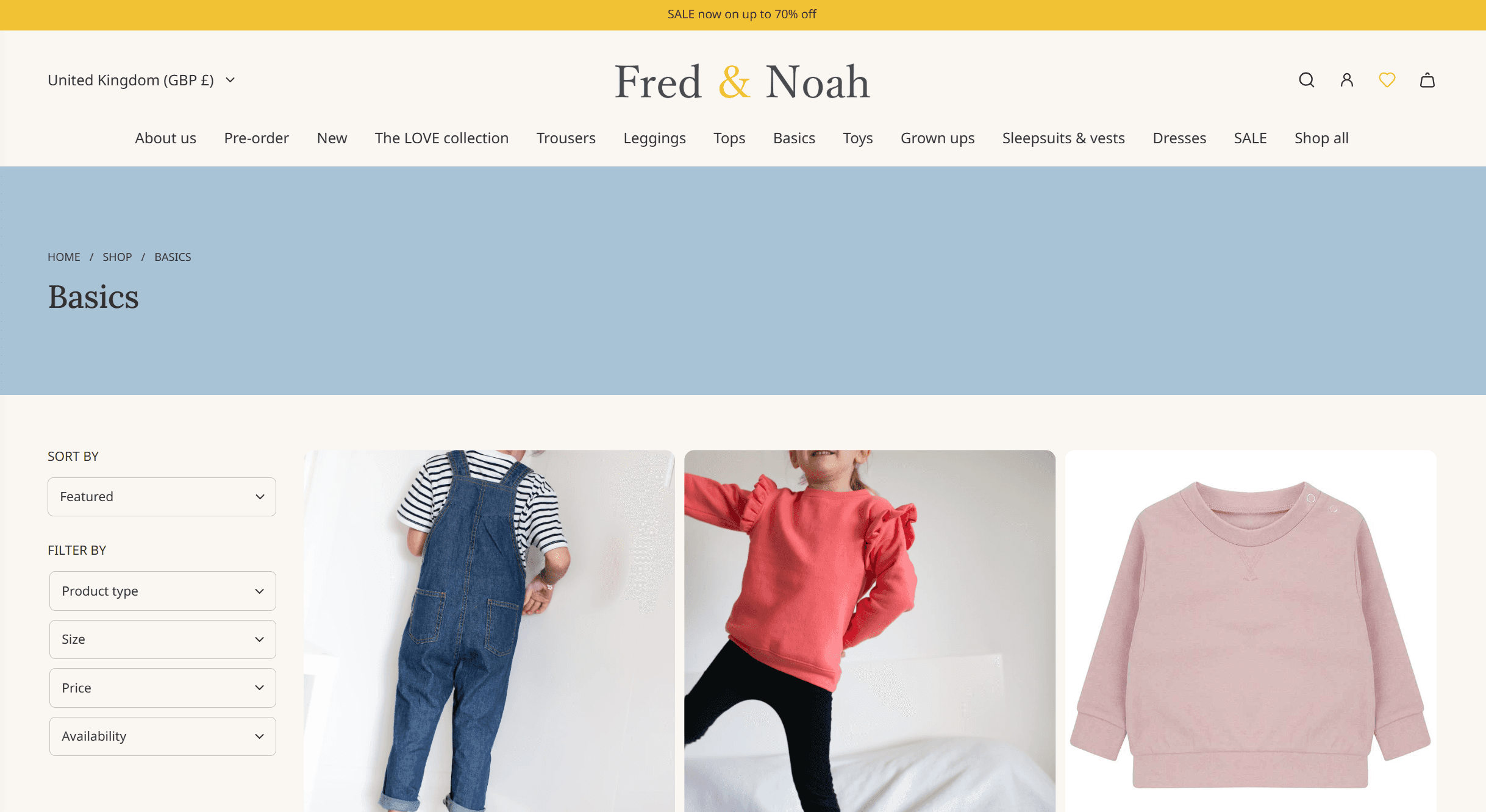
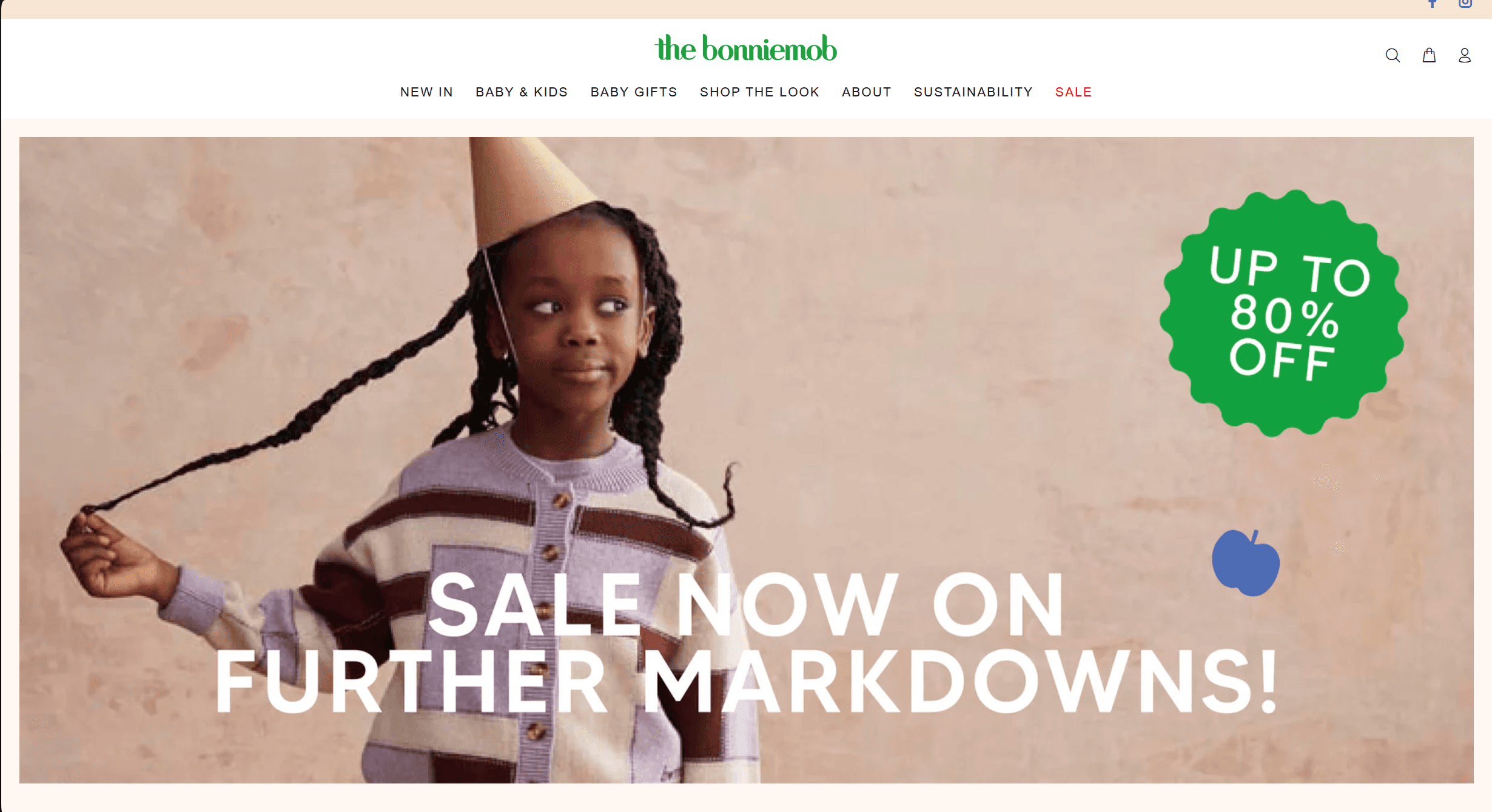
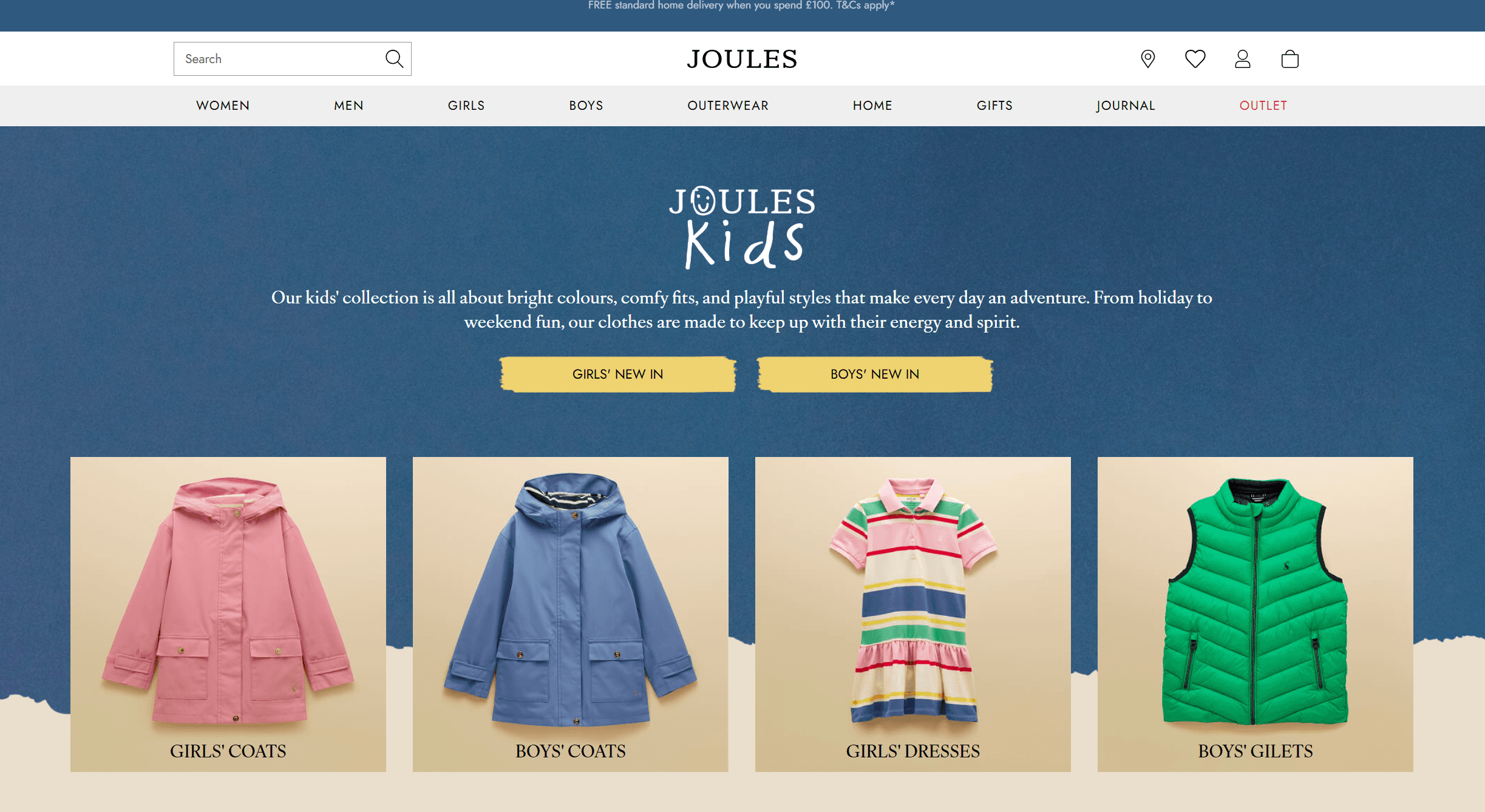
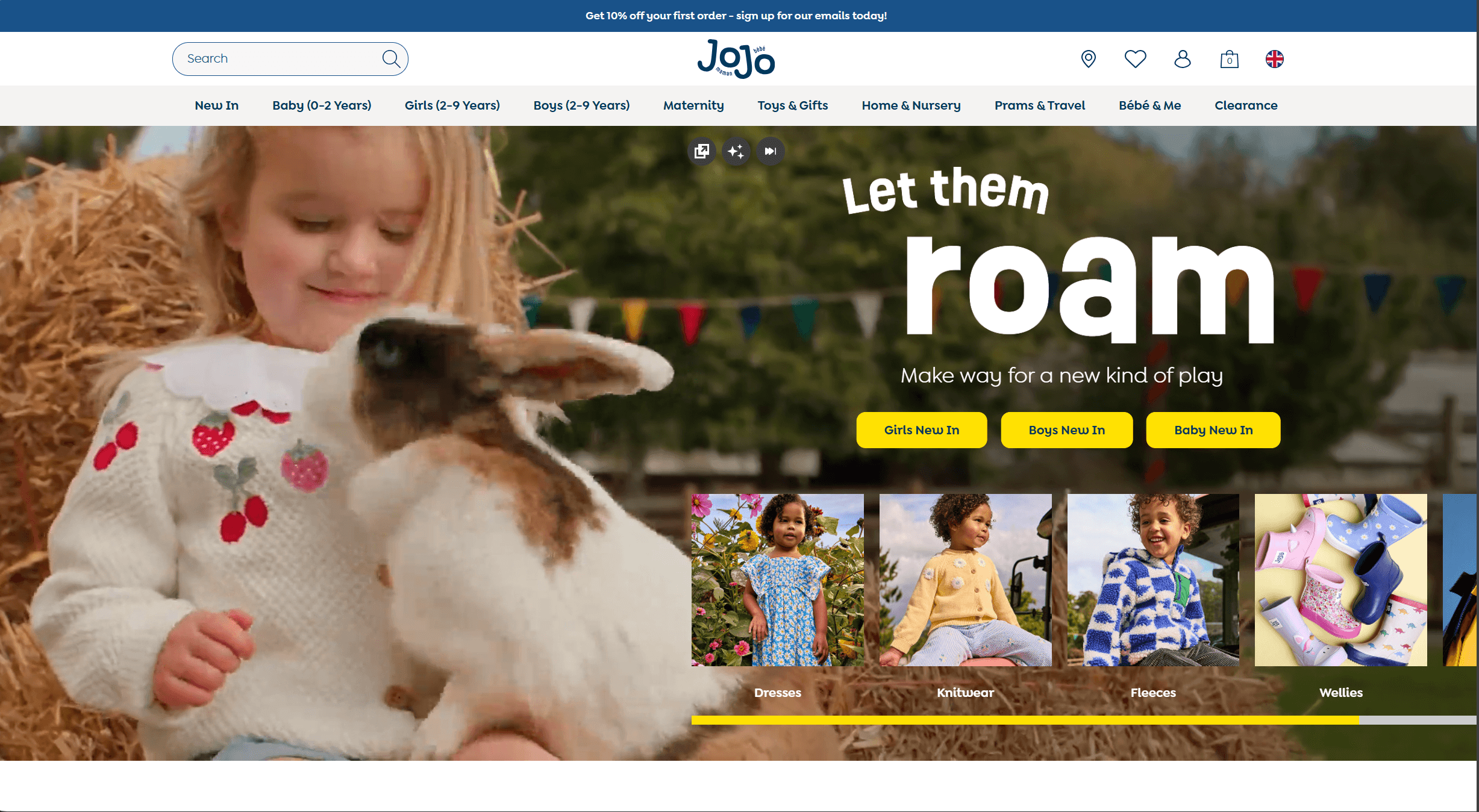
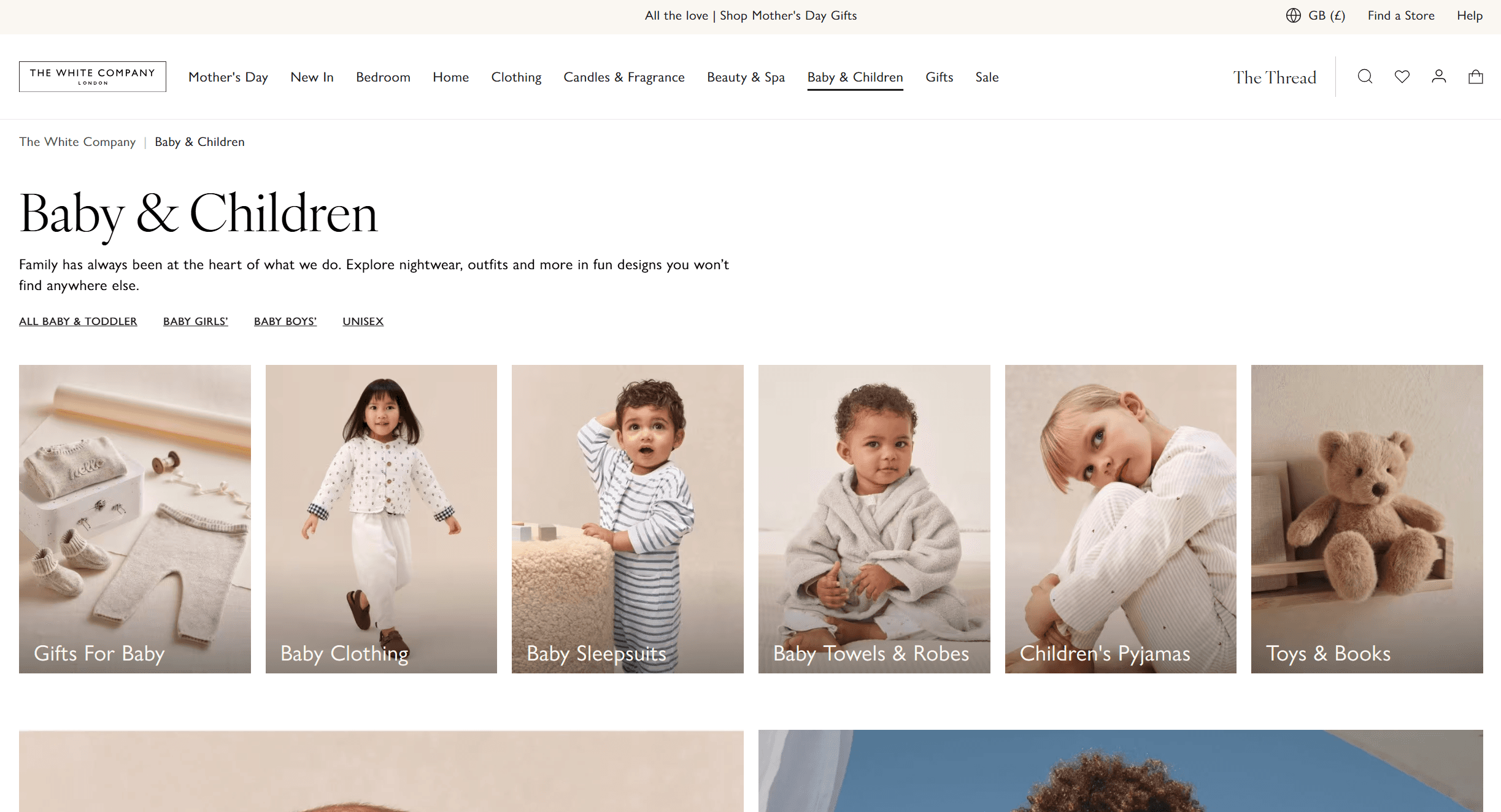
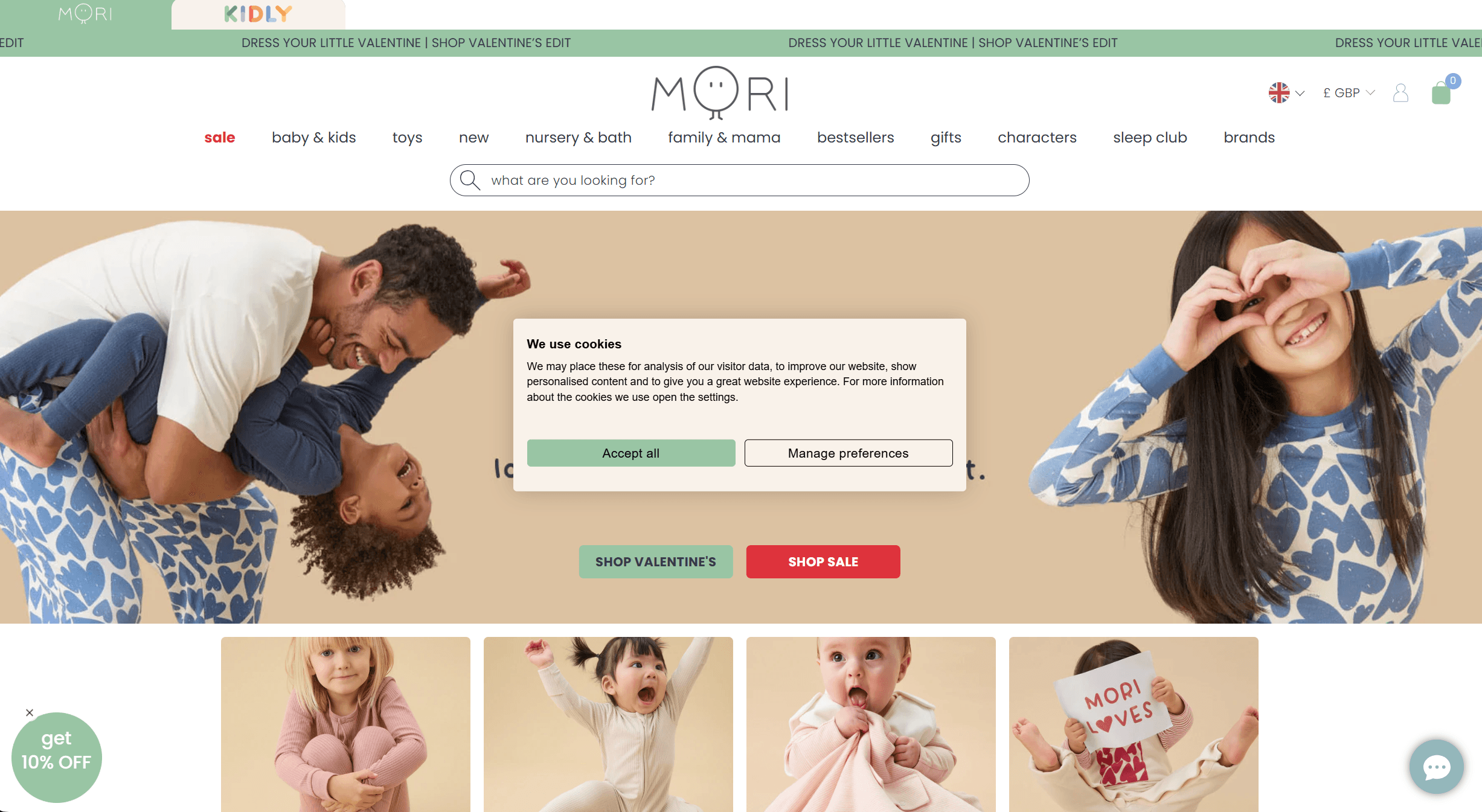
To define the positioning of Little Smiles Kiddiewear within the UK market, I analysed children’s apparel brands within two categories: aspirational and premium, and mass-market and digital-first. The goal was to understand dominant visual codes, trust-building mechanisms, and the level of system consistency.


— Aspirational and Premium Segment

Brands with refined, aesthetic communication and a strong focus on quality, materials, and minimalist visual identity.

Example UK brands: The Little White Company, Mori, Turtledove London, Fred & Noah, The Bonnie Mob, Toby Tiger.

Shared characteristics:
• use of neutral base palettes such as beige, off-white, and warm greys,
• restrained, editorial-style communication,
• typography based on sans-serif or subtle serif typefaces,
• limited illustration in favour of product texture and detail,
• strong emphasis on quality, organic cotton, and sustainability.

Conclusion: in the premium segment, differentiation does not stem from colour but from system discipline and minimalism. Visual identity is structured, mature, and oriented toward long-term trust-building.
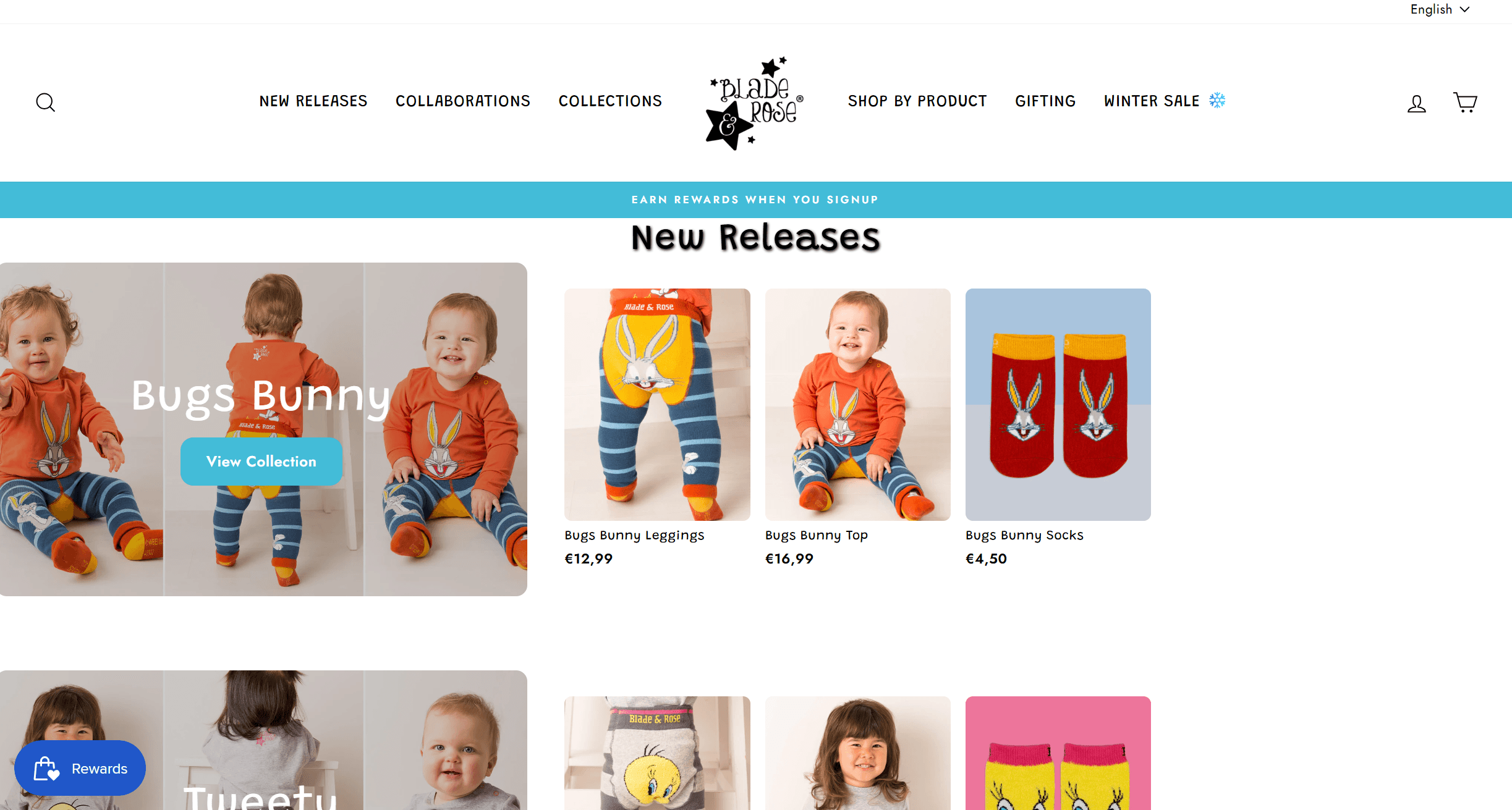
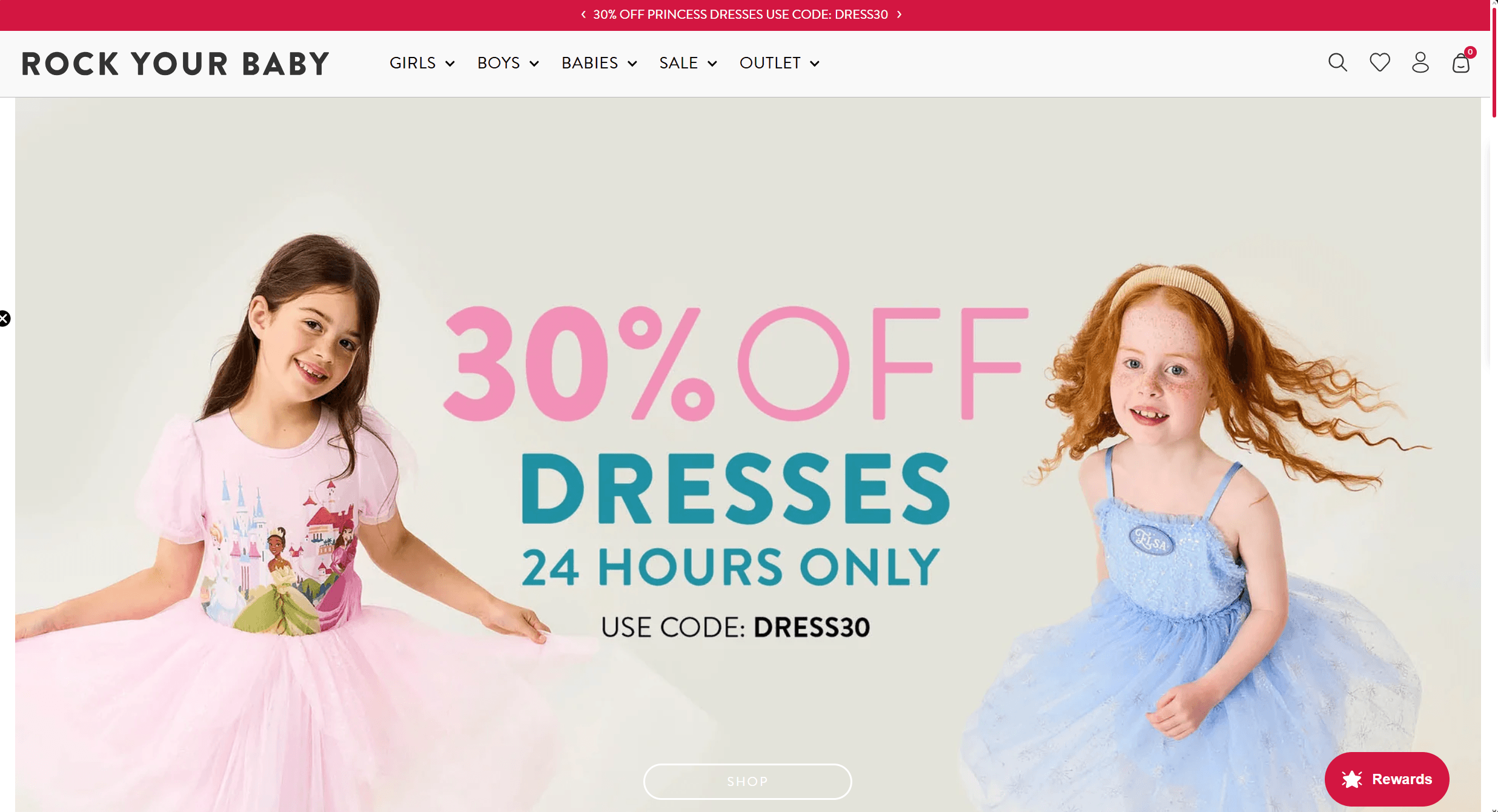
— Mass-Market and Digital-First Segment

Brands highly active on social media, often built around patterns, illustration, and overt playfulness.

Example UK brands: Blade & Rose, Rock Your Baby, Joules Kids, Next Baby, JoJo Maman Bébé, Mini Boden.

Shared characteristics:
• wide and often intense colour palettes,
• pattern as a primary recognition element,
• more playful, less neutral typography,
• strong focus on seasonal collections,
• communication driven by emotion and styling.

Conclusion: in this segment, differentiation is built through energy and variety, often at the expense of long-term system consistency.
— Strategic Conclusion for Little Smiles Kiddiewear

The analysis revealed a space between premium minimalism and mass-market visual intensity. The strategy aimed to create a system that preserves delicacy and childlike character while building coherence and credibility closer to aspirational brands.

VISUAL BENCHMARKING

Following competitor analysis, I conducted a benchmarking review of key visual identity elements, comparing solutions used in premium and mass-market segments. The objective was to identify which visual decisions build trust and which merely increase communication intensity.


— Colour
• premium brands rely on neutral bases with subtle accents,
• mass-market brands use broad, high-intensity palettes, often with strong contrast.

Design direction: Little Smiles Kiddiewear should use a limited pastel palette grounded in a neutral base. This preserves softness and system clarity while avoiding visual overload.


— Typography
• minimalist sans-serif or subtle serif fonts dominate in the premium segment,
• playful typefaces with reduced legibility are more common in the mass market.

Design direction: The typography system should combine a soft, friendly character with high functional clarity. Typography plays a dual role: shaping emotional perception and ensuring informational precision.


— Illustration and Pattern
• premium brands use illustration sparingly and in a controlled manner,
• mass-market brands often treat illustration as a dominant visual layer.

Design direction: In Little Smiles Kiddiewear, pattern functions as a supporting element, enhancing recognition without competing with the product or key information.


— Trust-Building

Premium brands build trust through:
• material quality communication,
• informational clarity,
• visual order and simplicity.

Mass-market brands rely more heavily on emotional intensity and stylization.

Design direction: The identity of Little Smiles Kiddiewear should reinforce perceptions of quality and safety, even within a light pastel aesthetic. The system must support parental purchasing decisions without losing childlike lightness.


— Strategic Insights

Benchmarking confirmed that pastel aesthetics are standard in the kidswear segment. True differentiation results from:
• system consistency,
• deliberate typographic decisions,
• disciplined pattern usage,
• balance between emotional appeal and professional perception.

These observations formed the foundation for further design decisions within the Little Smiles Kiddiewear identity system.

TREND OBSERVATION

Trend analysis was conducted within the UK kidswear segment, considering aesthetic directions present in both premium and digital-first brands. The objective was not to follow trends but to identify those that could be consciously filtered through the Little Smiles Kiddiewear identity.

Three dominant micro-trends were identified.

— Scandi Soft Minimal

Characteristics:
• neutral base palette: off-white, beige, warm greys,
• restrained and structured composition,
• generous use of space and light,
• emphasis on natural materials and textures.

UK references, premium segment: The Little White Company, Mori, Turtledove London.

Relevance to the project: This direction demonstrates how minimalism effectively builds trust and perceived quality. Within Little Smiles Kiddiewear, it translated into a calm colour base, clear composition, and reduction of excessive visual elements.

— Playful Hand-Drawn

Characteristics:
• irregular, soft linework,
• hand-drawn illustrations,
• motifs such as arches, rainbows, stars, and smiles,
• freer composition.

References: Blade & Rose, Mini Boden, JoJo Maman Bébé.

Relevance to the project: This trend introduces emotion and childlike lightness. In Little Smiles Kiddiewear, it was applied in a controlled manner as a subtle supporting element, for example within the logo mark or pattern, rather than as a dominant visual layer.

— Retro Pastel

Characteristics:
• mint, butter yellow, dusty pink, muted blue,
• toned, nostalgic hues,
• warm and soft aesthetic.

References: The Bonnie Mob, Fred & Noah, Toby Tiger.

Relevance to the project: Pastel palettes are common in kidswear; therefore, selectivity and disciplined use become critical. In Little Smiles Kiddiewear, colours were limited and grounded in a neutral base to prevent visual overload and maintain system consistency.


— Trend Analysis Insights

The UK kidswear segment operates within a similar visual language based on pastels, soft forms, and illustration. Differentiation for Little Smiles Kiddiewear does not come from rejecting trends, but from:
• consistent and restrained colour use,
• controlled illustration presence,
• combining emotional softness with structured system clarity.

The trend analysis defined aesthetic boundaries that served as a foundation for moodboards and conceptual directions.

Analiza trendów została przeprowadzona w kontekście segmentu kidswear w Wielkiej Brytanii, z uwzględnieniem kierunków estetycznych obecnych w komunikacji marek premium oraz digital first. Celem nie było podążanie za trendami, lecz zidentyfikowanie tych, które mogą zostać świadomie przefiltrowane przez tożsamość Little Smiles Kiddiewear.

W efekcie wyodrębniłam trzy dominujące mikrotrendy.

— Scandi Soft Minimal

Charakterystyka:
• neutralna baza kolorystyczna, off white, beż, ciepłe szarości,
• oszczędna i uporządkowana kompozycja,
• duża ilość przestrzeni i światła,
• nacisk na naturalne materiały oraz faktury.

Referencje UK, segment premium: The Little White Company, Mori, Turtledove London

Znaczenie dla projektu: Kierunek ten pokazuje, że minimalizm skutecznie buduje zaufanie i poczucie jakości. W Little Smiles Kiddiewear został przełożony na spokojną bazę kolorystyczną, klarowną kompozycję oraz ograniczenie nadmiaru elementów wizualnych.

— Playful Hand Drawn

Charakterystyka:
• nieregularna, miękka kreska,
• ilustracje o ręcznym charakterze,
• motywy łuków, tęczy, gwiazdek i uśmiechów,
• swobodniejsza kompozycja.

Referencje: Blade & Rose, Mini Boden, JoJo Maman Bébé

Znaczenie dla projektu: Trend wnosi emocję i lekkość dzieciństwa. W systemie Little Smiles Kiddiewear został zastosowany w sposób kontrolowany, jako subtelny element wspierający, na przykład w znaku lub patternie, a nie jako dominująca warstwa wizualna.

— Retro Pastel

Charakterystyka:
• mięta, butter yellow, pudrowy róż, przygaszony błękit,
• stonowane, nostalgiczne odcienie,
• ciepła i miękka estetyka.

Referencje: The Bonnie Mob, Fred & Noah, Toby Tiger

Znaczenie dla projektu: Pastelowa paleta jest powszechna w segmencie kidswear, dlatego kluczowa staje się selektywność i konsekwencja jej użycia. W Little Smiles Kiddiewear kolory zostały ograniczone i osadzone na neutralnej bazie, aby uniknąć wizualnego przeładowania i utrzymać systemową spójność.


— Wnioski z analizy trendów

Segment kidswear w Wielkiej Brytanii operuje zbliżonym językiem wizualnym opartym na pastelach, miękkich formach i ilustracyjności. Wyróżnienie Little Smiles Kiddiewear nie polega na odejściu od trendów, lecz na:
• konsekwentnym i ograniczonym użyciu koloru,
• kontrolowanej obecności ilustracji,
• połączeniu emocjonalności z uporządkowaną strukturą systemu.

Analiza trendów wyznaczyła ramy estetyczne, które stały się punktem wyjścia do opracowania moodboardów oraz kierunków koncepcyjnych.

EMPATHISE

EMPATHISE

EMPATHISE

EMPATHISE

EMPATHISE

The kidswear segment operates on a dual audience dynamic: the child is the end user, while the adult makes the purchasing decision. Understanding this relationship was a critical starting point in developing the Little Smiles Kiddiewear system.

USER CONTEXT ANALYSIS

— Primary decision-making group: Parent

Profile:
• 28–38 years old,
• active online, particularly in social media and e-commerce,
• aesthetically sensitive,
• values quality and safety,
• avoids overly loud or visually aggressive styles.

Purchase motivations:
• comfort and material quality,
• child safety,
• aesthetics aligned with personal taste,
• a brand that presents well in social media communication.

The parent does not purchase clothing alone. They purchase reassurance, quality, and an aesthetic experience.

— End user: Child

Functional needs: comfort, softness of materials, and absence of discomfort in everyday use.

Visual perception: children respond to colour and form; soft, friendly shapes foster a sense of safety and emotional warmth.

Although the child does not make the purchase decision, their comfort and visual response influence the parent’s perception of the brand.

— Occasional user: Gift buyer

• expects clear and readable information, such as size and age,
• pays attention to packaging aesthetics,
• looks for a visually safe and reliable choice.

For this group, system clarity and a premium-oriented aesthetic are particularly important.

— Główna grupa decyzyjna: rodzic

Profil:
• 28 do 38 lat,
• aktywny online, szczególnie w social media i e-commerce,
• wrażliwy estetycznie,
• ceni jakość i bezpieczeństwo,
• unika nadmiernie krzykliwej stylistyki.

Motywacje zakupowe:
• komfort i jakość materiałów,
• bezpieczeństwo dziecka,
• estetyka spójna z własnym gustem,
• marka, którą dobrze prezentuje się w komunikacji social media.

Rodzic nie kupuje wyłącznie ubrania. Kupuje poczucie spokoju, jakości i estetyczne doświadczenie.

— Użytkownik końcowy: dziecko

Potrzeby funkcjonalne: wygoda, miękkość materiałów oraz brak dyskomfortu w codziennym użytkowaniu.
Odbiór wizualny: dziecko reaguje na kolor i formę, a miękkie, przyjazne kształty budują poczucie bezpieczeństwa i sympatii.

Choć dziecko nie podejmuje decyzji zakupowej, jego komfort i reakcja wizualna wpływają na percepcję marki przez rodzica.

— Użytkownik okazjonalny: kupujący na prezent

• oczekuje jasnych i czytelnych informacji, takich jak rozmiar i wiek,
• zwraca uwagę na estetykę opakowania,
• poszukuje wizualnie bezpiecznego wyboru.

Dla tej grupy kluczowe znaczenie mają czytelność systemu oraz estetyka o charakterze premium.

EMOTION MAPPING

To define the brand’s communication direction, I identified key emotions accompanying the purchasing process:
• joy and the lightness of childhood,
• safety and trust,
• tenderness and closeness,
• aesthetic satisfaction for the parent.

The system was designed to build emotional resonance and a sense of quality simultaneously, without introducing visual noise.

DESIGN INSIGHTS

User analysis directly informed decisions within the identity system:
• a warm, limited pastel palette grounded in a neutral base creates softness without excess,
• friendly yet highly legible typography balances emotional warmth with informational clarity,
• illustration and pattern function as accents, supporting the emotional layer without overpowering the product,
• digital communication built on space and light reinforces perceived quality.

The Little Smiles Kiddiewear system was designed to balance childlike emotionality with a mature and credible aesthetic valued by parents.

DEFINE & STRATEGY

DEFINE & STRATEGY

DEFINE & STRATEGY

DEFINE & STRATEGY

DEFINE & STRATEGY

Market, user, and trend analysis defined the strategic direction for Little Smiles Kiddiewear, grounded in balancing childlike emotionality with structured, credible communication.

BRAND POSITIONING

Little Smiles Kiddiewear is a children’s apparel brand created for aesthetically conscious parents. It combines the joy and lightness of childhood with quality, comfort, and calm, structured visual communication. The brand operates within the soft premium segment, offering delicate aesthetics free from excessive infantilization, supported by a cohesive identity system designed for long-term recognition.

VALUE PROPOSITION

Little Smiles Kiddiewear offers:
• comfort and softness tailored to the needs of young children,
• aesthetics aligned with the sensibilities of modern parents,
• cohesive, quality-driven visual communication,
• products suitable for both everyday wear and gifting,
• a brand parents identify with and are proud to share.

The brand’s value is not based solely on the product, but on the overall visual and communication experience.

VISUAL STRATEGY

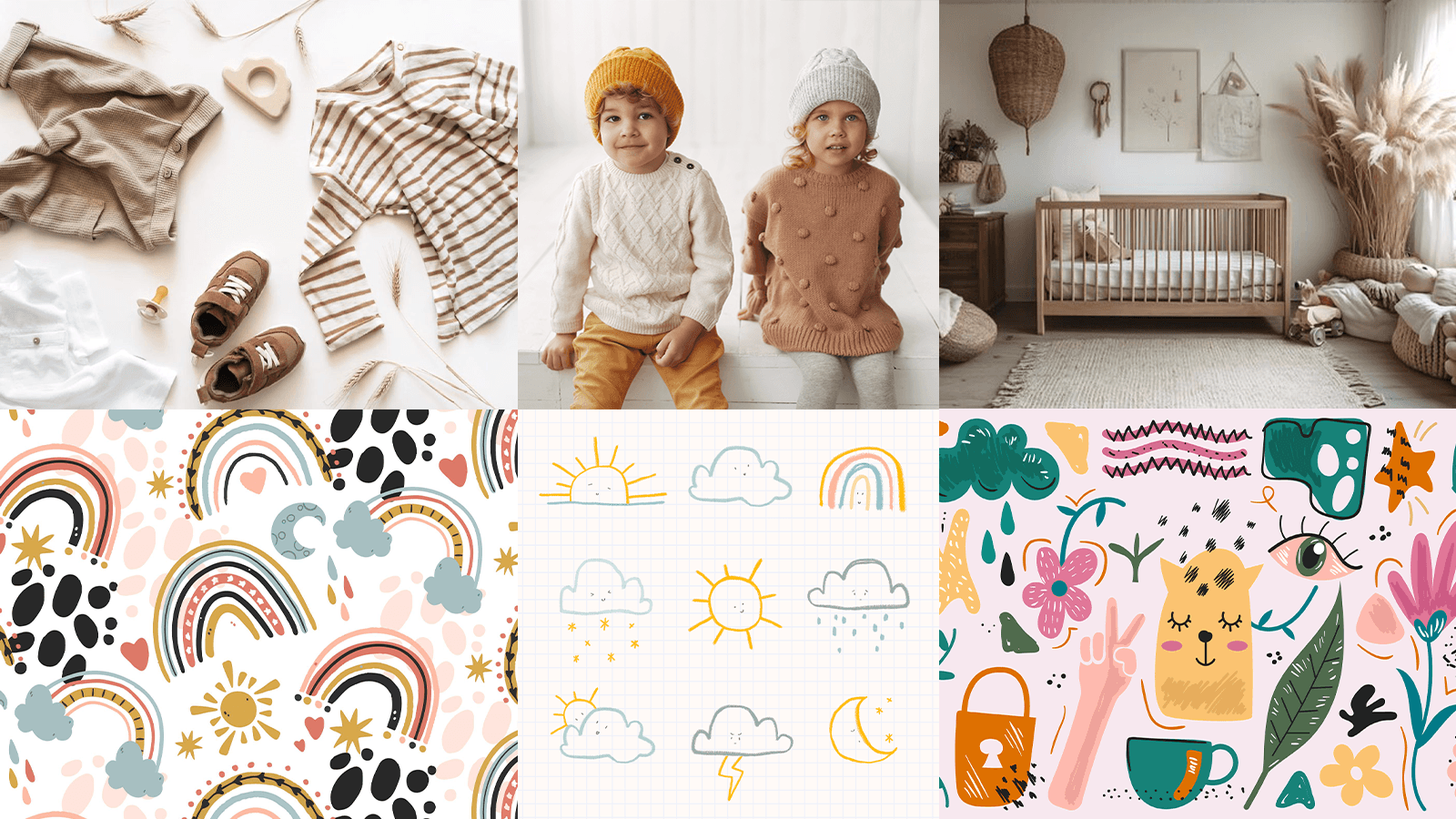
A limited pastel palette is grounded in a neutral base of off-white and soft cream. The colours support the product rather than compete with it, creating a calm and warm background for brand communication.

— Typography
The typographic system is based on two clearly defined roles:
• a soft, friendly typeface responsible for the emotional layer,
• a highly legible sans-serif used for informational communication such as sizing, descriptions, and e-commerce.
This combination ensures balance between lightness and functionality.

— Graphic Elements
The arch and rainbow shape serve as a subtle brand signature. The pattern, controlled in intensity, functions as a supporting element rather than a dominant visual layer. The entire system was designed to be scalable and adaptable across future collections.

— Photography Style
Photography is based on natural light, soft textures, and everyday situations. A real-life aesthetic, free from excessive stylisation, reinforces authenticity and perceived quality.

Strategia wizualna została oparta na trzech filarach: delikatności, czytelności oraz systemowości.

— Kolor

Ograniczona paleta pastelowa została osadzona na neutralnej bazie w postaci off white i jasnego kremu. Kolory wspierają produkt, nie konkurują z nim i budują spokojne, ciepłe tło dla komunikacji marki.

— Typografia

System typograficzny opiera się na dwóch jasno określonych rolach:
• font o miękkim, przyjaznym charakterze, odpowiedzialny za warstwę emocjonalną
• czytelny sans serif wykorzystywany w komunikacji informacyjnej, takiej jak rozmiary, opisy czy e commerce
Takie zestawienie pozwala zachować równowagę pomiędzy lekkością a funkcjonalnością.

— Motywy i elementy graficzne

Motyw łuku i tęczy pełni rolę subtelnego znaku rozpoznawczego marki. Pattern o kontrolowanej intensywności stanowi element wspierający, a nie dominujący. Cały system został zaprojektowany jako skalowalny i możliwy do rozwijania wraz z kolejnymi kolekcjami.

— Styl fotografii

Fotografia oparta jest na naturalnym świetle, miękkich teksturach oraz codziennych sytuacjach. Estetyka real life, pozbawiona nadmiernej stylizacji, wzmacnia autentyczność i postrzeganie jakości.

— Strategic Summary
Little Smiles Kiddiewear was designed as a brand that competes not through intensity, but through consistency and aesthetic balance. The visual strategy forms the foundation for the continued development of the identity system and brand communication.
IDEATE

IDEATE

IDEATE

IDEATE

IDEATE

Based on market, user, and trend analysis, I developed three alternative visual directions for Little Smiles Kiddiewear. Each responded to the same strategic assumptions, differing in the balance between minimalism, emotional expression, and colour intensity.

— Direction A: Soft Minimal

Character: calm, structured, soft premium.

Colour palette: off-white, warm beige, light grey, muted mint, dusty pink, graphite.

Typography:
• a delicate serif typeface emphasizing elegance and softness,
• a clean sans-serif ensuring informational clarity.

Visual aesthetic:
• generous use of light and space,
• minimal illustration,
• emphasis on material texture and detail.

Pattern: subtle micro-arch elements.

Evaluation: a safe and refined direction that effectively builds trust.
Risk: excessive neutrality and potential loss of childlike energy.

— Direction B: Playful Hand-Drawn

Character: emotional, soft, illustration-led.

Colour palette: mint, butter yellow, dusty pink, light blue, peach, warm white.

Typography:
• a soft, slightly calligraphic display typeface,
• a legible sans-serif for informational content.

Visual aesthetic:
• irregular, hand-drawn elements,
• arches, rainbows, and subtle smile references,
• freer composition.

Pattern: a rhythmic arch and rainbow pattern with controlled intensity.

Evaluation: the most expressive and emotionally engaging direction.
Risk: excessive illustration may reduce perceived quality if not carefully balanced.

— Direction C: Retro Pastel

Character: nostalgic, warm, more colour-forward.

Colour palette: muted mint, butter yellow, pastel terracotta, dusty blue, cream.

Typography:
• a soft, rounded sans-serif,
• an alternative typeface with a subtle retro tone.

Visual aesthetic:
• larger colour blocks,
• stronger contrasts,
• more prominent pattern exposure.

Pattern: a repeat inspired by textile prints.

Evaluation: distinctive but more seasonal in character.
Risk: reduced timelessness and more limited long-term scalability.


— Final Direction Selection

For Little Smiles Kiddiewear, a hybrid approach combining Soft Minimal with a controlled Playful Hand-Drawn layer was selected. This allowed for a structured, soft premium visual base, an emotional recognition element in the arch and rainbow symbol, and a cohesive, scalable identity system. The chosen direction balances delicacy with distinct brand character, addressing the needs of the parent as the primary decision-maker while preserving childlike lightness.

Na podstawie analizy rynku, użytkownika oraz trendów opracowałam trzy alternatywne kierunki wizualne dla Little Smiles Kiddiewear. Każdy z nich odpowiadał tym samym założeniom strategicznym, różniąc się proporcją między minimalizmem, emocjonalnością i kolorem.


— Kierunek A: Soft Minimal

Charakter: spokojny, uporządkowany, premium soft.

Paleta kolorystyczna: off white, ciepły beż, jasna szarość, przygaszona mięta, pudrowy róż, grafit.

Typografia:
• delikatny font serifowy podkreślający elegancję i miękkość,
• prosty sans serif zapewniający czytelność informacyjną.

Estetyka wizualna:
• duża ilość światła i przestrzeni,
• minimalne użycie ilustracji,
• nacisk na fakturę materiału i detal.

Pattern: subtelne mikro motywy łuku.

Ocena: kierunek bezpieczny i estetyczny, skutecznie budujący zaufanie.

Ryzyko: nadmierna neutralność i utrata dziecięcej energii.


— Kierunek B: Playful Hand Drawn

Charakter: emocjonalny, miękki, ilustracyjny.

Paleta kolorystyczna: mięta, butter yellow, pudrowy róż, jasny błękit, brzoskwinia, ciepła biel.

Typografia:
• miękki, lekko kaligraficzny font o charakterze wizerunkowym
• czytelny sans serif do treści informacyjnych

Estetyka wizualna:
• nieregularne, ręcznie rysowane motywy
• łuki, tęcze i subtelne elementy smiles
• swobodniejsza kompozycja

Pattern: rytmiczny motyw łuków i tęczy o kontrolowanej intensywności.

Ocena: najbardziej emocjonalny i wyrazisty kierunek.

Ryzyko: nadmierna ilustracyjność może obniżyć postrzeganą jakość, jeśli nie zostanie odpowiednio zbalansowana.

— Kierunek C: Retro Pastel

Charakter: nostalgiczny, ciepły, bardziej wyrazisty kolorystycznie.

Paleta kolorystyczna: przygaszona mięta, butter yellow, pastelowa terakota, dusty blue, krem.

Typografia:
• miękki, zaokrąglony sans serif
• alternatywny font o subtelnym charakterze retro

Estetyka wizualna:
• większe plamy koloru
• wyraźniejsze kontrasty
• silniejsza ekspozycja patternu

Pattern: powtarzalny motyw inspirowany nadrukami tekstylnymi.

Ocena: kierunek wyrazisty, ale bardziej sezonowy.

Ryzyko: mniejsza ponadczasowość i trudniejsza skalowalność systemu.


— Wybór kierunku

Dla Little Smiles Kiddiewear wybrany został kierunek łączący Soft Minimal z kontrolowaną warstwą Playful Hand Drawn. Pozwoliło to zachować uporządkowaną, premium soft bazę wizualną, emocjonalny element rozpoznawczy w postaci motywu łuku i tęczy oraz spójny i skalowalny system identyfikacji.

Wybrany kierunek buduje równowagę pomiędzy delikatnością a charakterem marki, odpowiadając na potrzeby rodzica jako kluczowego decydenta zakupowego, przy jednoczesnym zachowaniu dziecięcej lekkości.

PROTOTYPE

PROTOTYPE

PROTOTYPE

PROTOTYPE

PROTOTYPE

BRAND BOARD


The Little Smiles Kiddiewear brand board provides a concise synthesis of the brand strategy and its visual identity system. It brings together key components such as the logo, colour palette, typography, graphic elements, and photographic direction within a cohesive and scalable framework.

Each element was designed to reinforce the brand’s positioning as soft, structured, and trust-building. Presenting all components on a single board allows for validation of their relationships, hierarchy, and overall visual consistency.

The system combines the emotional quality of children’s aesthetics with clear communication structure. It serves as a foundation for implementing the identity across print materials, digital platforms, and the e-commerce environment, ensuring consistency across all brand touchpoints.
PRINT MATERIAL DESIGN

Printed materials for Little Smiles Kiddiewear were designed as a natural extension of the brand’s visual identity system. Each element serves not only an informational function, but also reinforces the perception of the brand as soft, cohesive, and trust-building.

— Product Tags

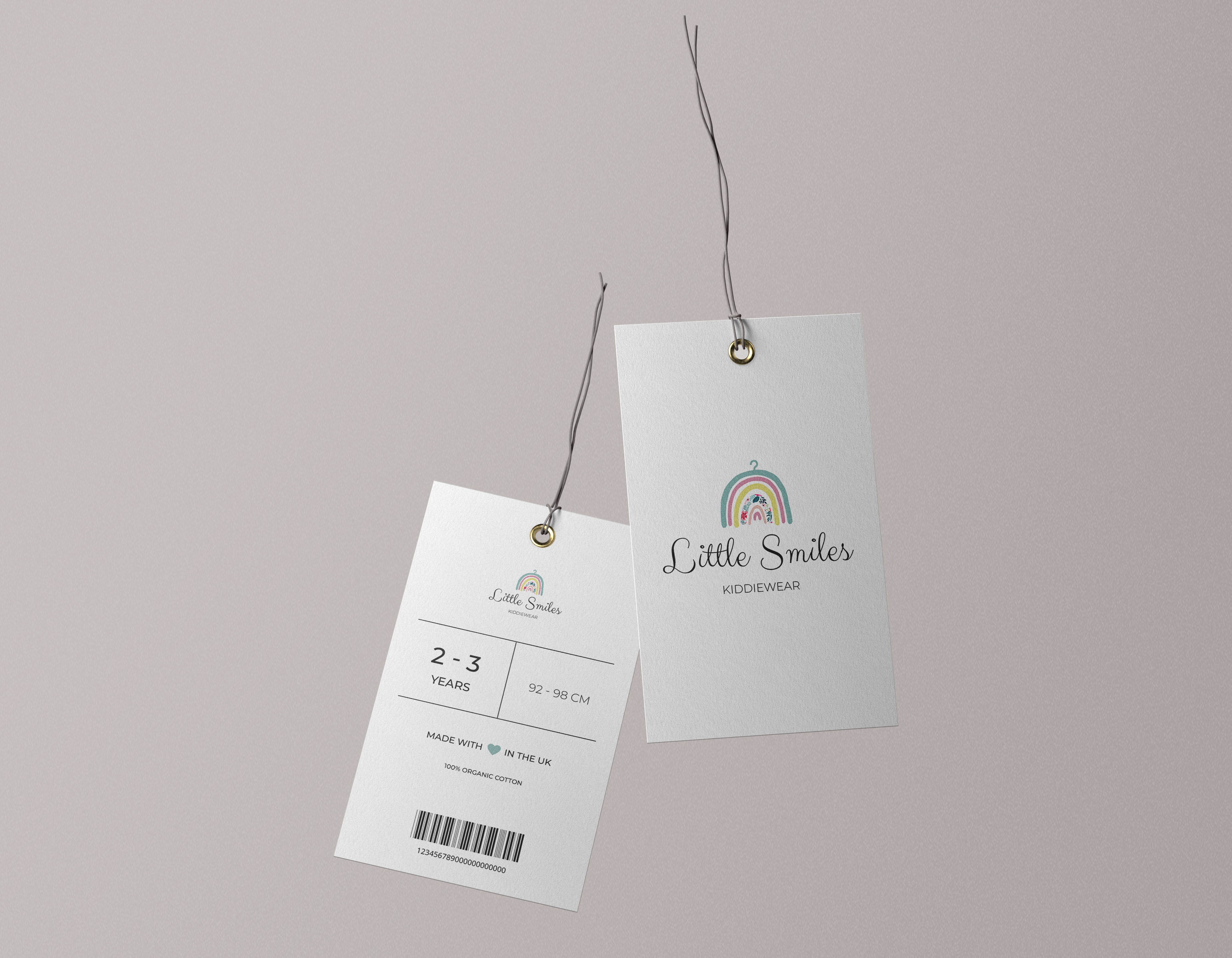
The tag combines subtle aesthetics with high informational clarity. The front highlights the logo and the brand’s distinctive graphic element, while the reverse presents clearly structured information regarding size and product composition. The use of a neutral colour base complemented by a pastel accent ensures consistency with the identity system. The tag design supports purchasing decisions in everyday contexts as well as gift scenarios, reinforcing perceived quality and attention to detail.
— Woven Labels and Textile Tags

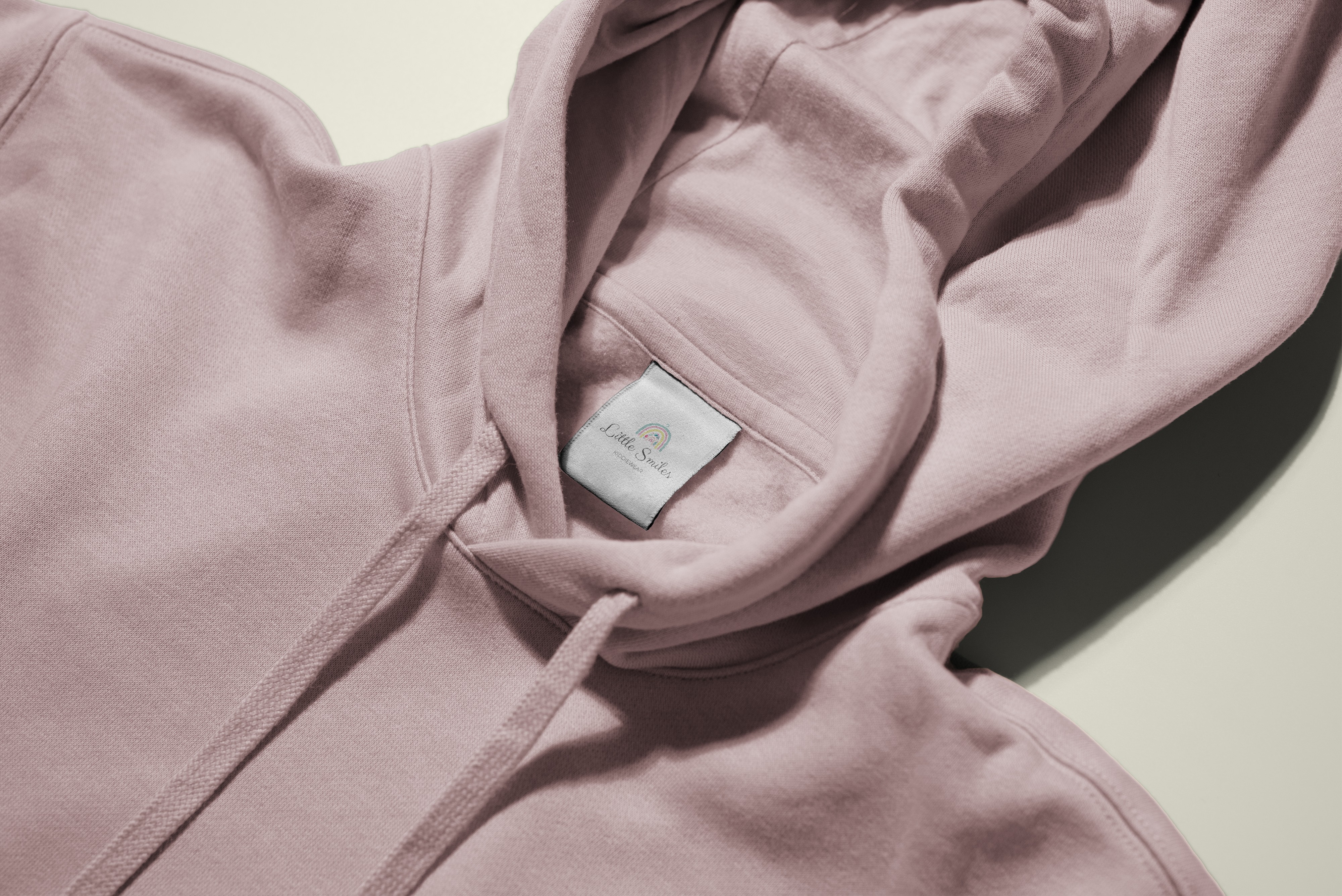
The label system was designed with very small-scale application and high legibility in mind. The logo retains recognition even within highly constrained space, supported by its simplified form and clear construction.
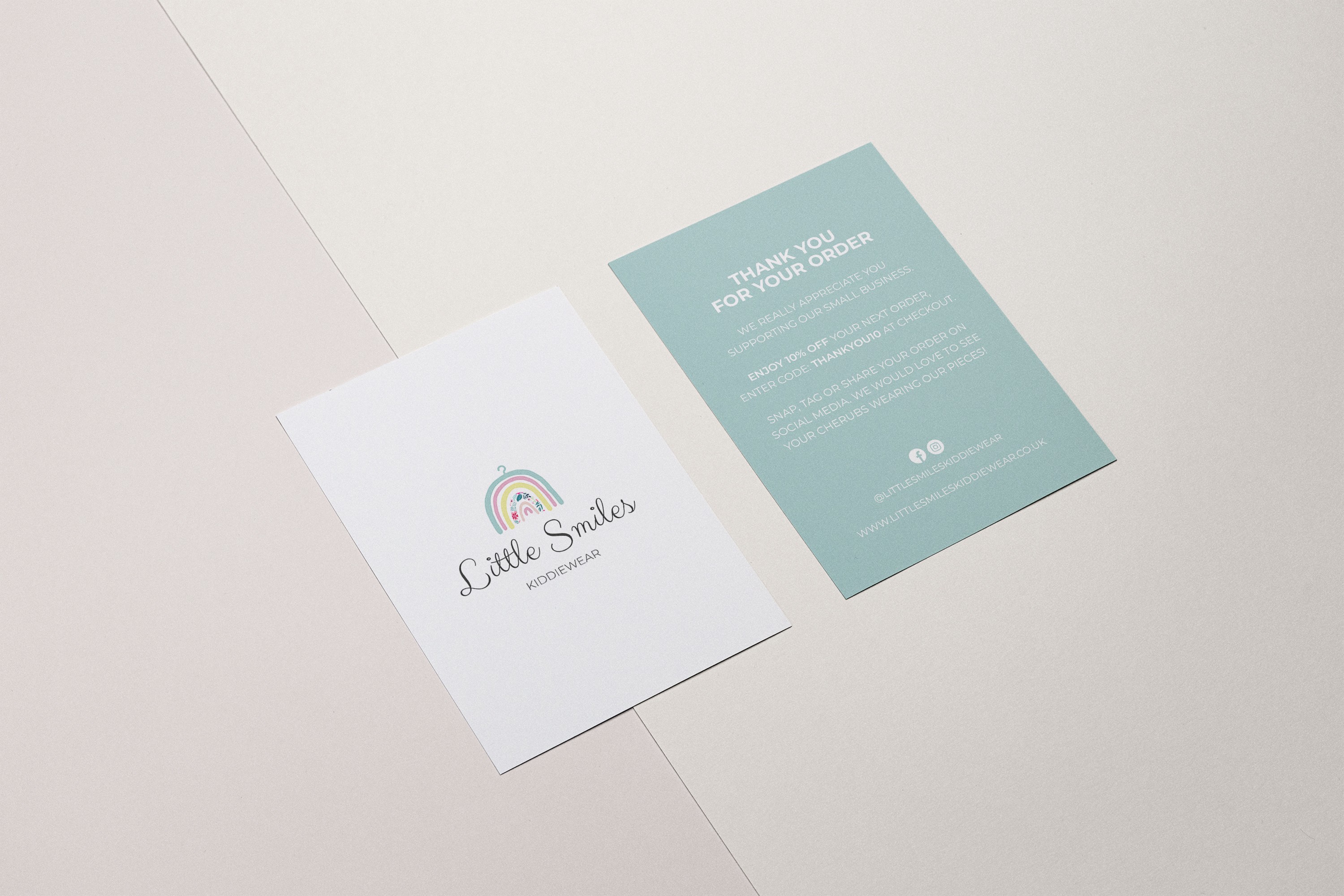
— “Thank You” Card

The packaging insert was designed to enhance the post-purchase experience. A warm and simple tone of voice supports positive emotional engagement, while a consistent typographic hierarchy ensures clarity and alignment with the broader system. This detail strengthens the emotional connection with the brand and highlights its attentiveness and care across every aspect of the customer experience.
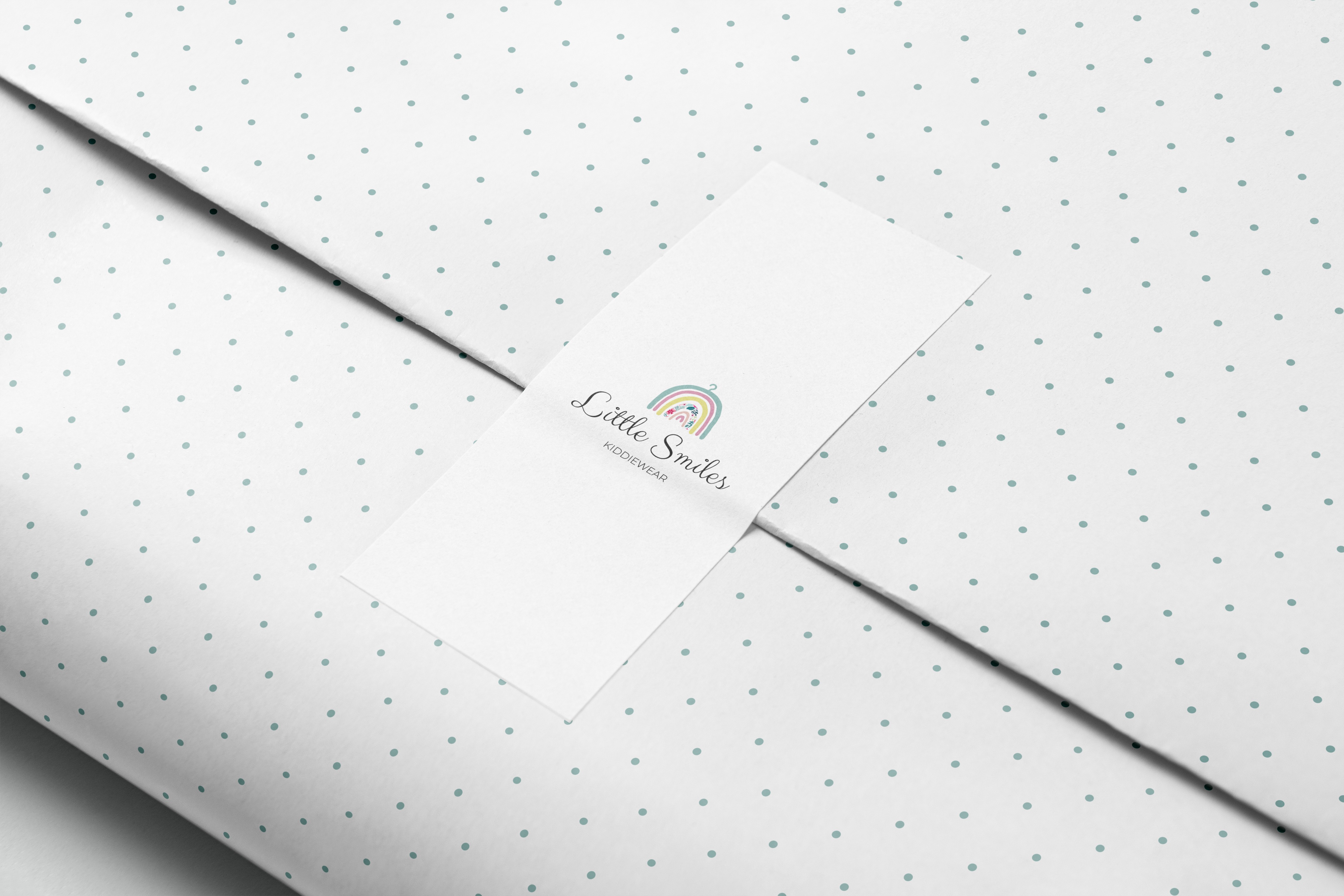
— Stickers and Packaging Details

Logo stickers function as a natural extension of the visual identity system, introducing the brand across additional touchpoints.

Example applications:
• sealing tissue paper,
• marking envelopes or boxes,
• a subtle gifting element.

The repeated use of the graphic element reinforces brand recognition and contributes to a cohesive, refined purchasing experience.
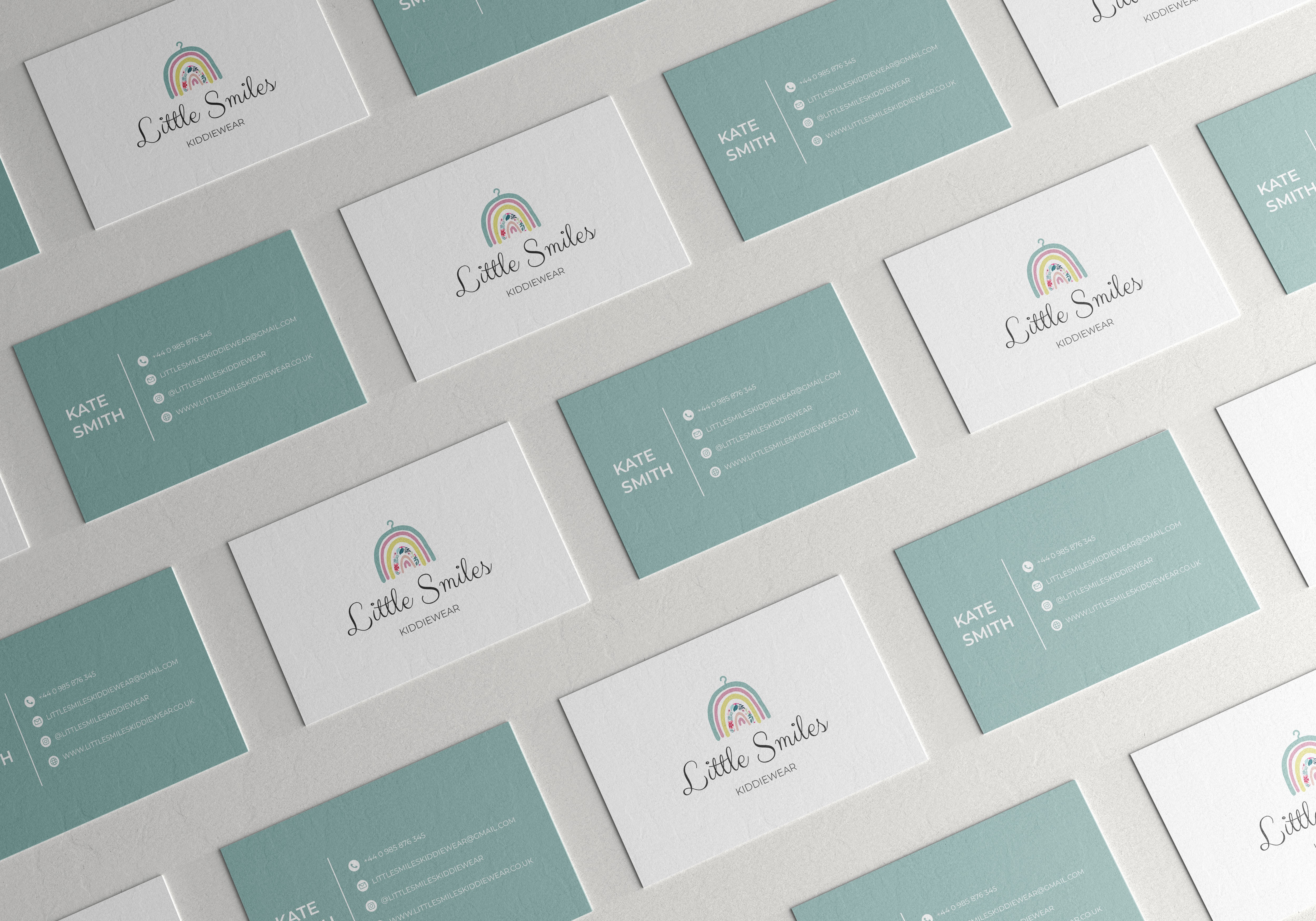
— Business Cards

Little Smiles Kiddiewear business cards were designed as a minimalist extension of the brand’s visual identity. Their role is to establish a first physical point of contact with the brand, aligned with its soft character and overall aesthetic consistency.
SUMMARY

SUMMARY

SUMMARY

SUMMARY

SUMMARY

VISUAL CONSISTENCY VERIFICATION

At the final stage of the project, I conducted a comprehensive consistency review of the Little Smiles Kiddiewear identity system across all key brand touchpoints. The objective was to confirm that each element functions as part of one cohesive and scalable visual system, regardless of format or medium.

Logo Consistency
• the logo system maintains clarity in both print and digital environments,
• the mark remains recognizable at small scales, including labels and avatars,
• alternative versions remain stylistically aligned,
• the arch and rainbow symbol is applied consistently and without overexposure.

Colour Consistency
• all materials use the same limited palette,
• pastel tones follow an established hierarchy,
• the neutral base stabilizes visual communication,
• colours support product presentation rather than compete with photography.

Typographic Consistency
• a clear distinction between the display and informational typefaces,
• consistent hierarchy of headings and body text,
• unified leading and compositional rhythm across print and digital materials.

Graphic Element Consistency
• the pattern functions as an accent rather than a dominant layer,
• graphic elements are applied in a repeatable and controlled manner,
• balance is maintained between illustration and minimalism.

Communication Consistency
• the visual layer and brand tone reinforce one another,
• communication remains warm yet structured,
• the visual language avoids excessive infantilisation,
• a consistent photographic direction based on natural light and soft textures.


— Summary

The Little Smiles Kiddiewear identity system was designed to be flexible while remaining disciplined. The verification confirmed that the brand maintains visual consistency across all touchpoints, from labels and printed materials to digital communication and e-commerce.

Create a free website with Framer, the website builder loved by startups, designers and agencies.