BRIEF ANALYSIS
The project involved creating a visual identity and communication materials for Home Scent – a brand offering handcrafted home fragrance products.
The business objective was to design a premium brand that builds trust in a new product, stands out in a competitive market, and communicates quality, naturalness and a sense of home comfort.
— Project scope included:
• the brand’s visual identity,
• logo design,
• selection of colour palette and visual style,
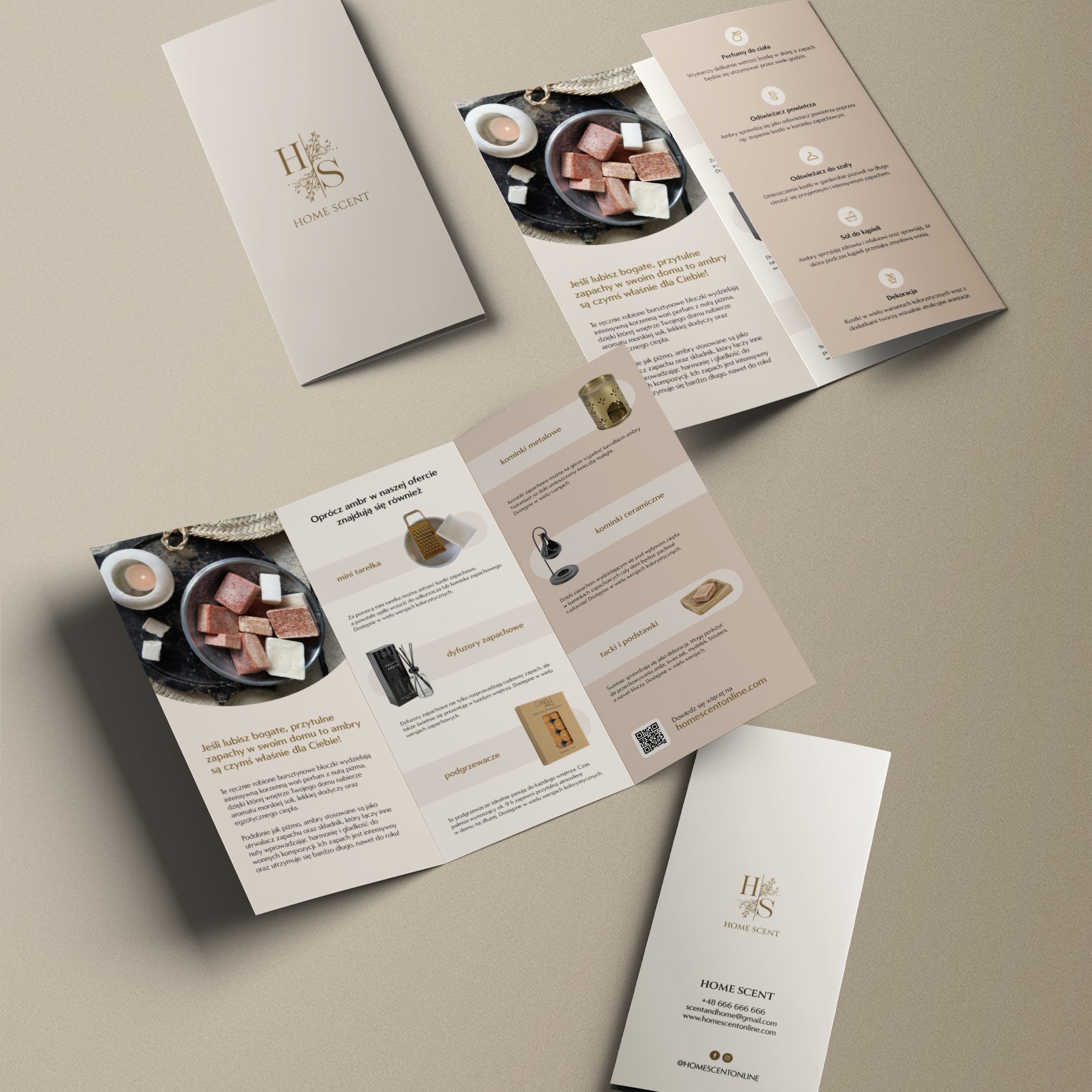
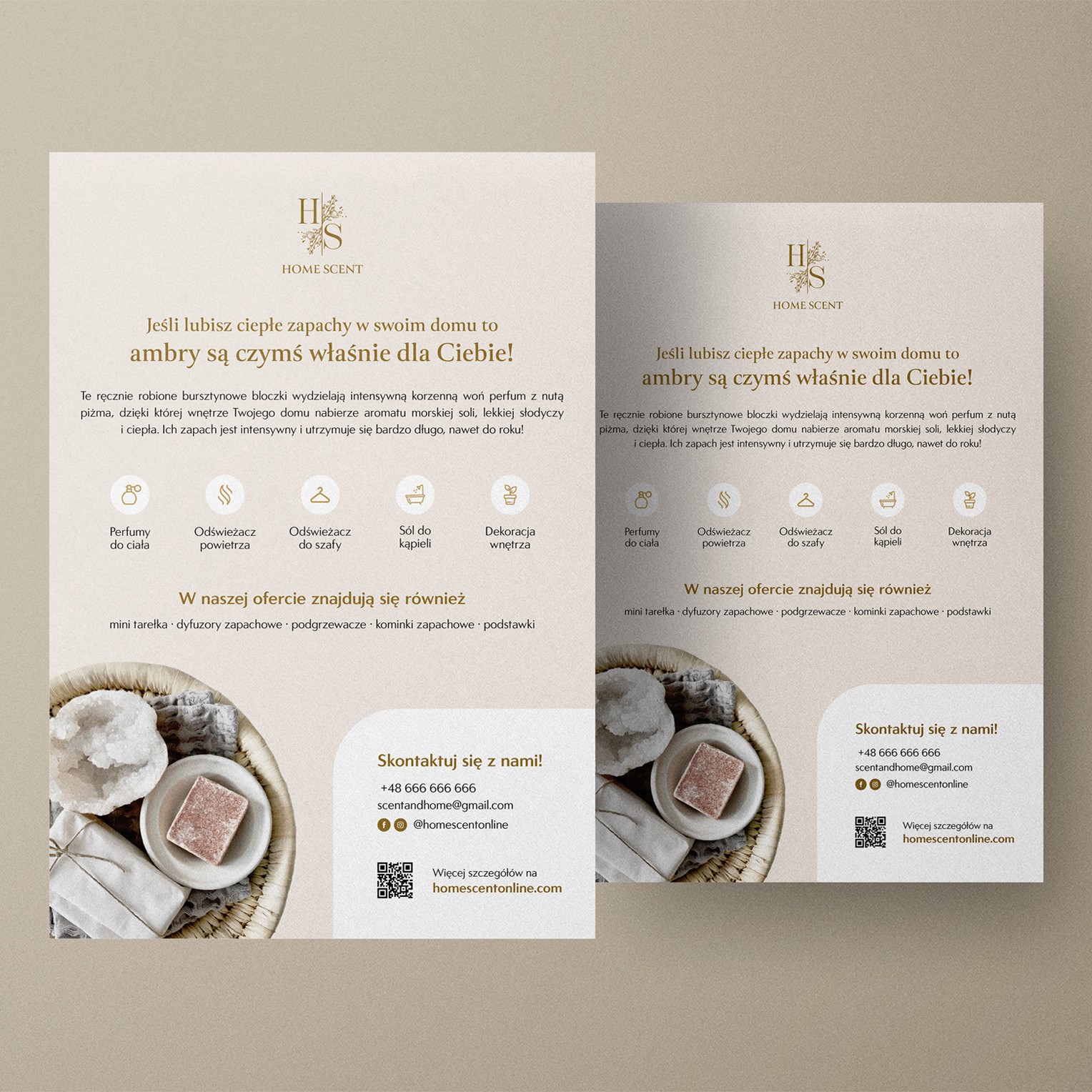
• print materials, including business cards, a brochure, and a poster.
— Design constraints:
• no opportunity to experience the scent at the first point of contact with the brand,
• the need to communicate emotions and atmosphere solely through the visual layer,
• a focus on print materials as key customer touchpoints.
Competitor analysis
The goal of the analysis was to understand how home fragrance brands communicate quality, emotion and a premium character – and which visual conventions dominate the market.
— Scope of the analysis included:
• visual identity systems,
• colour palettes,
• typography,
• communication and photography style,
• ways of creating a premium feel.
— Key observations:
• many premium brands use cool, minimalist aesthetics based on black and white with strong contrast,
• communication often focuses on the product rather than emotions and atmosphere,
• naturalness is sometimes presented literally, without a subtle narrative,
• some brands build an exclusive image that feels distant and not very approachable.
Strategic takeaway: The analysis revealed space for a premium brand with a warmer, more emotional character – combining elegance with a sense of home comfort and approachability.
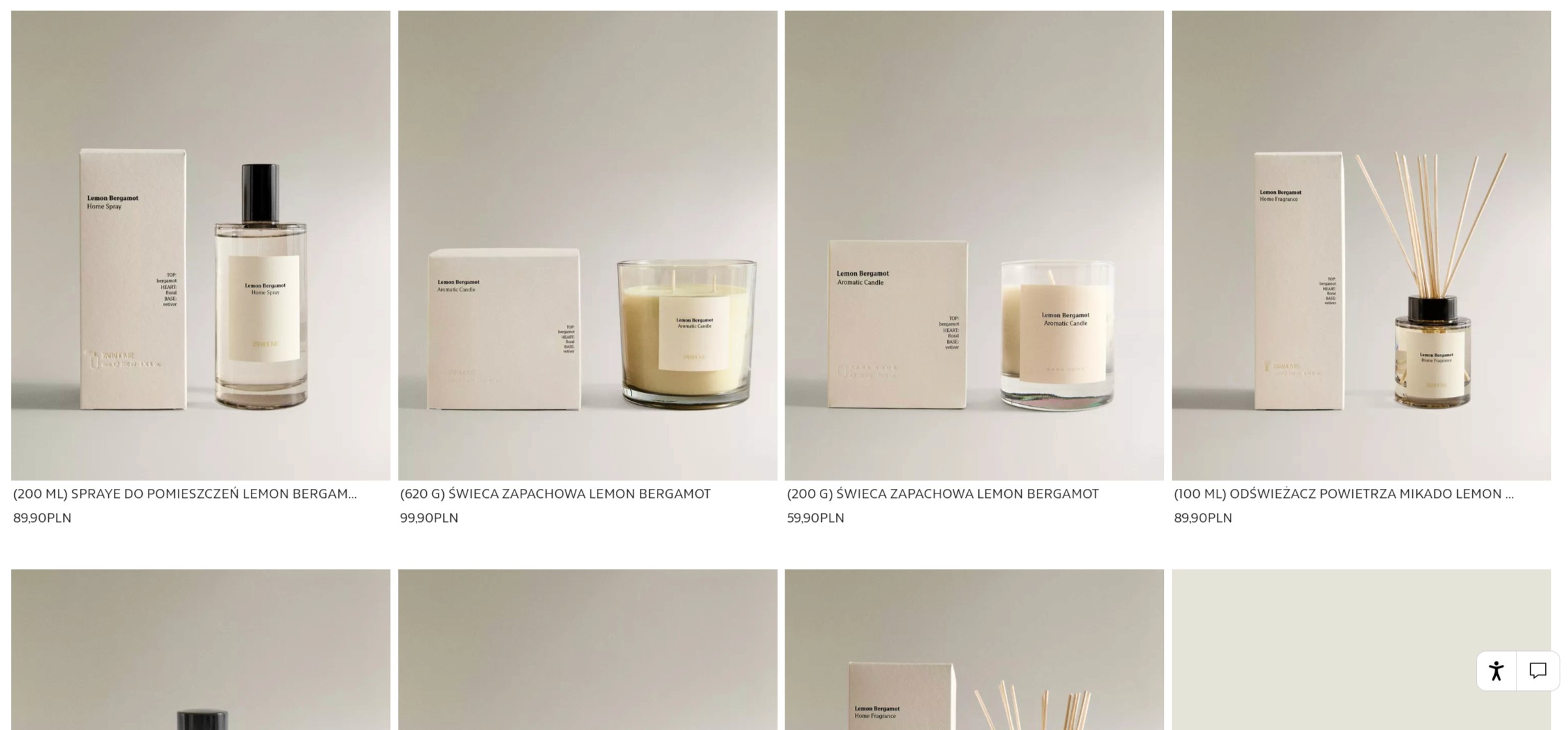
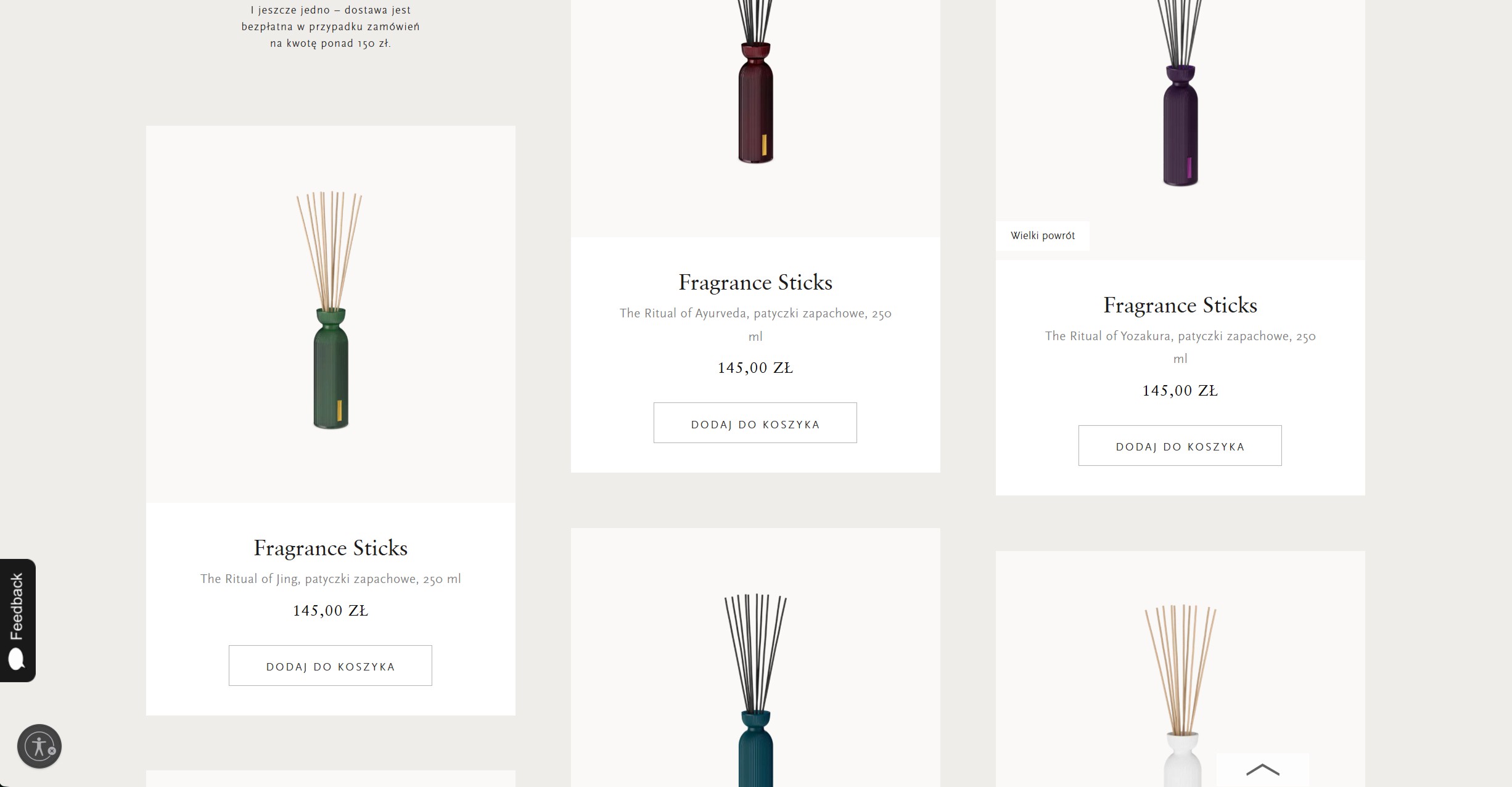
VISUAL BENCHMARKING
The goal of visual benchmarking was to identify aesthetic patterns used by premium brands in the home fragrance and lifestyle segments, and to define a direction that would help Home Scent stand out while maintaining credibility within the category.
— The analysis covered the following areas:
• colour palette and contrast,
• typography,
• photography style and composition,
• graphic and illustrative motifs,
• ways of building a premium image.
— Key observations:
• dominance of neutral, cool colour palettes based on black, white, and greys,
• frequent use of classic typefaces with strong contrast,
• a minimalist aesthetic that often feels emotionally distant,
• an emphasis on clean form and elegance at the expense of narrative and atmosphere.
— Design takeaways:
The benchmark indicated an opportunity to create a premium brand with a warmer, more emotional character. I decided on:
• a warm colour palette based on beige tones, off-white, and subtle gold,
• classic yet soft typography that combines elegance with approachability,
• subtle botanical motifs that introduce a sensory and narrative layer without compromising visual cohesion.
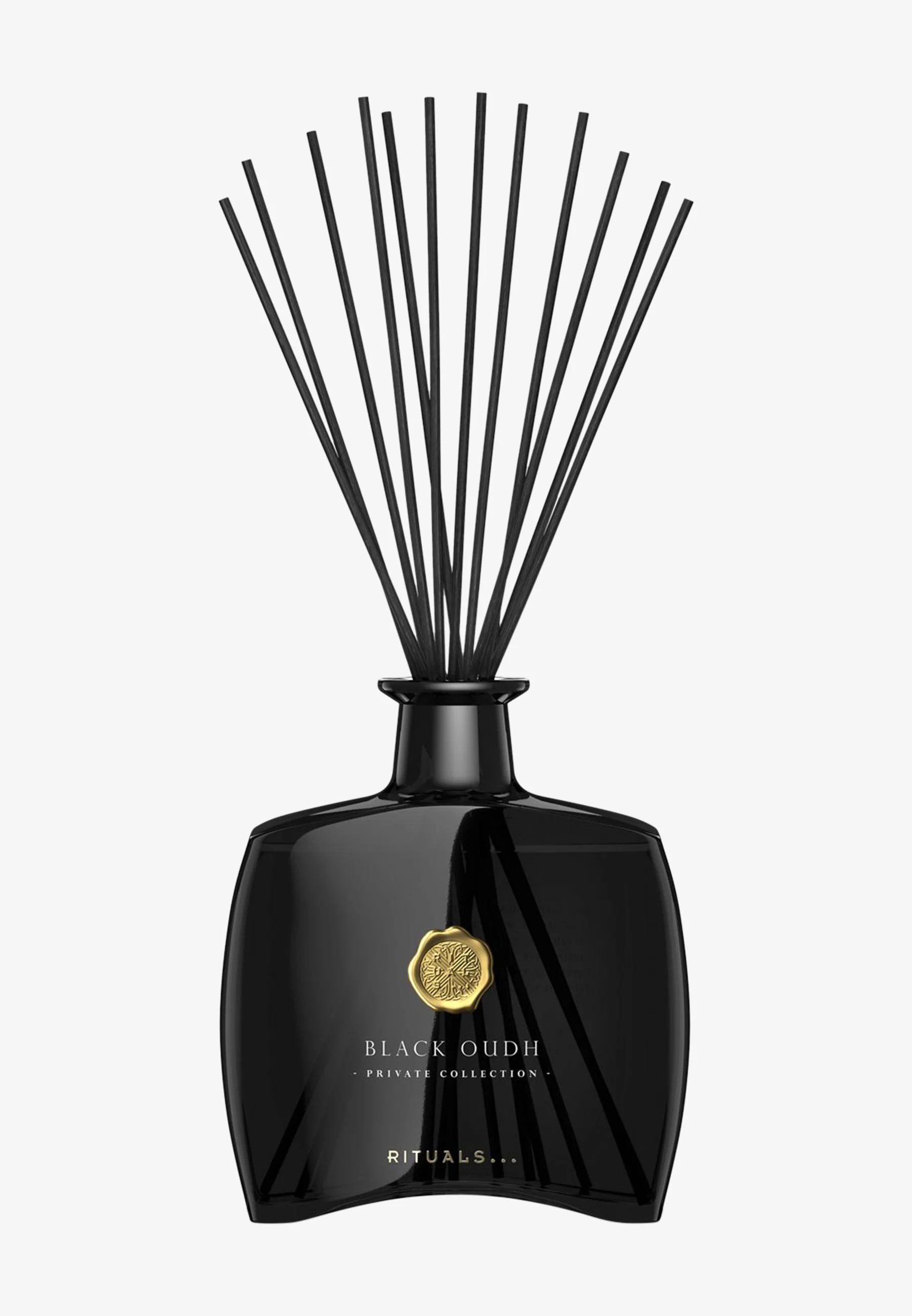
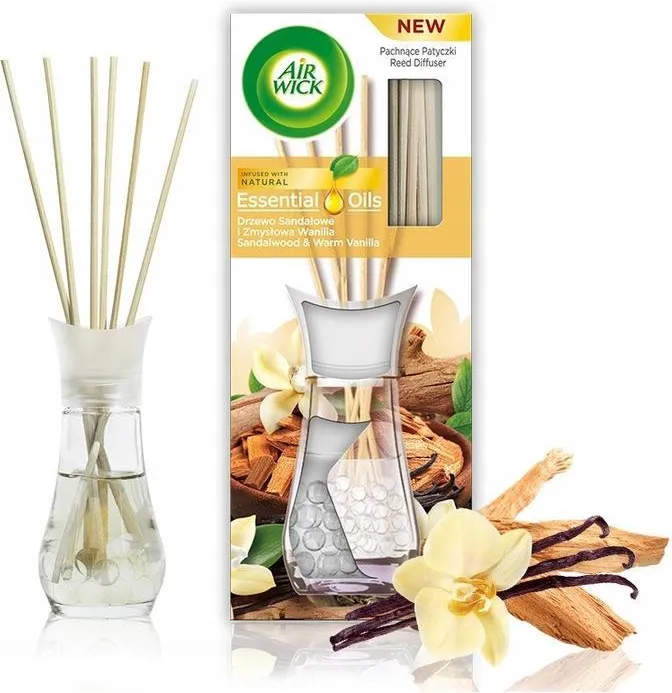
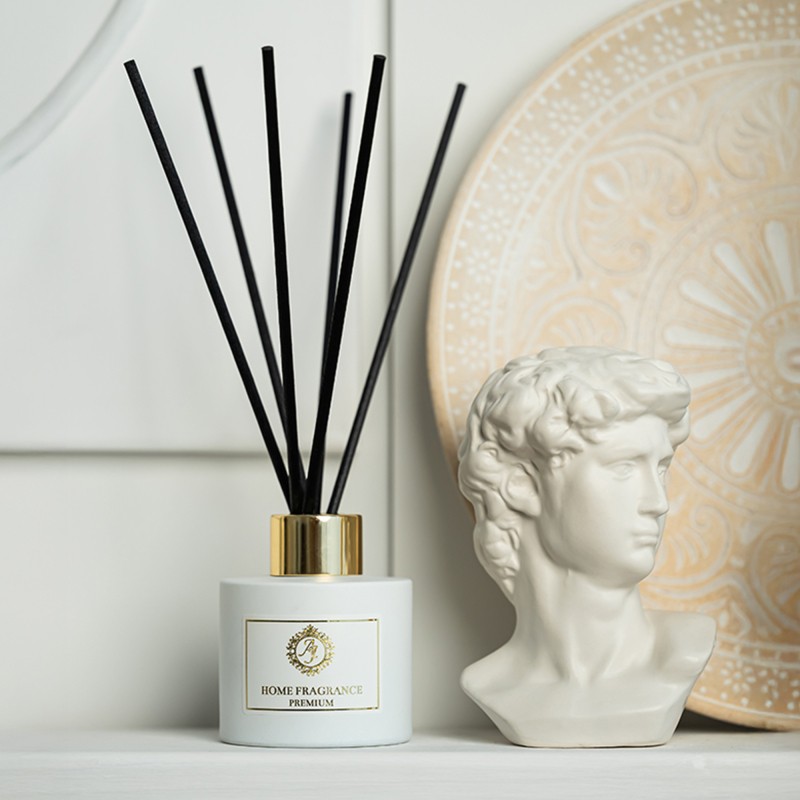
TREND OBSERVATION
The goal of trend observation was to understand aesthetic and communication directions within lifestyle and premium brands – especially those rooted in sensory experience and emotion.
— Identified trends:
• Warm minimalism – a shift away from cool minimalism towards warmer, more inviting palettes and softer contrast
• Sensory branding – multi-sensory storytelling focused on scent, touch, light and atmosphere
• Slow living and home rituals – positioning the product as part of everyday rituals and quality of life, not purely as a functional item
• Natural aesthetics – delicate botanical motifs, organic forms, and soft typography that strengthen a sense of authenticity
• Subtle luxury – luxury expressed through detail, quality and system consistency, rather than overt statements
Impact on the project: Impact on the project: these directions confirmed the choice of a visual strategy based on warmth, natural motifs and calm composition. The Home Scent system was designed to be elegant, sensory and structured – building emotional connection and a sense of home comfort.
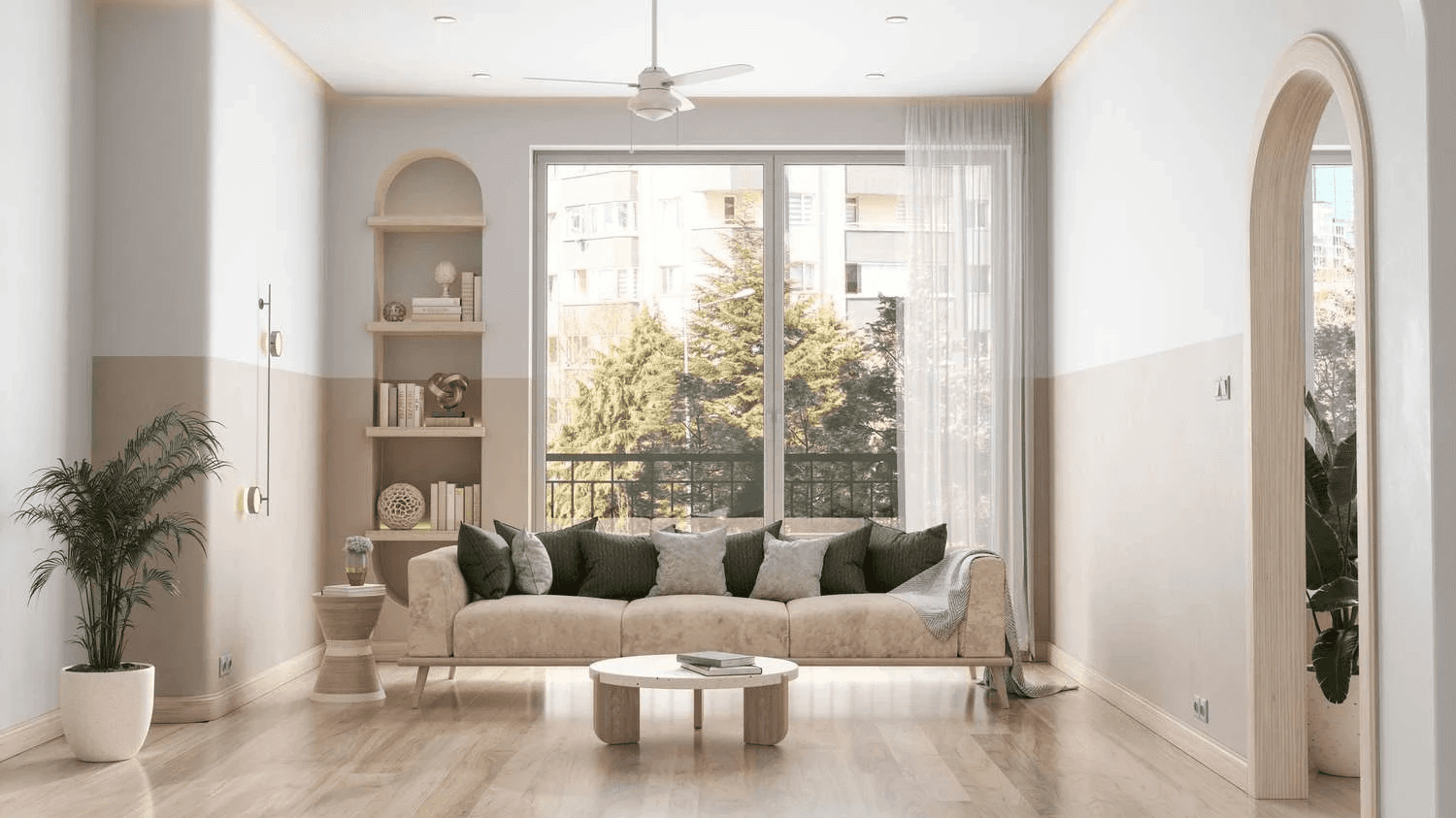
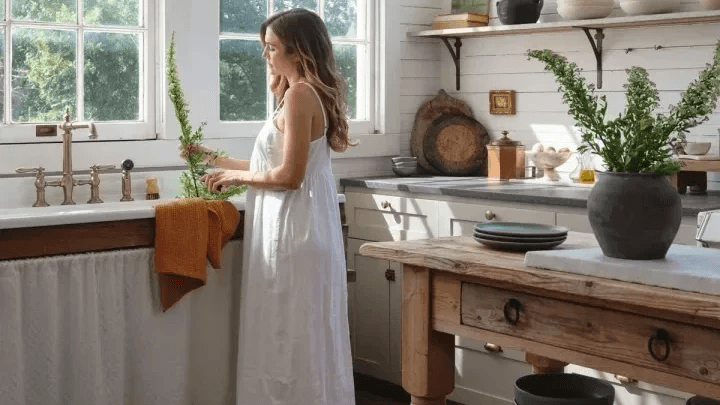

The goal of this stage was to understand the audience’s emotional context and the role of scent in everyday life at home. The analysis focused on atmosphere, comfort and the feeling of “being at home”, rather than viewing the product purely in functional terms. Scent was treated as part of a home ritual – a carrier of mood, emotions and memories, not merely an interior accessory.
USER CONTEXT ANALYSIS
The user context analysis helped define the situations in which the audience encounters the Home Scent brand and what scent means in their daily life. It was key to recognise that, in most cases, users cannot experience the scent physically before purchase, which significantly increases the role of visual identity and brand communication.
— Key insights:
• scent is perceived as an emotional experience, not just a functional product
• the user looks for atmosphere, mood and a sense of comfort – not technical specifications
• the brand’s aesthetics directly influence perceptions of product quality and credibility
• communication should help people imagine the scent through narrative, light, textures and interior context
• scent plays the role of an everyday ritual rather than a one-off purchase
These insights became the foundation for decisions around visual style, tone of voice and the designed materials.
EMOTION MAPPING
Emotion mapping helped identify the feelings that accompany users in the context of home spaces and fragrance products. The analysis covered moments of relaxation, unwinding and creating an atmosphere that supports rest.
— Key emotions and needs:
• calm and tranquillity
• comfort and a sense of security
• enjoyment drawn from small, everyday rituals
• aesthetic satisfaction and a need for harmony
• emotional connection through scent as a carrier of memories and mood
— Impact on design decisions:
• a warm, muted colour palette
• subtle typography and soft contrasts
• a calm compositional rhythm across materials
• a narrative centred on atmosphere and experience rather than technical product features
Inspirational research
The inspirational research included an analysis of premium fragrance and lifestyle brands, as well as aesthetics linked to interiors, nature and craftsmanship. The aim was to understand how brands communicate emotion and quality through visual details, rather than relying solely on product specifications.
The observations highlighted the importance of minimalism, natural textures, muted colour palettes and lifestyle storytelling that builds atmosphere. These insights directly shaped Home Scent’s visual direction and the way its communication materials were constructed.
Based on the market analysis and the user’s emotional context, I defined Home Scent’s strategic direction. The aim was to create a premium brand that communicates scent as a sensory experience and part of an everyday ritual, rather than merely a functional product.
— Key strategic decisions
• positioning the brand in the premium segment with an emphasis on naturalness and craftsmanship,
• building communication rooted in emotion, atmosphere, and home comfort,
• moving away from aggressive sales-led aesthetics towards a calm, elegant visual language,
• designing the identity and materials as one cohesive system.
These assumptions became the foundation for further design decisions.
BRAND POSITIONING
Home Scent was positioned as a premium brand in the home fragrance segment, where the core value is sensory experience and atmosphere – not simply a refreshing function. The brand is aimed at people who intentionally shape their home environment and treat scent as part of ritual, aesthetics, and wellbeing.
Unlike mass-market brands, Home Scent emphasises:
• handmade production and a craft-led character,
• naturalness and authenticity,
• calm, non-intrusive communication,
• an emotional relationship with the audience rather than purely sales-driven messaging.
VALUE PROPOSITION
Home Scent enables people to create a personal interior atmosphere through a cohesive combination of scent and visual aesthetics. The brand’s products are not communicated as functional air fresheners, but as part of everyday home experience.
The brand’s value is built on:
• combining scent and design into a single experience,
• aesthetics that naturally complement the home environment,
• luxury understood as quality and detail rather than visual excess,
• consistent communication that builds trust.
VISUAL STRATEGY
The visual strategy was built around quietness, rhythm, and balance. Instead of strong contrasts and intense accents, the design uses an aesthetic that works harmoniously with interior spaces.
The system is based on:
• a warm, neutral colour palette,
• classic, elegant typography,
• subtle botanical motifs,
• natural light and detail as carriers of quality.
The visual language does not compete with the product or the space; it supports scent as the central element of the experience.
At the conceptual stage, I explored different visual directions, analysing how to translate scent and emotion into a cohesive aesthetic language. The goal was to find an aesthetic that:
• communicates naturalness and warmth,
• retains the elegance of the premium segment,
• builds an atmosphere of home comfort,
• differentiates the brand in a competitive landscape.
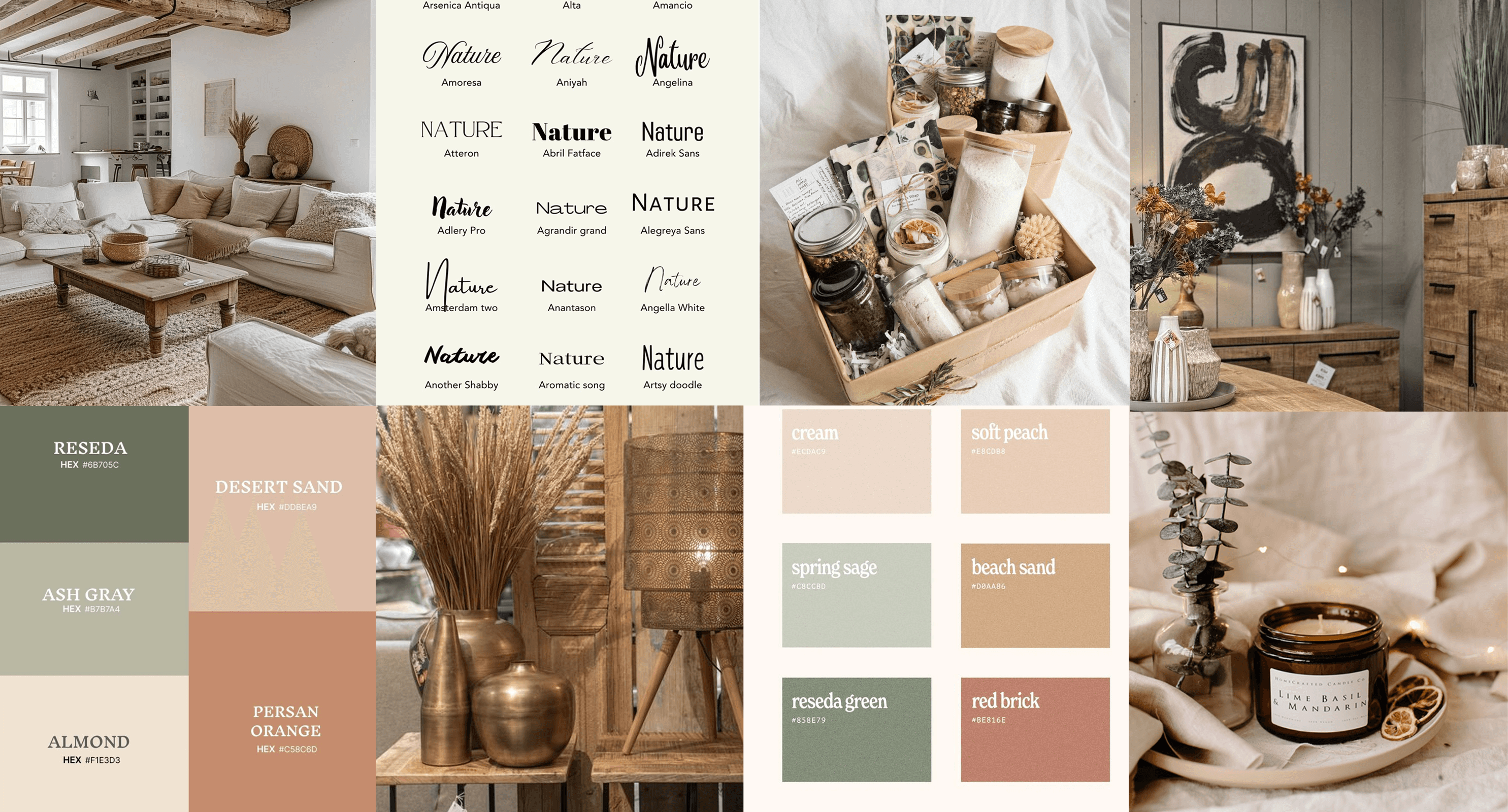
moodboard
The moodboard served as a tool for defining the brand’s ambience and ensuring colour and typographic cohesion. It helped establish:
• the photography character,
• the balance of light and shadow,
• how natural materials relate to composition,
• the visual rhythm of communication.
It became the starting point for further identity system design.
CONCEPT TESTING
This stage involved comparing different variants of the mark, composition, and visual language. I tested the proportions of botanical elements, colour contrasts, and the relationships between typography and detail.
The analysis made it possible to assess which solutions best build:
• a sense of quality,
• emotional warmth,
• trust,
• system-wide clarity.
Based on this, I selected the direction that became the foundation for further work.
Visual identity guidelines
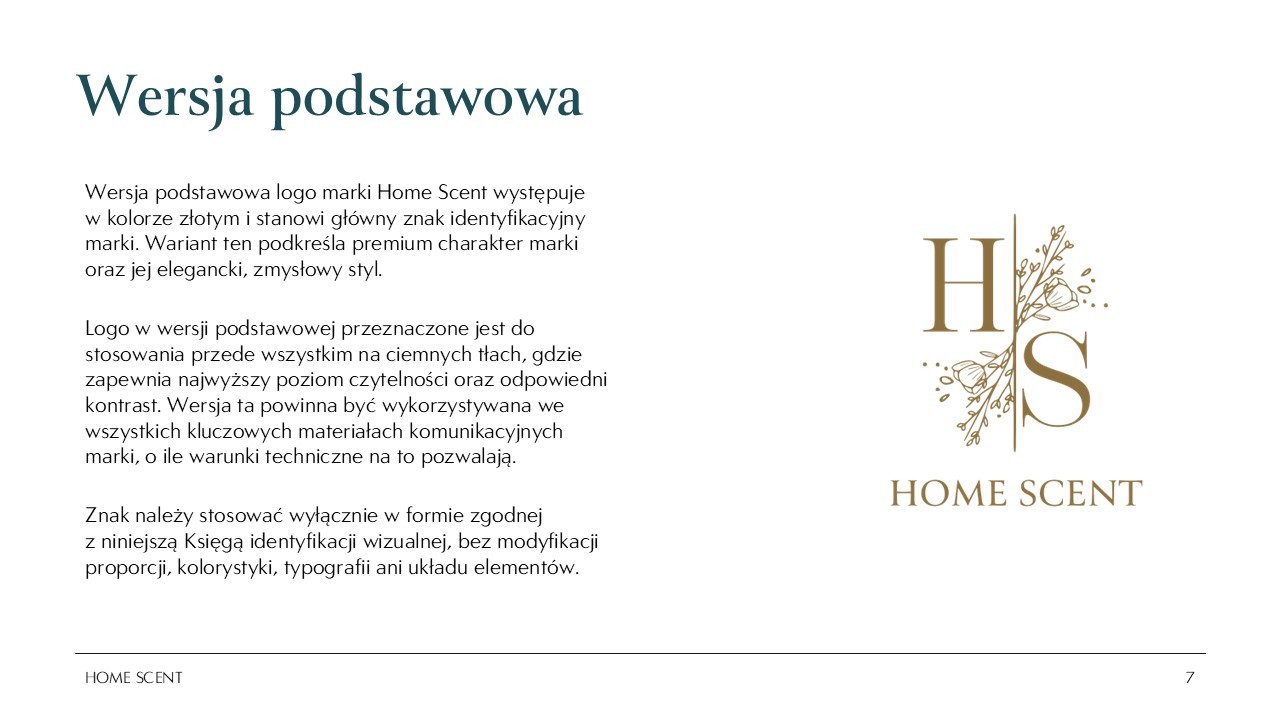
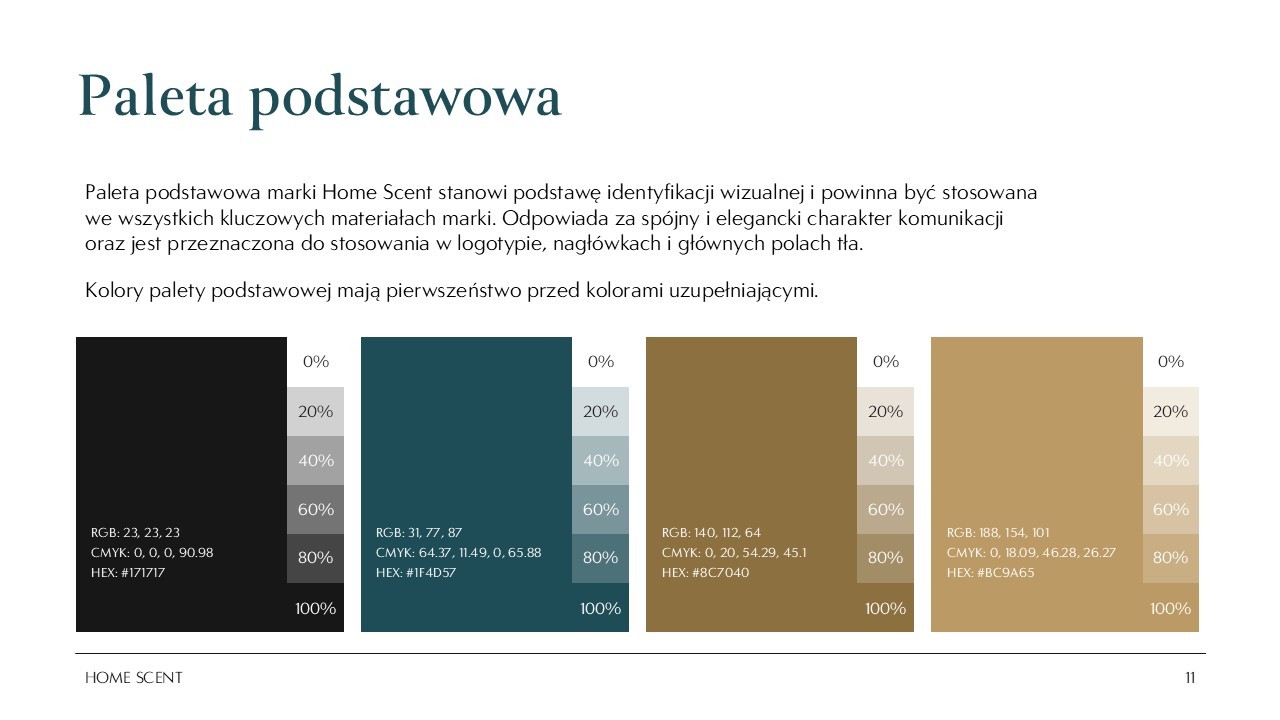
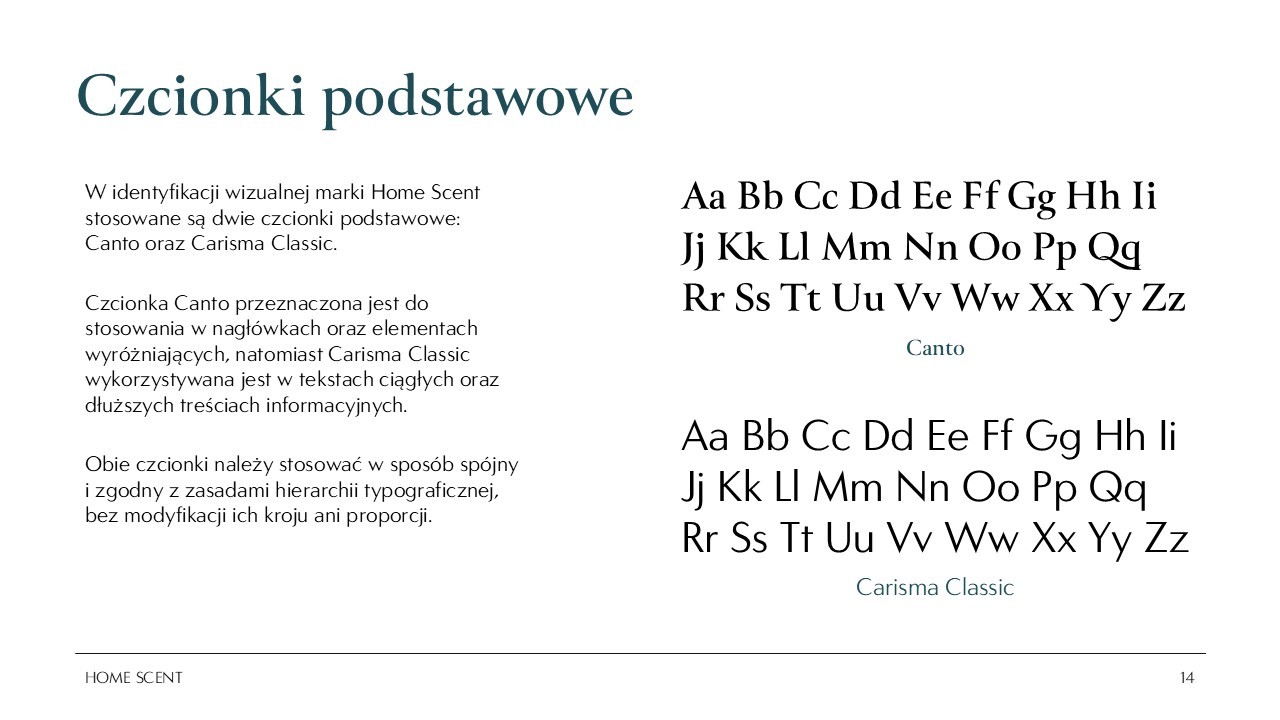
I developed visual identity guidelines defining:
• the logo construction and its variants,
• the colour palette with proportion rules,
• the typographic system,
• the photography style,
• compositional principles.
The document ensures brand consistency across all communication materials.
Print materials design
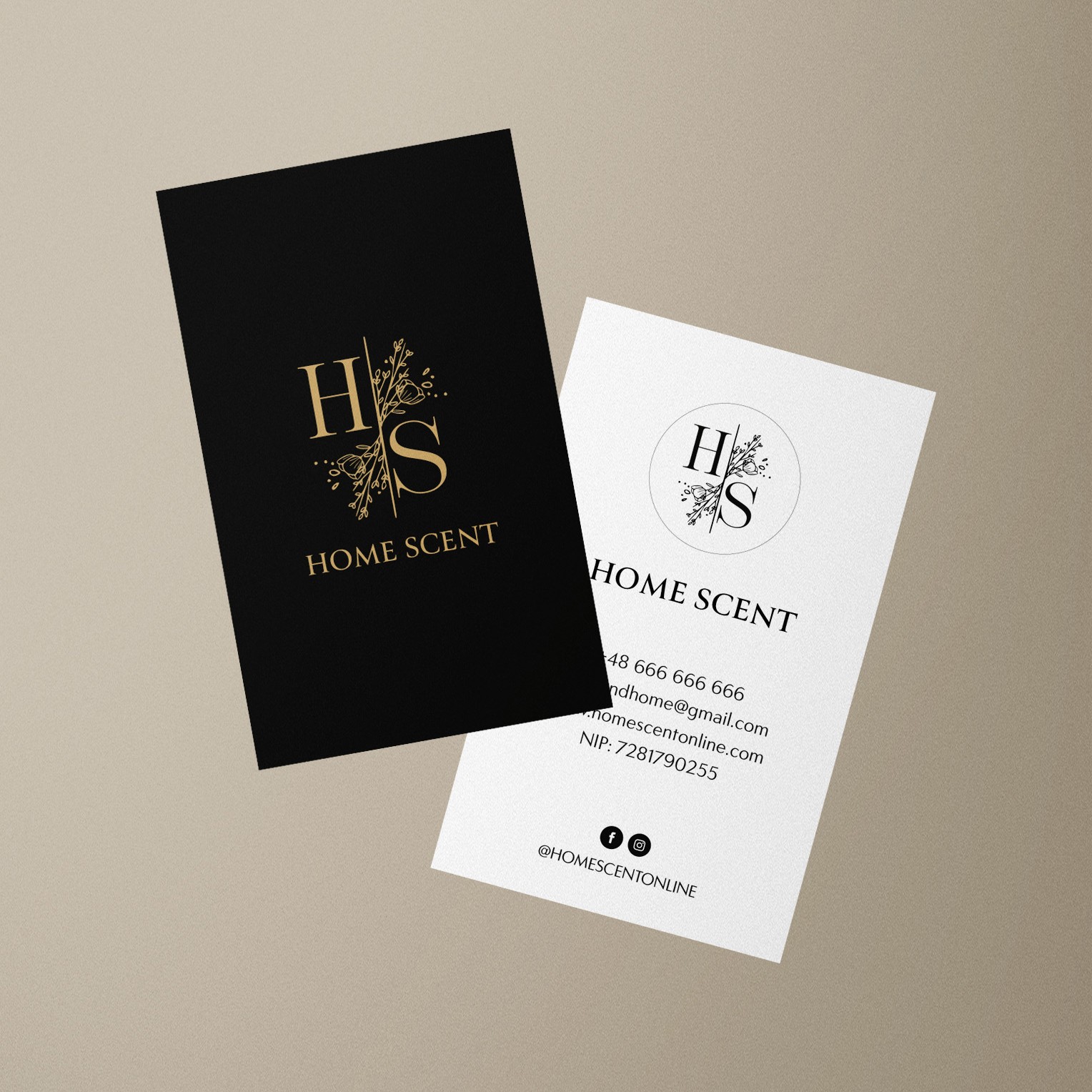
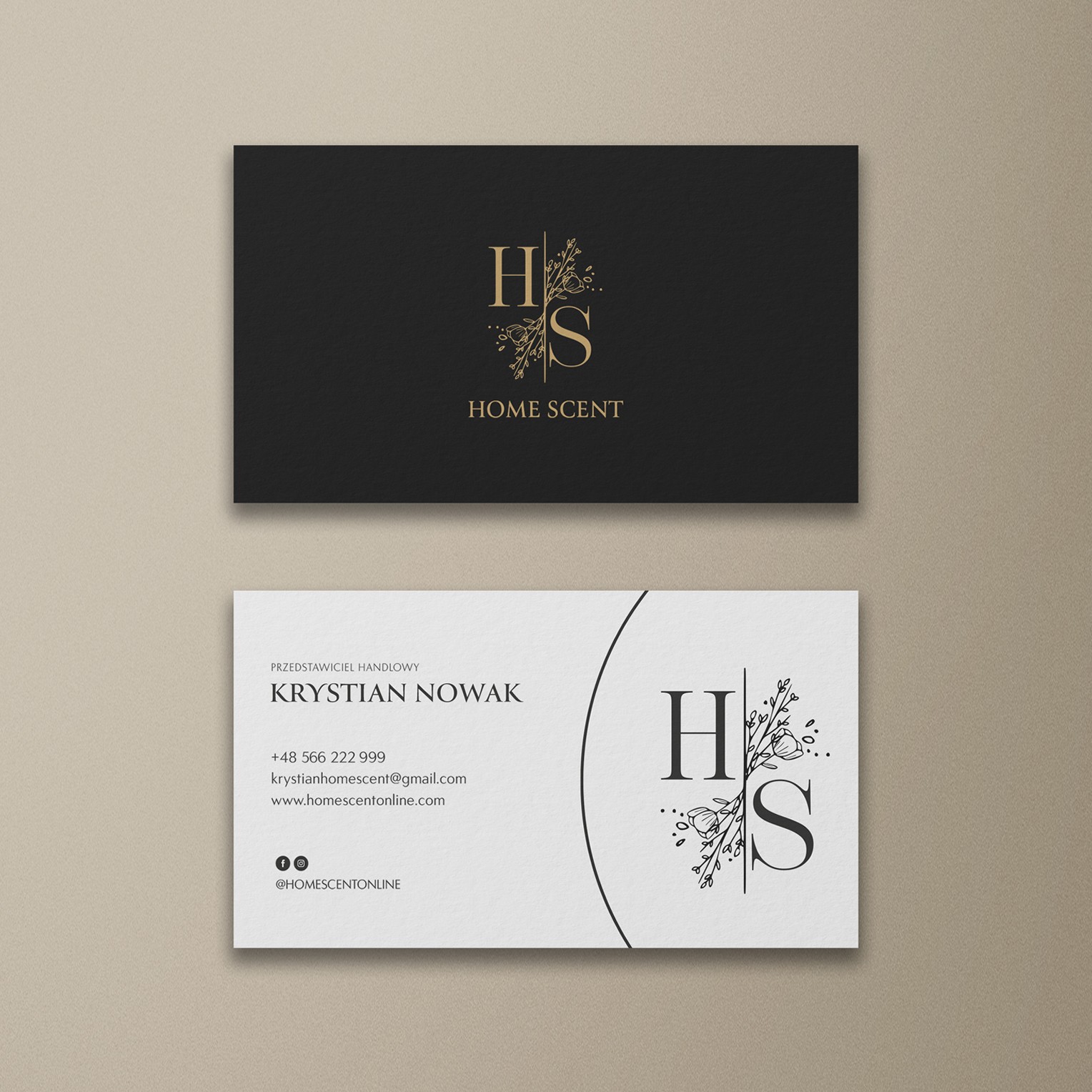
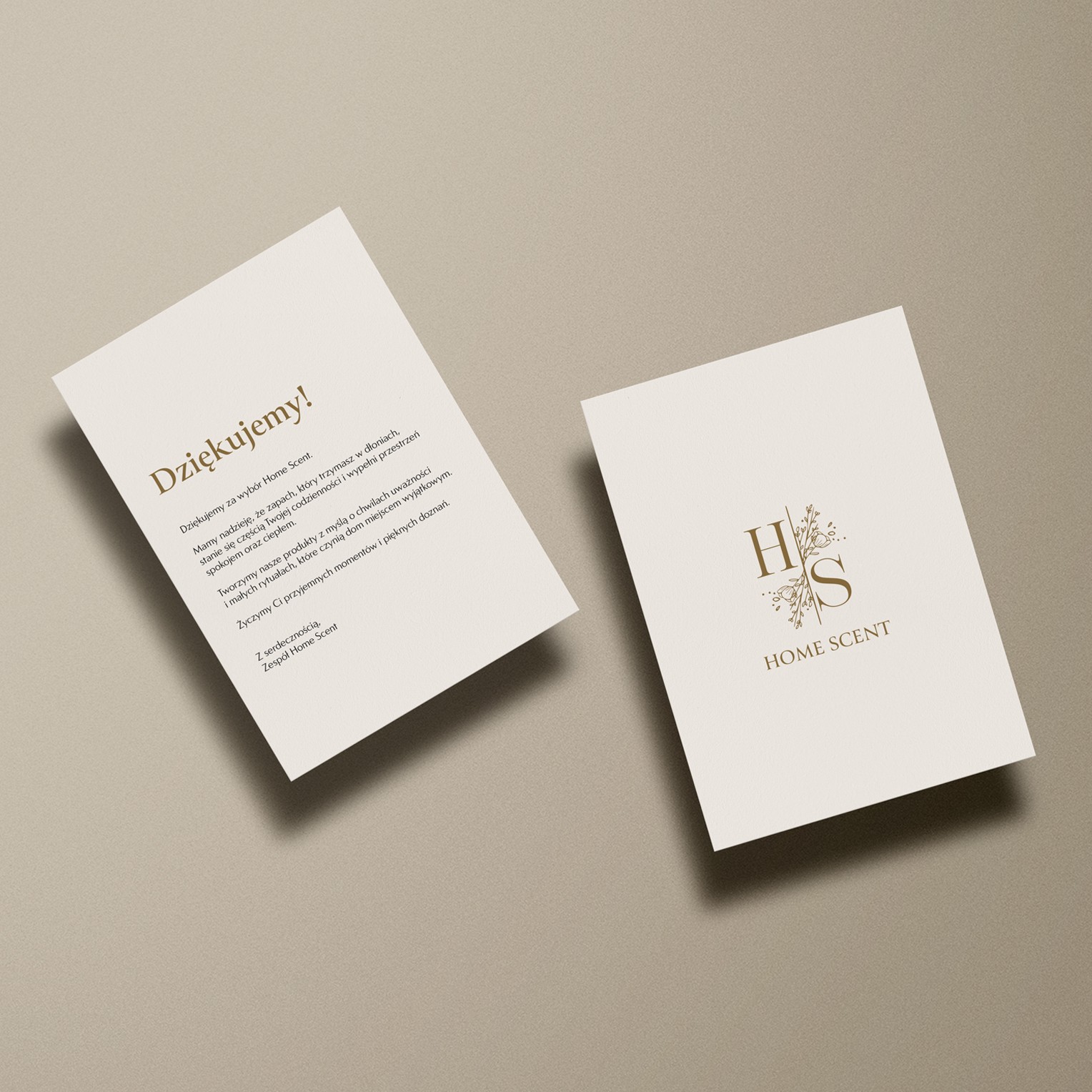
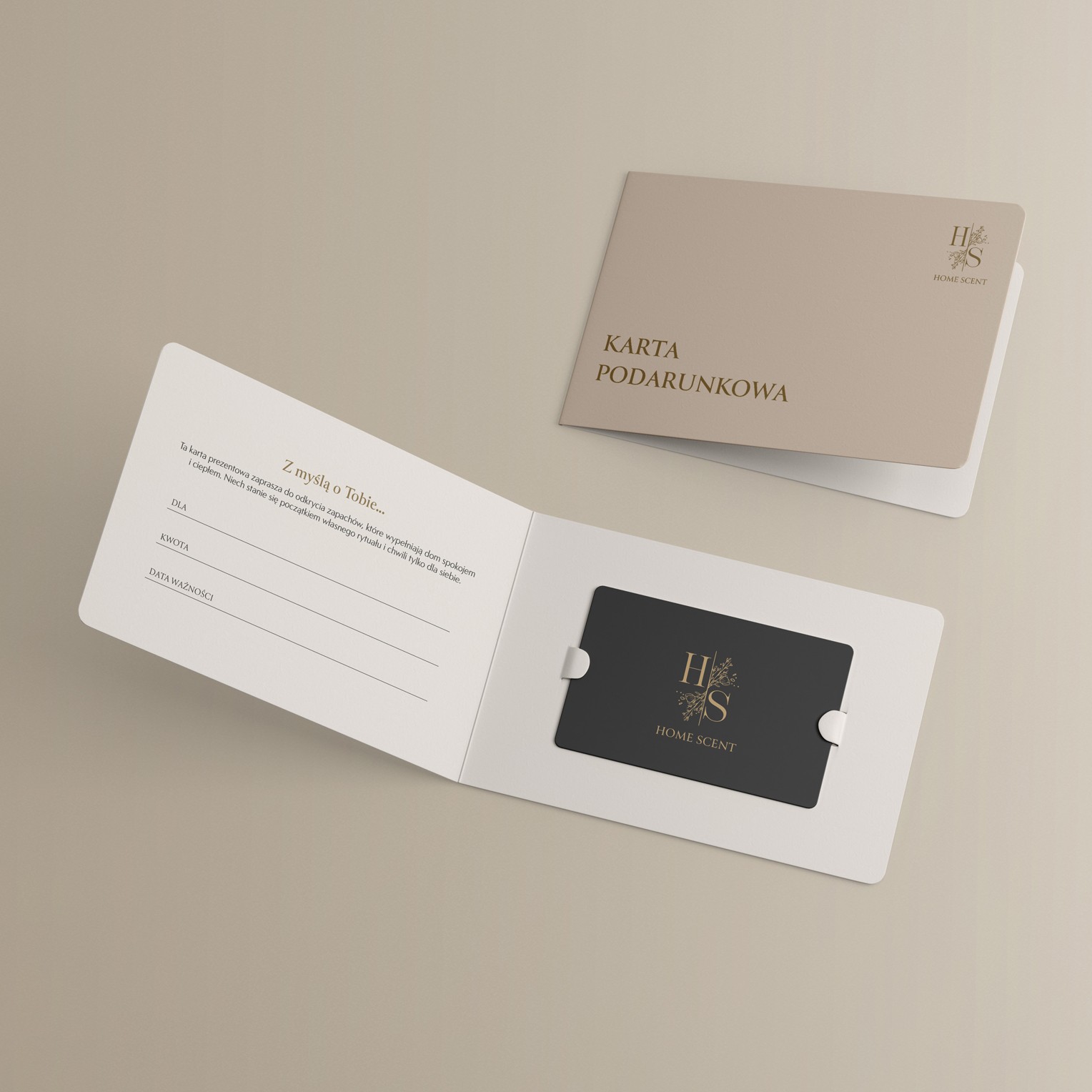
Based on the brand identity guidelines, I designed a set of print materials that serve as key touchpoints: business cards, informational materials, and product inserts. The print assets were designed as a natural extension of the brand experience – building an atmosphere of trust and quality from the very first contact.
DIGITAL AND SOCIAL MEDIA ASSET DESIGN
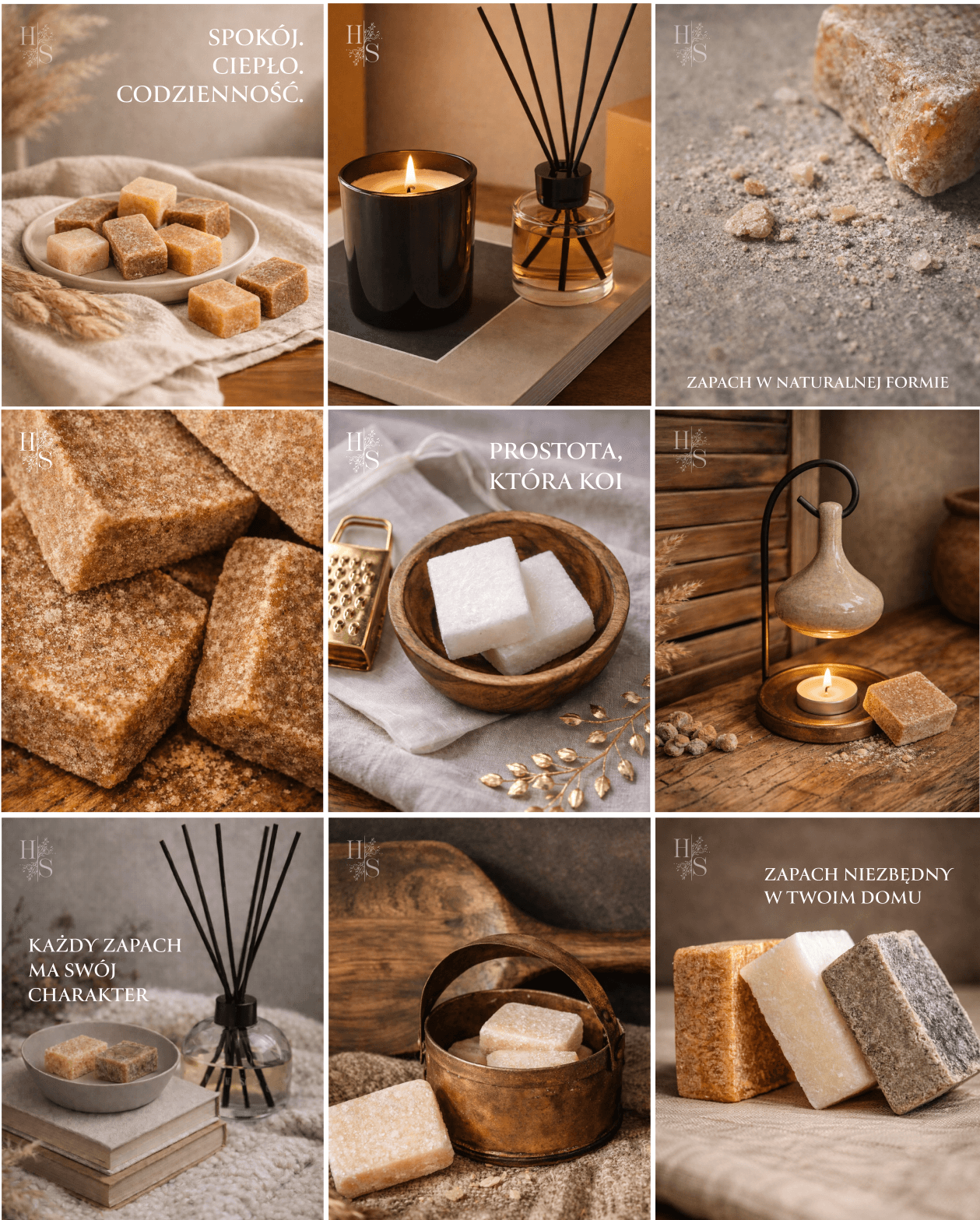
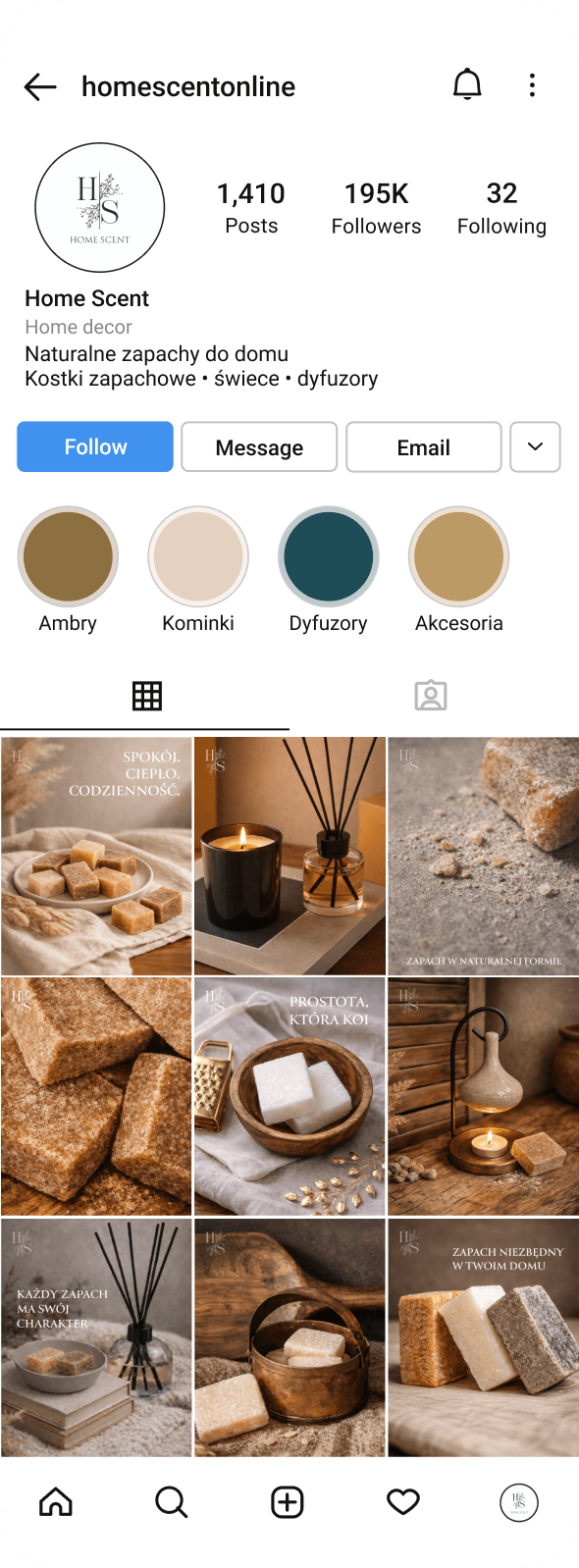
In parallel, I developed a concept for visual communication across digital channels.
Digital system principles:
• cohesive post layouts,
• lifestyle storytelling rooted in emotions and rituals,
• gentle CTAs inviting people to experience the brand,
• product shown in the context of the space rather than as a sales-centred hero.
The communication focuses on atmosphere and quality, avoiding direct, aggressive selling.
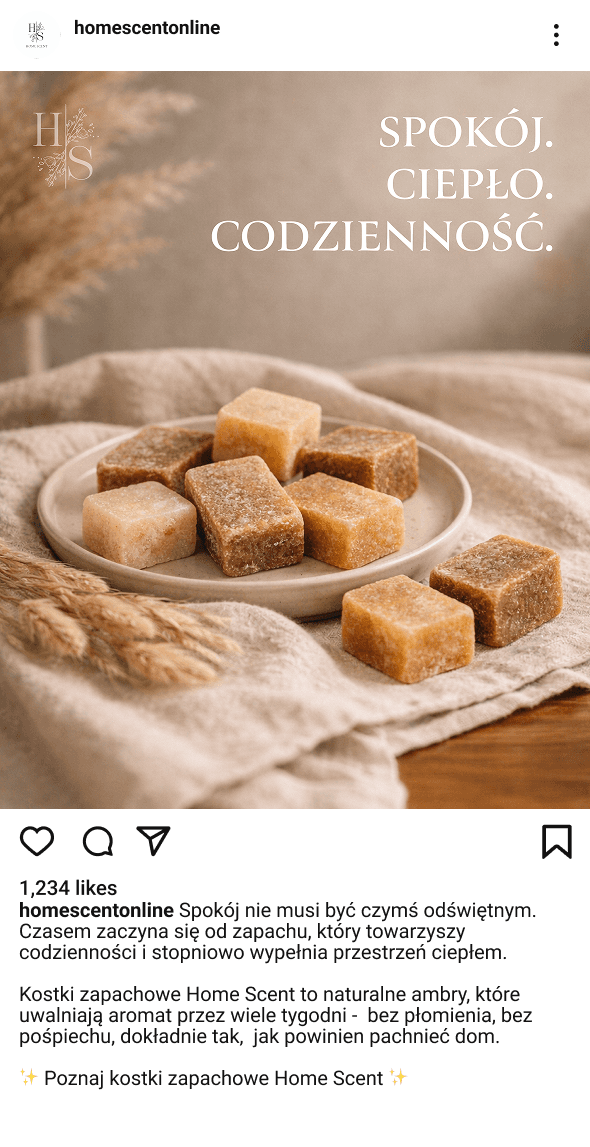
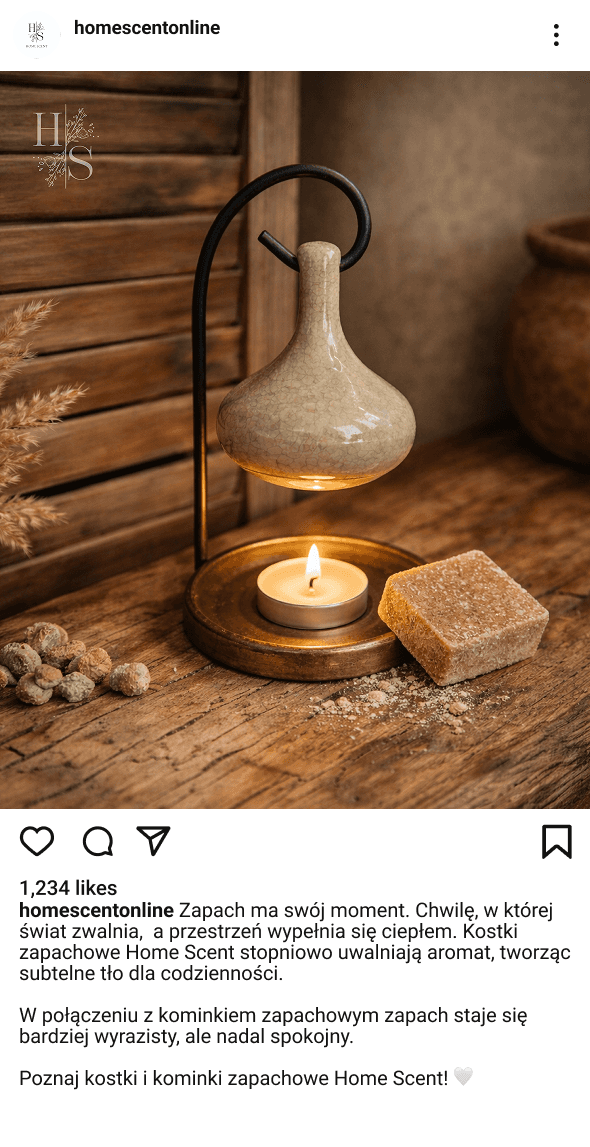
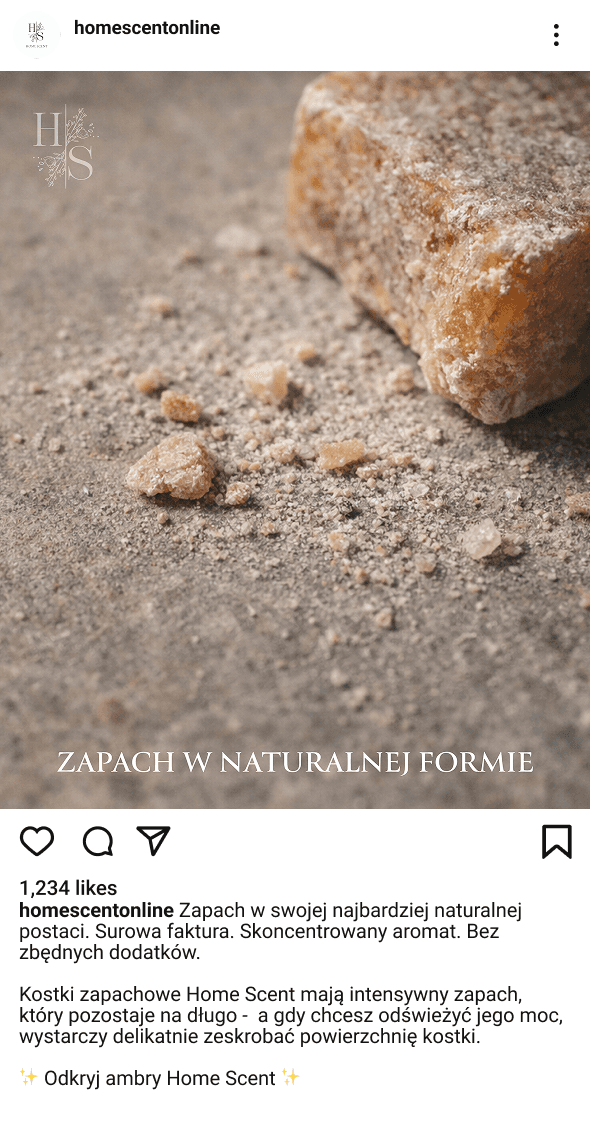
— Mood and atmosphere
Posts that build the brand mood through light, texture, and minimal headlines – without direct sales messaging.


— Product
The product is presented as part of everyday ritual and space, rather than as a central packshot. Compositions support the brand’s emotional tone and premium character.


— Detail and quality
Quality communication is built around detail, material, and light as carriers of the brand’s value.


— Headlines:
• Calm. Warmth. Everyday.
• Warmth captured in scent.
• A space that soothes the senses.
• A ritual that stays with you.
• Scent in its natural form.
• Mindfulness in the details.
— CTAs:
• Discover the scent
• Explore the collection
• Create your ritual
• Pause for a moment
• Step into the mood
VISUAL CONSISTENCY CHECK
After designing the materials, I carried out a systematic review of the visual identity across key touchpoints. The analysis covered:
• correct logo usage,
• colour consistency in print and digital,
• typographic hierarchy and rhythm,
• alignment of photography with the brand style,
• consistency of communication tone.
The review confirmed that the system functions as a consistent, scalable visual structure.
INTERNAL EVALUATION
The final stage was an internal evaluation of the system against strategic goals and readiness for further development.
— Goal delivery
• the brand effectively communicates scent as a sensory experience,
• the identity builds an emotional connection with the audience,
• the system balances elegance with approachability,
• communication remains consistent across channels.
— System performance
• the system works coherently in print and digital,
• it is clear and easy to implement,
• it supports offer expansion without losing character,
• it provides a stable foundation for further brand growth.
— Final takeaway
The Home Scent project confirmed that a consistent combination of strategy, emotion, and design can build a premium brand with a distinctive, sensory, and recognisable character. The visual identity system is scalable, cohesive, and ready for further development.